Constitutional Court Tests Gibran's Equivalency Evidence: Between Legality and the Future of the Constitution
Baca dalam 60 detik
- MK memutuskan melanjutkan perkara PHPU Nomor 01/PHPU/2026 ke tahap pembuktian, memeriksa saksi, ahli, dan dokumen terkait syarat pendidikan Gibran Rakabuming Raka.
- Dugaan penyelundupan hukum dalam Pasal 18 ayat (3) PKPU Nomor 19 Tahun 2023 mencuat karena norma itu tidak pernah dibahas dengan Komisi II DPR maupun diuji publik.
- Bawaslu mengungkap keterbatasan akses ke SILON KPU, memicu pertanyaan tentang efektivitas pengawasan eksternal dalam verifikasi syarat calon.
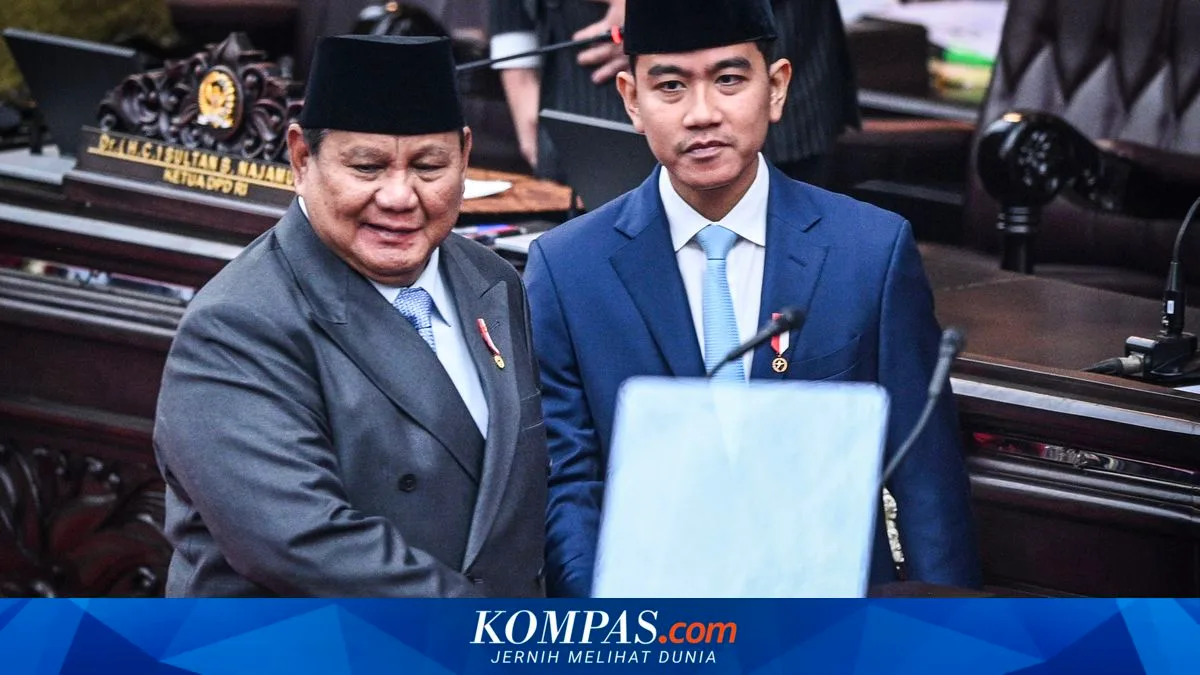
The Constitutional Court (MK) has officially entered a new phase in the dispute over the General Election Results Dispute (PHPU) Number 01/PHPU/2026. The panel of constitutional justices decided to continue the case to the evidentiary stage by summoning witnesses, experts, and parties directly connected to the evidence. This decision marks an important shift: the Court is no longer stopping at debates over jurisdiction or the petitioner's legal standing, but has begun dissecting the substance of the argument that Gibran Rakabuming Raka does not meet the constitutional requirements as a vice-presidential candidate.
The Court's move is seen as a breakthrough in procedural law. Until now, the Court has often been criticized for being too formalistic in handling election disputes. However, by choosing to seek material truth, the Court has sent a signal that the principle of legality must not become a shield for flawed procedures. Article 24 paragraph (1) of the 1945 Constitution mandates the judiciary to uphold law and justice, and that is what is now being translated into practice.
The focus of the evidentiary stage highlights two central issues. First, the legality of the norm underlying the candidacy. Testimony in court revealed allegations of legal smuggling in Article 18 paragraph (3) of PKPU Number 19 of 2023 on the Nomination of Participants in the Presidential and Vice-Presidential Election. This norm is alleged to have never undergone participatory deliberation with Commission II of the DPR RI, nor been subject to public testing as mandated by Law No. 12 of 2011. In the theory of rulemaking, such a procedural defect is called gebrek in de wilsvorming—a defect in the formation of will—which has juridical implications.
The second issue concerns the legal approach to evidence. Candidacy requirements should be documents that can be legally accounted for. However, the facts of the trial indicate that the equivalency document submitted is not a diploma in the formal sense. The fundamental difference between an equivalency certificate and a diploma is crucial: a diploma is issued by a verified educational institution, while equivalency is an administrative process that can have loopholes. If the Court finds that the minimum education requirement is not substantively met, the legal consequences could shake the legitimacy of the candidacy.
Bawaslu RI's testimony adds another dimension. The election supervisory body admitted that its access to the KPU's SILON was limited. Yet, in the constitutional design, Bawaslu is an external supervisory organ that should have full access to verify the material requirements of candidates. When that access is restricted, the constitutional oversight function is crippled. The KPU can argue that it acted according to procedure, but from the perspective of a material rule-of-law state, compliance with a formally defective norm cannot justify the substance.
“The debate at the preliminary objection level is over. What remains is the question of whether the petitioner's argument can be proven in a valid and convincing manner,” such was the essence of the testimony that developed in court.
For the public, this case is not merely a contest of legal arguments. It concerns the integrity of the democratic process and the future of the constitution. If the Court allows procedural loopholes, a bad precedent will be created: anyone can enter electoral contestation with questionable documents, as long as there is an implementing norm that accommodates it. Conversely, if the Court is firm, its ruling could become jurisprudence that strengthens candidacy requirements in the future.
Also worth noting is how this ruling will affect public trust in election organizing bodies. The KPU and Bawaslu are being tested for credibility. If the Court later rules that the education requirement is not met, a big question will be directed at the KPU: why did verification pass? Conversely, if the petitioner's argument is rejected, the Court must convincingly explain why the equivalency evidence is considered equivalent to a diploma, so as not to generate political speculation.
In the coming weeks, the evidentiary agenda will determine the direction. Witnesses and experts from both sides will have their credibility tested. The public awaits whether the Court truly prioritizes material truth, or once again gets trapped in formality. What is clear is that this case has opened a Pandora's box regarding candidacy governance in Indonesia. The question now is not only about Gibran's fate, but how far the Court dares to uphold the constitution amid unrelenting political pressure.