Court Rejects Summoning Gibran in Vice-Presidential Candidacy Lawsuit Hearing, Is Denny Indrayana Disappointed?
Baca dalam 60 detik
- Mahkamah Konstitusi menolak permohonan pemohon untuk menghadirkan Wakil Presiden Gibran Rakabuming Raka dalam sidang uji materi syarat pendidikan calon wakil presiden.
- Hakim Saldi Isra menegaskan pihak yang dihadirkan murni berdasarkan kebutuhan Mahkamah, bukan kepentingan pemohon.
- Pemohon tetap berupaya membuktikan status pendidikan Gibran tidak memenuhi syarat imperatif Pasal 169 huruf r UU Pemilu dan menuntut diskualifikasi.
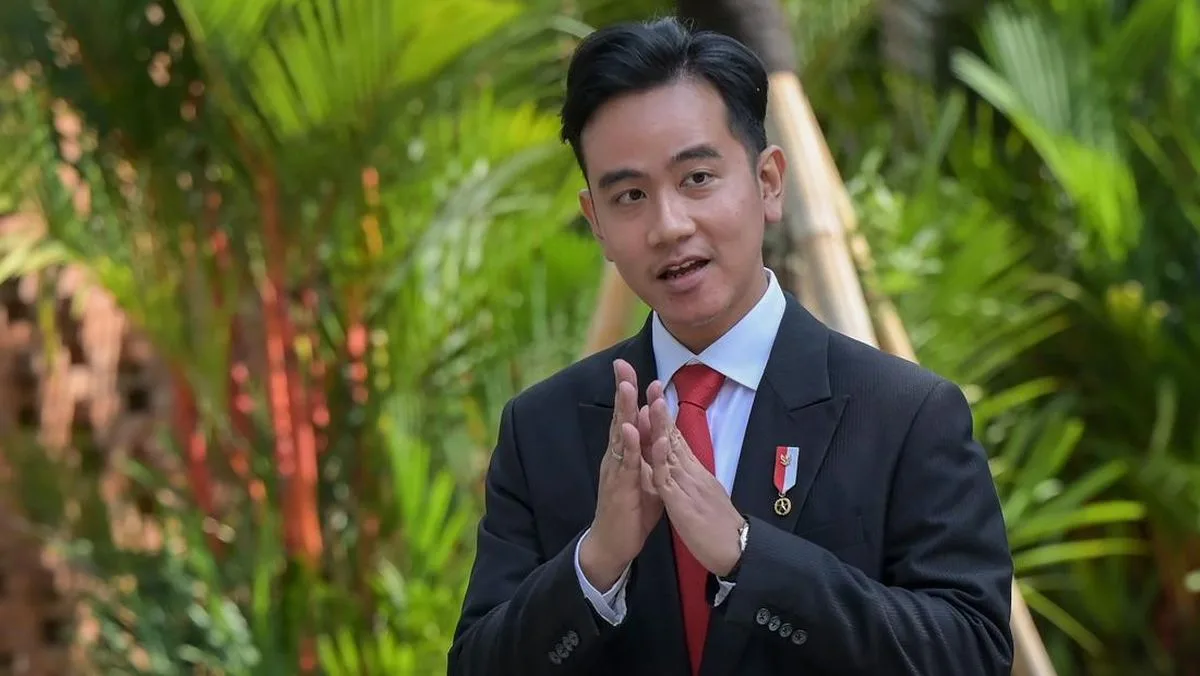
The Constitutional Court (MK) rejected the petitioners' request to summon Vice President Gibran Rakabuming Raka to appear directly at the follow-up hearing on the dispute over the vice-presidential candidacy requirements. The rejection was delivered by Constitutional Justice Saldi Isra during the hearing at the MK Building on Thursday (1/10) evening, in response to two letters submitted by the petitioners.
Saldi stressed that the Court did not accept the proposal to summon the parties named in the letters. "We do not accept the proposal or request from the petitioners regarding the summoning of the parties referred to in both letters," he said. Nevertheless, the MK confirmed it would summon other parties at Friday's hearing (2/10). Saldi said those parties were considered more relevant for their testimony to be heard. However, he was reluctant to disclose their identities. "Those are parties that, according to the Court, the Court needs. Not for the petitioners' interests," Saldi stressed.
The request to summon Gibran had earlier been filed by constitutional law expert who is also a petitioner, Denny Indrayana. According to Denny, Gibran's presence is crucial to clarify his educational status, which is the object of the dispute. He also asked the MK to summon the Minister of Primary and Secondary Education and the Minister of Law to explain the harmonization process of KPU Regulation No. 19 of 2023 and the issuance of Gibran's education equivalency certificate. "First is Mr. Gibran Rakabuming Raka. It is important for him to also explain the actual situation regarding his education," Denny said during the hearing.
The case stems from a lawsuit filed by several parties, including the Independent Committee for Election Monitoring (KIPP), Partai Ummat, Denny Indrayana, six citizens grouped in the Forum of Retired TNI Soldiers, M Subhan, Bonatua Silalahi, and Tiurma M.S. Sihombing. In their petition, they ask the Court to declare that the educational requirement in Article 169 letter r of the Election Law is imperative and must be lawfully fulfilled at the time of registration and determination of the presidential and vice-presidential candidate pairs. They also demand that Gibran be disqualified for allegedly failing to meet that educational requirement.
The MK's refusal to summon Gibran can be read as a signal that the Court wants to keep its focus on the normative aspects of the constitution rather than on personal figures. However, for the petitioners, Gibran's presence is considered important to factually test whether the education equivalency process he underwent meets formal and material requirements. The MK's move to summon other parties—whose identities remain undisclosed—indicates that the Court may seek testimony from relevant authorities, such as ministries, without having to open a space for direct confrontation with the incumbent vice president.
In the context of constitutional law, this judicial review of candidacy requirements touches on fundamental issues of legal certainty and the integrity of the electoral process. If the MK later rules that the educational requirement is imperative and unfulfilled, the implications could be far-reaching, including potential disputes over election results. Conversely, if the MK rejects the petitioners' argument, the status quo remains. The public awaits whether the Court will summon the relevant ministers to explain the harmonization of the rules, or instead rule based on existing documentary evidence.
What is clear is that the refusal to summon Gibran does not immediately close the space for evidence. The petitioners can still submit other evidence, including documents and expert testimony. The question is whether the MK will go further by examining the officials authorized to issue the equivalency certificate, or simply rely on the interpretation of norms. Today's follow-up hearing will signal the direction of a ruling awaited by many.