Miliband Warns Iran at UN: Hostile Activity on British Soil Will Not Be Tolerated
Baca dalam 60 detik
- Menlu Inggris Ed Miliband menyampaikan peringatan keras kepada Menlu Iran Abbas Araghchi terkait aktivitas yang mengancam keamanan Inggris, termasuk serangan terhadap komunitas Yahudi.
- Pertemuan di sela Sidang Umum PBB itu juga membahas perang Timur Tengah, upaya membuka kembali Selat Hormuz, dan penahanan sepasang warga Inggris di Iran.
- Ketegangan London-Teheran berpotensi memengaruhi stabilitas pasokan energi global dan hubungan dagang dengan Asia Tenggara, termasuk Indonesia.
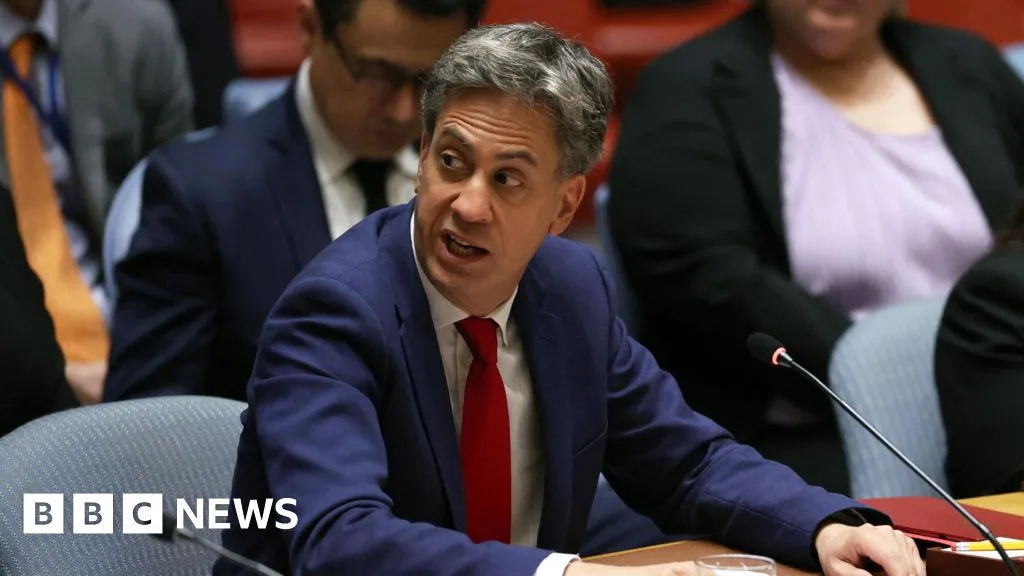
British Foreign Secretary Ed Miliband delivered a firm message to Iranian Foreign Minister Abbas Araghchi that London will not tolerate any form of intimidation, threat, or hostile activity within its sovereign territory. The face-to-face meeting took place on the sidelines of the UN General Assembly in New York on Thursday (26/9), marking a rare diplomatic escalation between the two countries whose relations have heated up in recent months.
According to the UK Foreign Office, Miliband specifically highlighted his country's determination to combat threats from groups linked to Iran, including attacks on the Jewish community in Britain. The statement came after a series of security incidents that emerged throughout 2026, from the arson of four Jewish community ambulances in Golders Green last March to a cyber attack that crippled a small power plant in July.
The BBC understands that British intelligence services were initially open about the possibility of involvement by the Iranian state or organizations working for it in the attack on Hatzola ambulances and other actions against the Jewish community. However, the final conclusion points to intelligence evidence pointing to Iran or its proxies. Meanwhile, the cyber attack on the power plant was reported by The Telegraph to have been carried out by hackers affiliated with the Iranian regime.
During the meeting, Miliband also urged Iran to choose the path of de-escalation and diplomacy rather than prolonging the war. He stressed the importance of reopening the Strait of Hormuz, the strategic shipping lane normally used by one-fifth of the world's oil and gas shipments. Since February, Iran has closed the route after the United States and Israel launched strikes that killed Iran's supreme leader. Tehran retaliated by launching attacks on Israel and Arab Gulf states hosting US military bases.
Iranian President Masoud Pezeshkian, in his speech at the UN General Assembly on Wednesday, stressed that any agreement must include an end to the US blockade preventing Iranian ships from using the waterway. Responding to US President Donald Trump's threat to "obliterate" the Islamic Republic if no deal is reached, Pezeshkian said his country would never "bow down". "The resilience of the Iranian people will only increase in the face of sanctions, pressure, and intimidation," he said. The US delegation was reported to have walked out as the speech began.
"We will not tolerate intimidation, threats, or hostile activity on British soil," Miliband told Araghchi, as quoted by the Foreign Office.
The issue of detentions of citizens was also a concern. Miliband again demanded the immediate release of Lindsay and Craig Foreman, a couple from East Sussex who were arrested while crossing Iran on a motorcycle trip. They have been detained for more than 20 months and last February were sentenced to 10 years in prison on espionage charges—charges both deny. The Foreign Office stressed that their welfare remains a priority for the British government.
For Indonesia, the UK-Iran tension and the Strait of Hormuz blockade are not merely distant events. As a crude oil importer, Indonesia is highly vulnerable to a surge in global energy prices if the conflict drags on. Moreover, escalation in the Middle East could disrupt trade shipping routes from Asia to Europe, which have so far passed through the Suez Canal and the Strait of Hormuz. The Indonesian government needs to anticipate the knock-on effects on inflation and the trade balance, while strengthening diplomacy to encourage de-escalation.
The Miliband-Araghchi meeting itself produced no official statement from the Iranian side. The IRNA news agency only reported that the two discussed bilateral relations and international developments. However, the signal from London is clear: Britain will not stand idly by if activities threatening its national security continue. In the coming months, will Iran respond with diplomatic steps or instead increase tensions? The world, including Indonesia, awaits the direction of Tehran's policy.