Trump-Xi Summit: Grand Symbolism, No Breakthrough on AI and Taiwan
Baca dalam 60 detik
- Pertemuan puncak AS-China di Washington hanya menghasilkan perpanjangan gencatan dagang hingga 10 Januari, tanpa kesepakatan substantif soal AI, Taiwan, atau Iran.
- Kritik keras muncul dari senator Demokrat dan mantan diplomat yang menilai lawatan Xi Jinping lebih menonjolkan seremonial ketimbang diplomasi riil.
- Bagi Indonesia, ketidakpastian hubungan dua raksasa ekonomi ini berpotensi mengguncang stabilitas rantai pasok dan harga komoditas di kawasan.
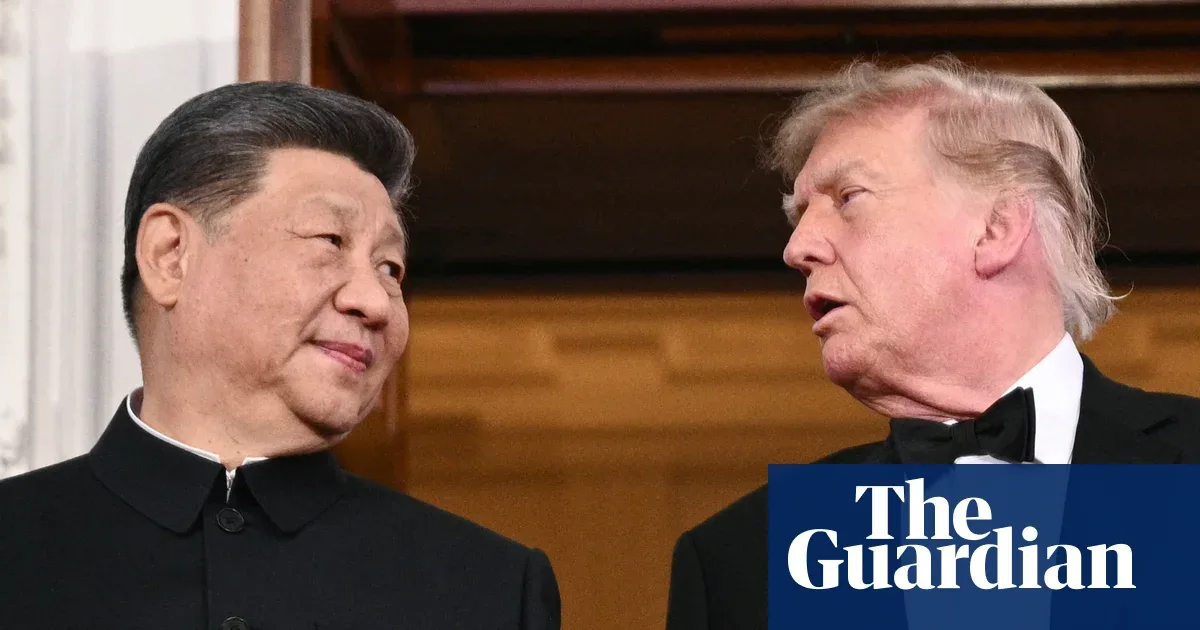
US President Donald Trump received Chinese President Xi Jinping at the White House on Thursday (25/9/2026) in the Chinese leader's first state visit to Washington in more than a decade. But behind the pomp of the welcoming ceremony, there was no signal of a breakthrough from the closed-door meeting that lasted about 90 minutes on thorny issues: artificial intelligence (AI), trade, Taiwan, and the war with Iran.
The two countries only agreed to extend the truce in their trade war until 10 January. Several observers judged that there was almost no concrete outcome beyond that. Democratic senators sharply criticized the meeting, accusing Trump of prioritizing ceremonial grandeur over the substance of the negotiations.
Former US diplomat who served in the Obama era, Danny Russel, expressed concern that the two leaders spent more time on social and ceremonial events than on the core meeting. "Pomp and protocol are not the same as progress. Pandas are cute, but what America needs is rare earths," he said. "What we witnessed was not diplomacy, but 'diplotainment', which will not do much to resolve the serious problems in the US-China relationship."
In his speech, Xi again raised the "Thucydides Trap" theory—the academic idea that competition between a rising power and an established power often ends in war. Xi said the risk "can be managed" and called for cooperation. But analysts judged that fierce competition in AI is likely to limit room for any agreement beyond symbolism.
Trump had earlier written on Truth Social that he and Xi would discuss "super intelligence"—his new term for AI—but signaled he was not interested in new regulation. "Super Intelligence will be a big topic, but I want to leave it as is. That is also China's position," he wrote. Xi, in his comments, stressed that the two countries must "ensure the development of AI always remains under human control".
The Taiwan issue was in the spotlight. According to a release from China's official news agency, Xinhua, Xi urged Trump to oppose "Taiwan independence". Xi was also scheduled to press Trump to stop arms sales to Taiwan. After his visit to China in May, Trump said he was holding back an arms package worth about US$14 billion for Taiwan and called it a "very good negotiating chip"—a move that alarmed several US allies in Asia. The White House did not immediately provide an official summary of the talks.
"Pomp and protocol are not the same as progress. Pandas are cute, but what America needs is rare earths. What we witnessed was not diplomacy, but 'diplotainment'." — Danny Russel, former US diplomat
The visit was also marked by media controversy. No US television network broadcast Trump's and Xi's statements live, in protest of the White House ban on CNN, MS Now, and Politico. The state dinner for Xi was attended by several prominent business figures, including Tim Cook (Apple), Jeff Bezos (Amazon), Sundar Pichai (Alphabet), Sam Altman (OpenAI), Elon Musk (Tesla), and Jensen Huang (Nvidia). Outside the gates, a group of protesters shouted slogans such as "China out of Hong Kong" that were clearly audible as the two leaders posed on the White House steps.
Indonesian Context
For Indonesia, the summit's lack of breakthroughs prolongs uncertainty in the trade relations of the world's two largest economies. The extension of the trade truce until January 2026 does provide temporary breathing room for global markets, but without a structural agreement, the risk of volatility in commodity prices—including coal, CPO, and nickel—remains high. Indonesia, as a major trading partner of both China and the US, needs to watch for the potential for abrupt shifts in tariff policy. In addition, tensions in the Taiwan Strait could affect shipping lanes and regional supply chains, with direct effects on the national manufacturing and logistics sectors.
Going forward, the big question is whether these two powers will move from the ceremonial stage to the real negotiating table. Without breakthroughs on AI, Taiwan, and trade, the world—including Indonesia—must prepare for a new phase of strategic competition that is more unpredictable.