Foreign Minister Sugiono Calls for Global Recognition of Palestine from UN Headquarters
Baca dalam 60 detik
- Menlu Sugiono menyerukan seluruh negara anggota PBB mengakui Palestina dalam forum aliansi global di New York.
- Indonesia menegaskan penolakan terhadap rencana pemukiman Israel E1 dan berkomitmen memberikan bantuan kemanusiaan.
- November mendatang, Indonesia dan Belanda akan menjadi tuan rumah pertemuan aliansi global di Den Haag untuk memperkuat dukungan internasional.
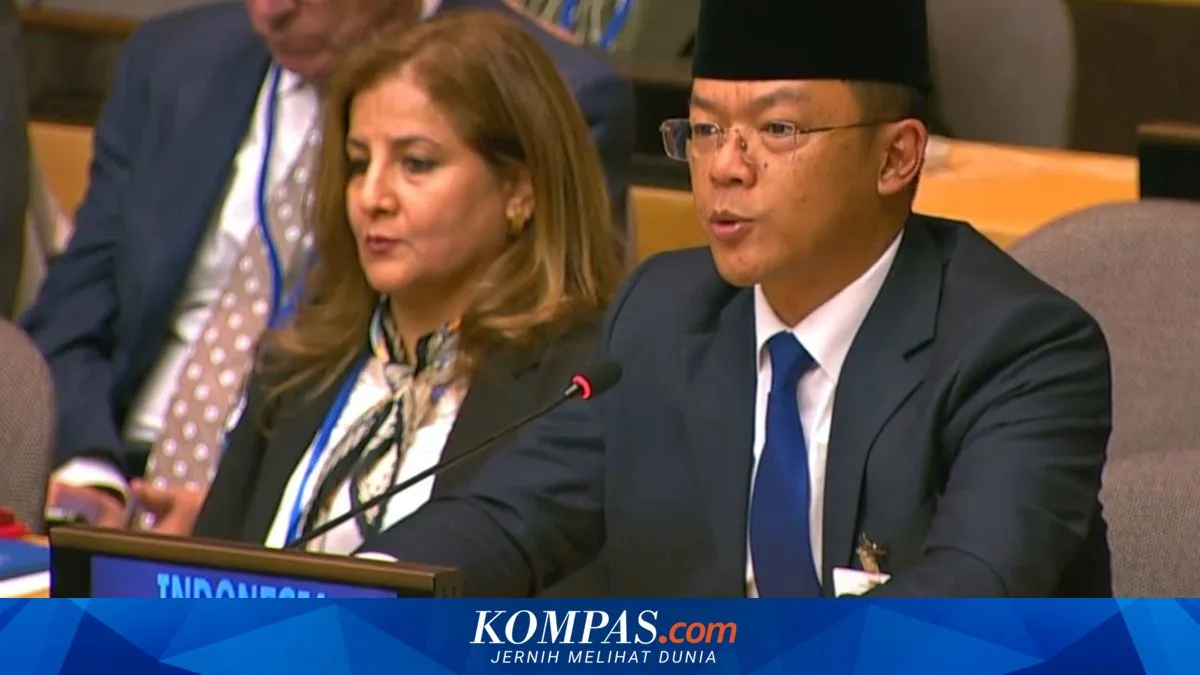
Minister of Foreign Affairs of the Republic of Indonesia Sugiono called on all member states of the United Nations (UN) to immediately recognize Palestine as a sovereign state. The call was made at the High-Level Ministerial Global Alliance for the Implementation of the Two-State Solution meeting at UN Headquarters, New York, United States, Thursday (24/9/2026).
At the forum, Sugiono stressed that international recognition of Palestine is a crucial step to end the Israeli occupation. "We must keep knocking on the door of every country that has not recognized Palestine, because each recognition will tear down one by one the bricks of the wall of occupation," he said. He also highlighted that after the New York Declaration and UN Security Council Resolution 2803, support for Palestine has grown stronger.
Indonesia firmly rejects Israel's plan to build settlements in the E1 area, which is seen as potentially damaging the prospects for a two-state solution. "Indonesia rejects it, the UN rejects it, the international community must reject it too," Sugiono said. This stance is in line with Indonesia's commitment to continue fighting for Palestinian rights in multilateral forums.
Beyond political support, Indonesia is committed to providing humanitarian aid for the Palestinian people. Sugiono said political support must be translated into coordinated steps that protect Palestinian statehood, uphold international law, and end the occupation. "Our unity is our strength; let us harness it to achieve our common goal, namely the realization of an independent and sovereign Palestinian state," he concluded.
"Our political support must be translated into coordinated steps that protect Palestinian statehood, uphold international law, and end the occupation."
For Indonesia, the Palestine issue is not merely foreign policy but also part of the nation's identity enshrined in the Preamble to the 1945 Constitution. Support for Palestinian independence has consistently been a priority of Indonesian diplomacy, including in international forums. This step also strengthens Indonesia's position as the country with the world's largest Muslim population that actively fights for global justice.
The impact for readers in Indonesia, especially investors and professionals, is geopolitical stability in the Middle East that can affect world oil prices and financial markets. Easing tensions could lower investment risk in the region, while escalation could trigger volatility. In addition, Indonesia's commitment within the global alliance demonstrates an active role in multilateral diplomacy that can enhance its positive image in the eyes of international investors.
Going forward, the meeting in The Hague in November 2026 will test the effectiveness of the global alliance. Will this collective step be able to push more countries to recognize Palestine and end the occupation? Indonesia appears set to continue playing a central role, but the outcome depends heavily on consistency and international pressure on Israel.