Jokowi Details Gibran's Education History Amid Constitutional Court Lawsuit: UTS Insearch to MDIS
Baca dalam 60 detik
- Jokowi memaparkan jejak pendidikan Gibran Rakabuming Raka, dari SD Negeri 16 Surakarta hingga program pathway UTS Insearch Australia dan MDIS Singapura.
- Gugatan ke MK mempertanyakan pemenuhan syarat pendidikan Pasal 169 huruf r UU Pemilu oleh Gibran, dengan petitum mendiskualifikasi dan membatalkan pelantikannya sebagai wapres.
- Mahkamah Konstitusi dihadapkan pada uji tafsir syarat pendidikan yang dapat berdampak pada stabilitas pemerintahan dan preseden pencalonan ke depan.
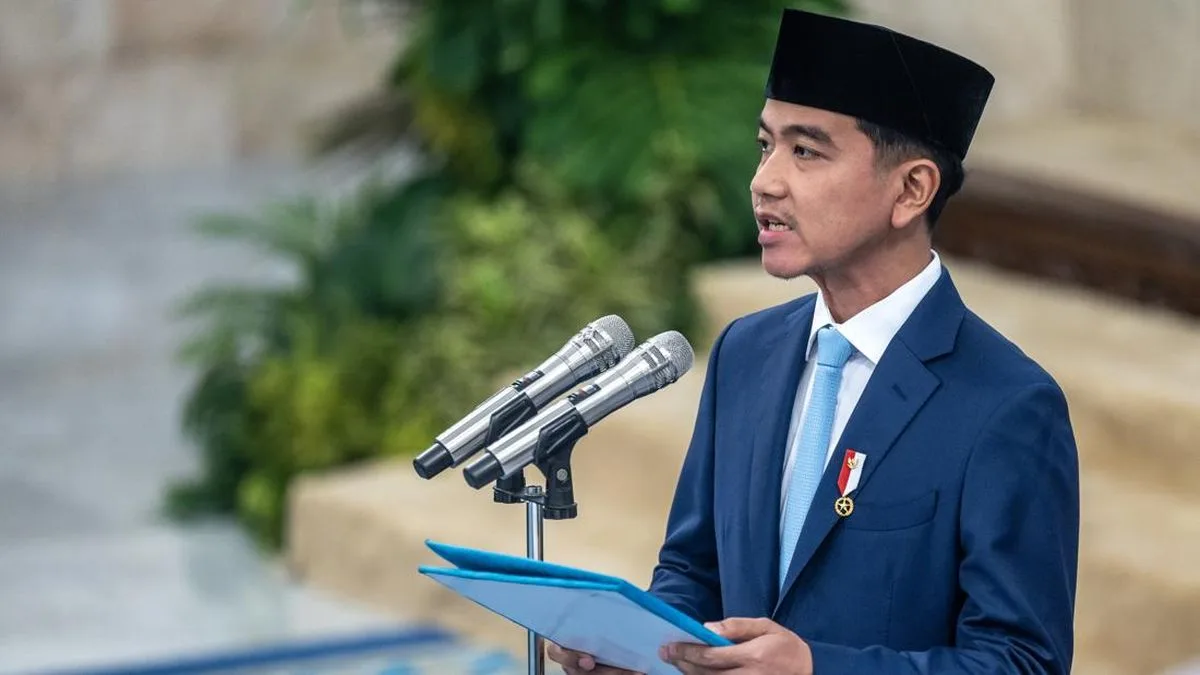
Indonesia's 7th President Joko Widodo laid out the educational background of his son, Vice President Gibran Rakabuming Raka, as he faces a lawsuit at the Constitutional Court (MK) over the educational requirements for vice-presidential candidates in the 2024 presidential election. Jokowi made the statement in Solo on Thursday (24/9), responding to a petition questioning the validity of Gibran's diploma.
Jokowi detailed that Gibran attended elementary school at SD Negeri 16 Surakarta, then continued to SMP Negeri 1 Surakarta. He completed his secondary education at Orchid Park Secondary School in Singapore, earning an O Level qualification. After that, Gibran took part in the UTS Insearch program in Australia, which Jokowi described as a pathway before eventually studying at the Management Development Institute of Singapore (MDIS).
"UTS Insearch was a pathway, so you know. As I recall, that was three years. Then he moved again, entering MDIS in Singapore," Jokowi said, as quoted from his remarks in Solo.
Although reluctant to comment directly on the lawsuit filed by Denny Indrayana and several parties, Jokowi stressed that the matter is now in the legal realm. He left the legal process entirely to the authorities. "This has entered the legal domain, so we follow the existing legal process," he said.
The lawsuit registered at the Constitutional Court places the educational requirement as the central issue. The petitioners argue that the provision in Article 169 letter r of the Election Law is imperative and must be lawfully fulfilled at the time of registration and the determination of the candidate pair. They ask the Court to declare that Gibran does not meet the requirement, meaning his candidacy was legally flawed from the outset.
In their petitum, the petitioners not only seek Gibran's disqualification as a vice-presidential candidate but also the annulment of the KPU Decision that designated Gibran as the vice-presidential candidate. They also demand that Gibran's inauguration by the People's Consultative Assembly (MPR) be annulled, and that the MPR be ordered to hold a vice-presidential election session from two candidates proposed by the president no later than 60 days after the ruling is read out.
"This has entered the legal domain, so we follow the existing legal process." — Joko Widodo
This case is not merely an electoral administrative dispute. If the Constitutional Court accepts the petitioners' argument, the implications could shake the power configuration, especially since Gibran currently serves as Vice President. Conversely, a rejection of the lawsuit would strengthen the legitimacy of the candidacy process that has already taken place, while still leaving a note on the interpretation of educational requirements for candidates for national leadership.
For the Indonesian public, this case highlights the importance of clear regulations on the education of prospective leaders. Qualification standards that have so far been treated as a formality could become an entry point for broader judicial review, including for regional head candidates or even future presidents. The worlds of education and politics will be watching how the Constitutional Court interprets the phrase "education" in the law, whether it covers non-formal routes such as pathway programs or only formal tiered education.
The Constitutional Court's eventual ruling will also set a precedent on the extent to which the judiciary can intervene in a political process that has already concluded. If the lawsuit is granted, Indonesia will face a rare situation: a vacancy in the vice-presidential seat in the middle of an ongoing government. Conversely, if it is rejected, the petitioners hope for regulatory improvements so that educational requirements are no longer open to multiple interpretations. What is clear is that the public is waiting to see whether the Court will maintain the status quo or open a new chapter in Indonesia's election history.