PSI Challenges 5 Percent Parliamentary Threshold: We Are Ready to Fight in 2029
Baca dalam 60 detik
- Sekjen PSI Raja Juli Antoni menegaskan partainya siap bertarung di Pemilu 2029, terlepas dari besaran ambang batas parlemen yang ditetapkan.
- Putusan MK dinilai memberi mandat kepada pembentuk undang-undang untuk merumuskan ambang batas yang tidak menyia-nyiakan suara rakyat.
- Dengan ambang batas 4 persen pada 2024, sekitar 16 juta suara pemilih tidak terkonversi menjadi kursi parlemen.
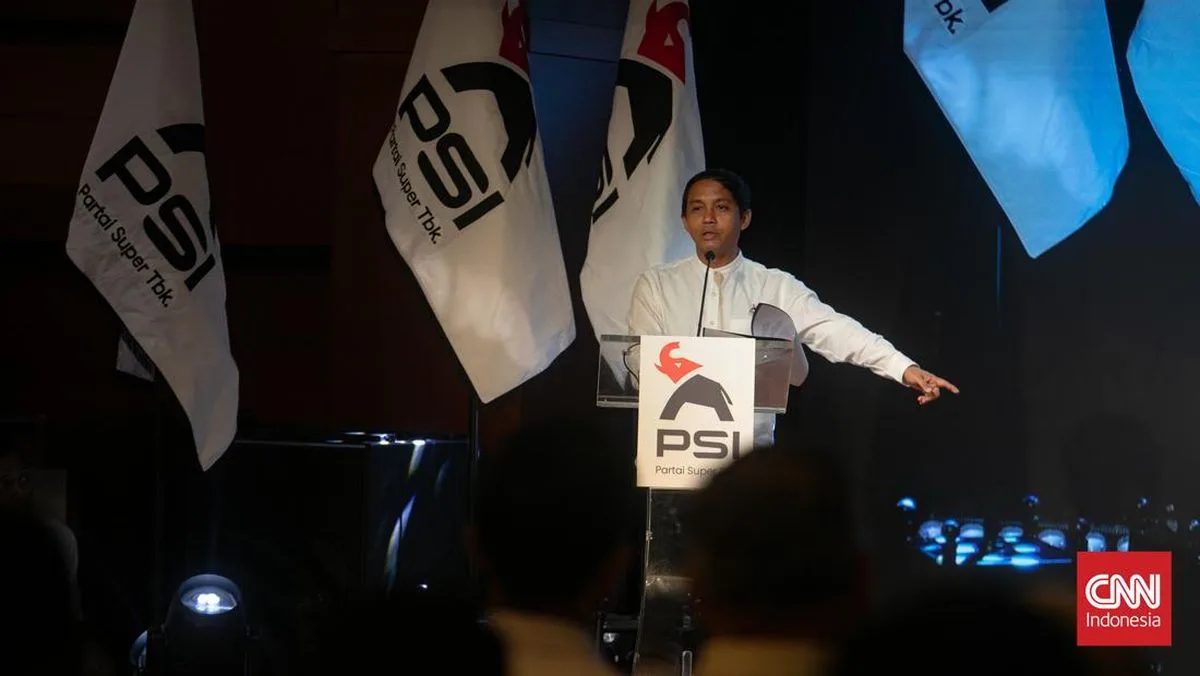
Secretary General of the Indonesian Solidarity Party (PSI), Raja Juli Antoni, said his party is ready to face the 2029 Election with whatever parliamentary threshold is eventually applied. The statement was made in response to the discourse on raising the threshold to 5 percent currently circulating in the DPR, and it has revived the issue of wasted votes in Indonesia's electoral system.
Speaking at the Presidential Palace in Jakarta on Thursday (24/9), Raja Juli touched on the Constitutional Court's (MK) consideration, which he said signaled the need for a fairer threshold formula. He assessed that the MK ruling implicitly asked lawmakers to ensure that no more people's votes are wasted because political parties fail to enter parliament.
"The MK decision, yes, clearly says that a more appropriate formulation is needed so that people's votes are not wasted, people's votes are not in vain," said Raja Juli.
He then laid out concrete data: in the 2024 Election, with a 4 percent threshold, around 16 million voters' votes were not converted into seats in Senayan. According to him, this figure is evidence that the threshold design needs to be evaluated so that it better reflects the people's will.
Although it is a non-parliamentary party, PSI stressed it will follow the DPR's final decision. However, Raja Juli said his party is ready to fight no matter the size of the threshold set. "PSI, God willing, is ready. Moreover, God willing, with the experience of two elections, now there is Mas Kaesang as Chairman, and then Pak Jokowi, God willing, is also fully endorsing PSI," he said.
The statement highlights the political dynamics ahead of the 2029 Election, in which the parliamentary threshold is one of the crucial instruments determining the map of party strength. If the threshold is raised to 5 percent, small parties like PSI will face a tougher challenge to break into parliament. Conversely, large parties benefit because vote fragmentation is reduced.
In the Indonesian context, the issue of the parliamentary threshold has always been a debate between the efficiency of the presidential system and the representation of people's votes. On one hand, a high threshold is seen as simplifying the multiparty system; on the other, it has the potential to disregard millions of valid votes. The MK ruling cited by Raja Juli affirms that lawmakers have a constitutional responsibility to seek balance.
The experience of the 2024 Election is a mirror: with a 4 percent threshold, only parties with a large mass base made it through, while votes from small parties were lost. If the threshold is raised, the number of wasted votes could swell. This is an alarm for the quality of democracy, especially when voter participation continues to be encouraged.
PSI, with its non-parliamentary position, seems to want to use this momentum to strengthen its base and attract public sympathy from those who feel their votes are unrepresented. Support from President Joko Widodo and the leadership of Kaesang Pangarep are political assets they are highlighting. However, the effectiveness of that support still has to be tested on the ground.
Going forward, the DPR's decision on the parliamentary threshold will determine the direction of political competition in 2029. Will lawmakers choose a more inclusive formula, or instead maintain a high threshold for the sake of stability? The public is waiting to see whether the promise of "no wasted votes" will truly materialize.