Forest Fire Hotspots Decline, but Central Kalimantan Surges to 673: A New Alarm for the Government
Baca dalam 60 detik
- Menteri Kehutanan Raja Juli Antoni melaporkan penurunan titik panas di Jambi, Sumsel, dan Kalsel, namun Kalimantan Tengah justru melonjak menjadi 673 titik.
- Presiden Prabowo mengumpulkan akademisi dan menteri di Istana untuk membahas penanganan karhutla, terutama di lahan gambut.
- Pemerintah diminta tidak lengah karena fluktuasi hotspot bisa memicu krisis asap lintas negara dan memperburuk hubungan diplomatik.
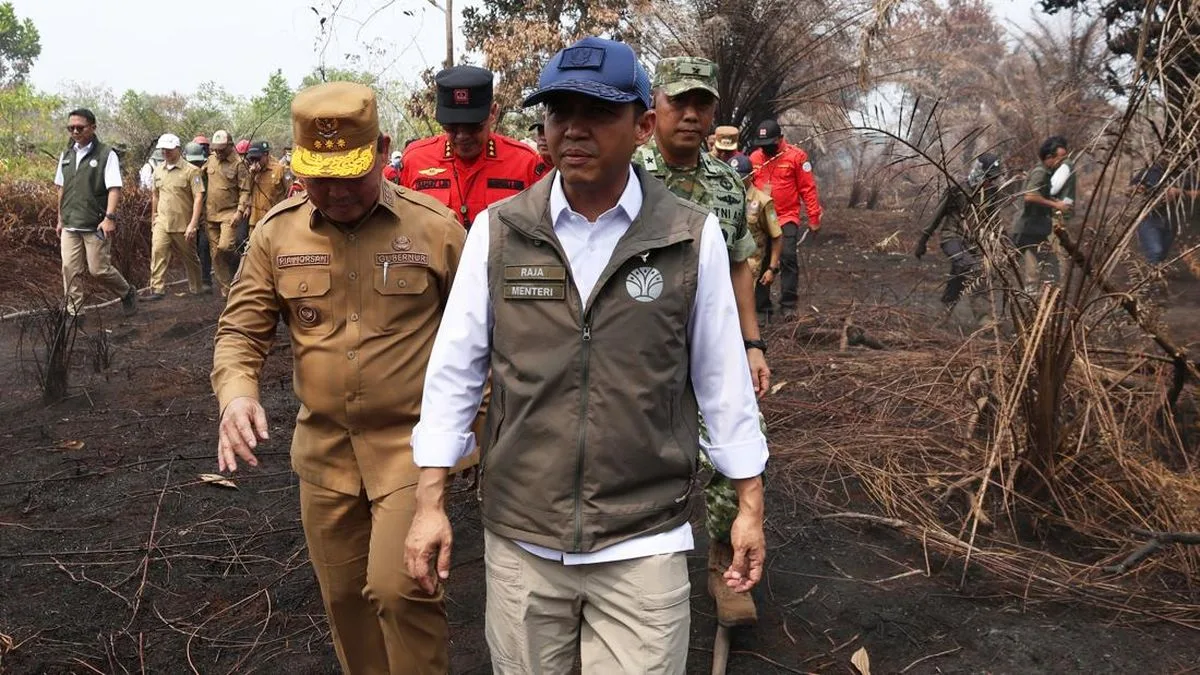
Forestry Minister Raja Juli Antoni revealed that the number of hotspots for forest and land fires (karhutla) in several provinces has declined significantly. However, he highlighted a drastic surge in Central Kalimantan, which reached 673 hotspots, making it the most critical region at present.
Data presented by Raja Juli after a limited meeting at the Presidential Palace in Jakarta on Thursday (24/9) showed improvements in several areas: Jambi from six hotspots to one, South Sumatra from 17 to 11, and South Kalimantan from 68 to 23. Nevertheless, he stressed that the main attention remains on Central Kalimantan and South Kalimantan. "Our concentration is indeed still on those two provinces," he said.
The decline in some regions does not necessarily signal the end of the threat. Sharp fluctuations in hotspots, especially in Central Kalimantan, indicate that weather factors and human activity remain the main triggers. Raja Juli claimed he continues to go to the field to monitor the latest conditions.
President Prabowo Subianto has shown particular concern about forest and land fires on peatland. This was disclosed by Raja Juli, who said that discussions on peat would be held soon. "The President is very concerned about peat. We will discuss it later and I will convey the results," he said.
On the same day, Prabowo invited a number of academics to the Palace to discuss the handling of forest and land fires. Those present included Bagus Muljadi from Nottingham University, Azwar Maas from Universitas Gadjah Mada, Zakaria Amsari from Universitas Tanjungpura, and Indratmo Soekarno from ITB. Also attending were BMKG Head Teuku Faisal Fathani and BRIN Head Arif Satria.
"I think it is very good that the President has concern about peat. Perhaps we will discuss it later and I will convey the results of the limited meeting to colleagues," said Raja Juli.
The involvement of experts and research institutions indicates that the government wants to take science-based steps in handling forest and land fires. Peatland is the focus because it is flammable and difficult to extinguish, especially during long dry seasons. Fires on peat also release large amounts of carbon emissions, worsening climate change.
For Indonesia, handling forest and land fires is not only an environmental matter but also affects the economy, health, and international relations. Transboundary haze often triggers protests from neighboring countries such as Malaysia and Singapore. In addition, the tourism and aviation sectors can be disrupted if the haze thickens.
The government is urged not to be complacent despite improvements at some points. A combination of satellite monitoring, law enforcement against land burning, and peat restoration is key. Without concrete steps, the surge in hotspots in Central Kalimantan could be the start of a wider crisis.
Going forward, the public will await the results of the limited meeting promised by Raja Juli. Will the government be able to consistently suppress hotspot numbers, or is this merely a pause before the next wave of forest and land fires? Time will tell, but infrastructure readiness and cross-sector coordination are non-negotiable.