Ombudsman Denied Entry to Cibinong Prison, Finds Luxury Facilities for Inmates
Baca dalam 60 detik
- Tim Ombudsman RI dua kali dicegah masuk ke Lapas Kelas IIA Cibinong saat sidak, Rabu (23/9), sebelum akhirnya menemukan kompleks hunian eksklusif di area asimilasi.
- Di dalam rumah berpagar hitam, tim mendapati sofa, kulkas berisi minuman keras, televisi, hingga simulator golf dan kolam, serta seorang warga binaan yang melarikan diri ke kamar.
- Kakanwil Ditjenpas Jabar membantah temuan itu sebagai fasilitas mewah, dengan alasan bangunan tersebut adalah rumah dinas jabatan yang memiliki SK resmi.
The Indonesian Ombudsman uncovered an access denial incident during a surprise inspection (sidak) at the Class IIA Cibinong Correctional Facility (Lapas) in Pondok Rajeg, Bogor Regency, on Wednesday (23/9). The external supervisory team only managed to penetrate the area after being blocked twice by officers, and instead found a residential complex with facilities far beyond the standards for inmate rehabilitation.
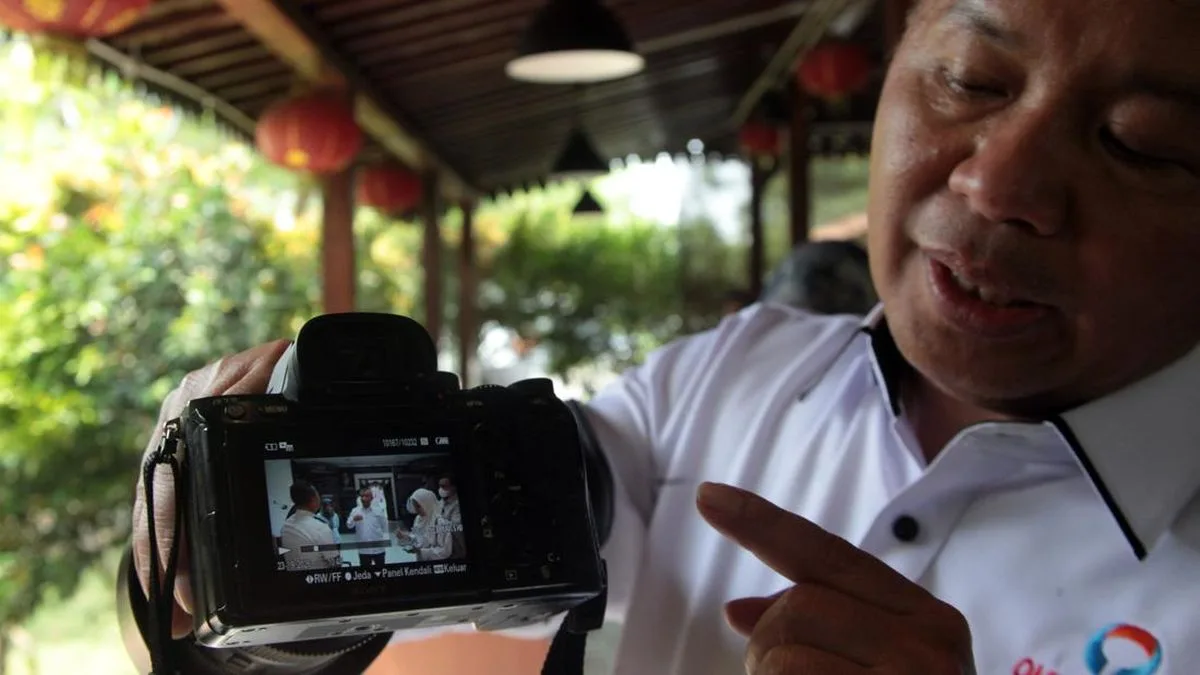
The chronology began when the team arrived at 09.45 WIB carrying an assignment letter to the reception room. Instead of being allowed in, they were asked to wait for the prison head (kalapas) for nearly 30 minutes without explanation. "We were also not allowed to enter and they did not explain the reason for the refusal," said Ombudsman Member Syafrida Rachmawati Rasahan at a press conference in Jakarta, Thursday (24/9).
After being denied, the team chose to wait in the prison canteen while awaiting the arrival of several journalists. From there, they saw a wooden fence about 100 meters away and asked what was behind it. Officers replied that the area was the Official Residence of the Class IIA Cibinong Prison Head. The team then entered and found several buildings, including a white-painted house with a black fence claimed to be an assimilation house.
An inspection inside the house revealed facilities far from the impression of a rehabilitation cell: sofas, a refrigerator, a television, and a dining table. Inside the refrigerator, bottles of liquor were even found. More surprisingly, the team found a resident who claimed to be an inmate. Upon learning of the Ombudsman's arrival, the person immediately ran into a room. "He answered that he was indeed an inmate," Syafrida said.
Syafrida also highlighted the lax security. Behind the luxury car parking area, there was a waste disposal site (TPS) without adequate fencing, potentially serving as a route for inmates to enter and exit. "Security at Cibinong Prison is very lax, and we see this has the potential for inmates to come and go," she stressed.
The Ombudsman questioned the status of the building referred to as an assimilation house. According to Syafrida, if the building is truly for assimilation, it should be accessible to all inmates, not just a select few. "Is the assimilation building only intended for a handful of convicts or inmates, because it is very exclusive, or can it indeed be used by all inmates," she said.
The inspection itself was conducted without prior notice. Its purpose was to ensure public services at the prison run according to standards and to socialize inmates' rights. "If they receive poor public services, they can report to the Ombudsman," Syafrida said.
The Head of the West Java Regional Office of the Directorate General of Corrections, Yudi Suseno, denied the findings. He stated that the location visited by the Ombudsman team was the Assimilation and Education Facility (SAE) area, which contains several official position residences. "The houses visited by the Ombudsman Team are official position residences that have a Residence Decree," Yudi said, Thursday (24/9), as quoted by detikcom.
Nevertheless, Yudi's explanation has not fully answered why an inmate was inside an official residence, especially with facilities such as a refrigerator containing liquor. The public is also awaiting the Ombudsman's next steps, including the possibility of a deeper examination of Cibinong Prison's governance and potential violations of employee codes of ethics.
This case is a test for the Directorate General of Corrections, which is trying to improve the image of correctional institutions after various scandals. If the Ombudsman's findings are proven, a massive evaluation of housing standards, supervision, and transparency in prison management across Indonesia is not out of the question. Will the Ombudsman recommend strict sanctions, or will the explanation about official residences once again dampen the polemic?