Constitutional Court Tested: Can a Vice President Be Disqualified?
Baca dalam 60 detik
- Mahkamah Konstitusi memeriksa perkara yang meminta diskualifikasi Gibran Rakabuming Raka sebagai calon wakil presiden 2024, meski ia kini menjabat.
- Permohonan menyasar syarat pendidikan saat pencalonan dan menuntut pembatalan pelantikan hingga pemilihan wapres baru oleh MPR.
- Perkara ini menguji batas antara rezim pemilu dan hukum tata negara, dengan implikasi besar bagi kepastian hukum dan stabilitas pemerintahan.
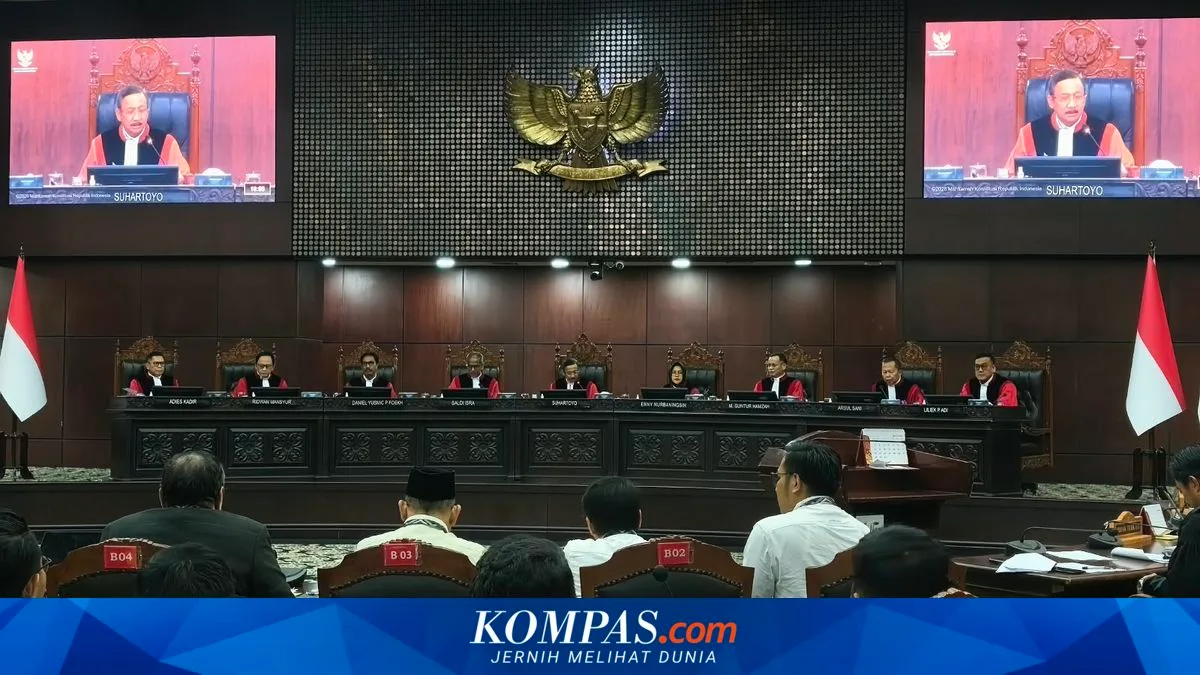
The Constitutional Court is hearing a case questioning the legality of Gibran Rakabuming Raka's candidacy as Vice President in the 2024 Election. In Case Number 01/PHPU.PRES-XXIV/2026, the petitioners allege a violation of the educational requirement when Gibran was still a candidate. They ask the Court to disqualify Gibran, declare his candidacy determination legally defective from the outset, annul several KPU decisions, annul his inauguration, and request that the MPR choose a vice president from two names proposed by the president, referring to Article 8 paragraph (2) of the 1945 Constitution.
This petition does not merely question a candidate's diploma. It drags in a major question of constitutional law: can someone who has officially served as vice president be disqualified through a dispute rooted in the candidacy stage? Gibran is no longer a candidate. Since his inauguration on 20 October 2024, his status has changed to that of a state official whose existence, authority, and removal are directly regulated by the constitution.
The petitioners build a backward argument: from the issue of candidate requirements, they draw legal consequences backward to annul the determination, then forward to nullify the inauguration. This logic has a flow, but the constitution does not work like a simple syllogism. Between the candidacy period and the vice presidency, there is a major event called an election involving the people's votes, the certification of results, dispute resolution, and inauguration. Each stage creates its own legal consequences that do not automatically collapse merely because of an alleged defect at the beginning.
The 1945 Constitution has provided a special channel for removing a president or vice president during their term. Article 7A mentions grounds such as treason against the state, corruption, bribery, serious criminal offenses, disgraceful conduct, or inability to meet the requirements as president/vice president. The process is regulated in Article 7B, which begins with the DPR's opinion and continues to the Constitutional Court. This channel is designed to maintain government stability and prevent the overthrow of an office through mechanisms outside the constitution.
If the Constitutional Court grants the petition, the impact will not be limited to Gibran but will affect the entire structure of government legitimacy. Such a decision could set a precedent that election results can be annulled years later due to technical candidacy issues. Conversely, if the Court rejects it, it affirms that legal certainty and a completed democratic process cannot be challenged by arguments that emerge later.
"The question that must be answered is not only whether a problem ever occurred at the candidacy stage, but to what extent that problem can produce consequences after someone holds the status of vice president," reads the core argument in the column analyzing this case.
For the Indonesian public, especially investors and market participants, this case is a test of political stability and legal certainty. Prolonged uncertainty can affect the investment climate, the exchange rate, and trust in state institutions. The business world usually responds positively to certainty, and conversely, political turmoil that is not resolved quickly can weigh on market sentiment.
The Constitutional Court now stands at a crossroads: upholding constitutional supremacy without ignoring the reality that the vice presidency is an institution protected by a special mechanism. The final ruling will not only determine Gibran's fate but also the boundary between legal correction and state stability. Will the Court expand the meaning of disqualification, or instead affirm that the constitution has its own door for testing state officials? The answer to that question will be an important reference for the future of Indonesian democracy.