Trump Welcomes Xi at Military Base, US-China Trade Truce Extended to January
Baca dalam 60 detik
- Presiden AS Donald Trump secara tak lazim menyambut langsung Presiden China Xi Jinping di landasan Joint Base Andrews, disaksikan upacara kenegaraan dengan karpet merah dan flyover pesawat pengebom B-1.
- Menteri Keuangan AS Scott Bessent mengumumkan perpanjangan gencatan dagang 'Busan agreement' hingga 10 Januari, meredakan ketegangan ekonomi terbesar dunia untuk sementara.
- Pertemuan dua hari ini akan membahas persaingan kecerdasan buatan, perdagangan, Taiwan, dan iklim, dengan para CEO teknologi raksasa diundang ke jamuan kenegaraan.
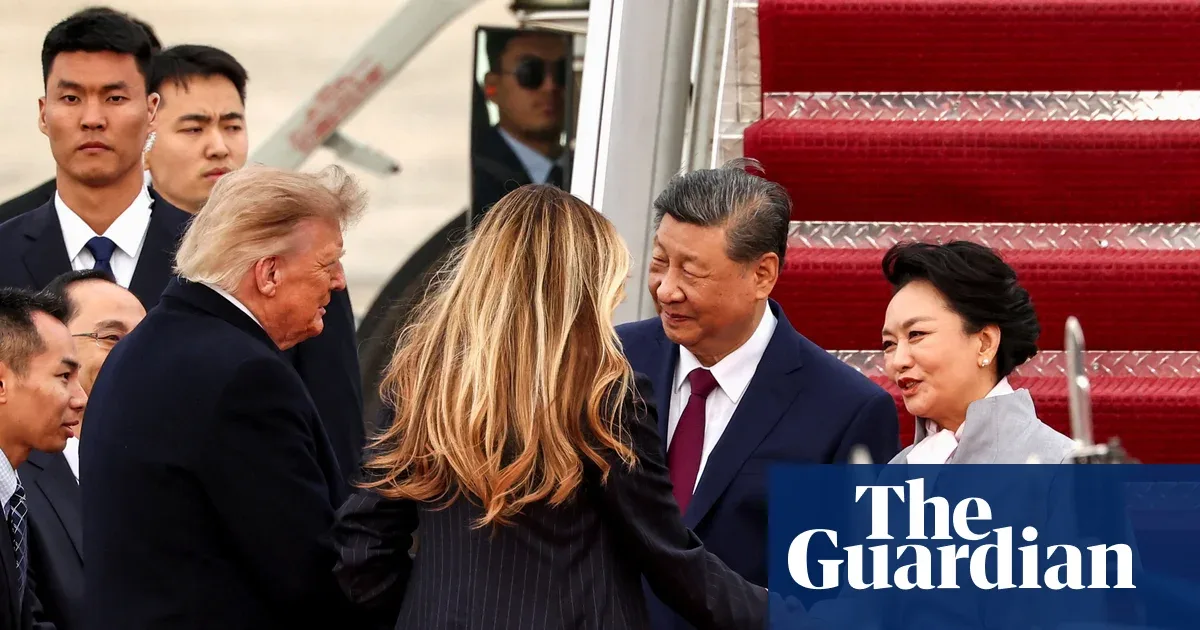
US President Donald Trump received Chinese President Xi Jinping with full state protocol at Joint Base Andrews, Maryland, on Wednesday evening local time. The move was unusual because US presidents typically welcome state guests at the White House, not at a military base. Trump and First Lady Melania Trump were on the tarmac to shake hands with Xi and his wife, Peng Liyuan, as soon as the Chinese presidential plane landed.
The welcome ceremony featured a 100-foot red carpet flanked by US military personnel, a flyover of two B-1 bombers, and the raising of both countries' flags and national anthems. The moment was a strong signal that Washington is seeking to ease tensions with Beijing, even as several sensitive issues still loom. The two-day state visit also served as a stage for Trump to display his personal rapport with Xi, after he received similar treatment during a visit to China earlier this year.
On the sidelines of the welcome, US Treasury Secretary Scott Bessent announced that the two countries had agreed to extend what is being called the "Busan agreement"—a temporary trade truce between the world's two largest economies. Bessent, who had earlier met Chinese Vice Premier He Lifeng, told Fox News that the extension runs until January 10, two months past the original deadline. The agreement gives breathing room to global markets that have been anxious about an escalating trade war.
The meeting agenda covers a number of thorny matters. Beyond the still-smoldering trade war, the two leaders will discuss the race to develop artificial intelligence, geopolitical stability, and the future of Taiwan and climate cooperation. The White House invited a number of prominent technology executives—from OpenAI, Apple, xAI, Microsoft, Nvidia, to Meta—to a state dinner on Thursday. Their presence underscores that the technology dimension, particularly AI, is one of the main axes of US-China diplomacy today.
Trump has long dismissed concerns that overly rapid AI development could endanger humanity. He has instead pushed for massive investment in the sector so that the US can stay ahead of China. In a post on Truth Social last week, Trump wrote that there is a "sick conspiracy" against AI and data centers, and that only China benefits. "Whoever wins AI, wins! We are leading China and everyone, and will continue to do so," he wrote. The statement underscores that for Washington, AI dominance is equivalent to military and economic superiority.
"He is coming to our land, and we need to welcome them with the highest respect," Melania Trump told Fox & Friends on Wednesday morning, responding to Xi's visit.
Yet amid the pomp of protocol, a small moment drew attention. As the US national anthem played, Trump appeared to grimace while enduring the sound of military aircraft flying overhead. Footage broadcast live by the White House showed Trump flinching, while Xi remained calm, as did both wives. The clip went viral on social media, but was not included in the official highlights released by Trump's team.
For Indonesia, the dynamics of this meeting are not merely a geopolitical spectacle. The extension of the US-China trade truce could affect the price stability of Indonesia's flagship commodities, such as coal, palm oil, and nickel, which depend heavily on demand from both countries. In addition, the AI rivalry between the US and China could push the relocation of technology investment to Southeast Asia, including Indonesia, which is building a digital ecosystem and data centers. ASEAN's position as a balancer will also be tested, especially if Taiwan tensions heat up and disrupt regional trade routes.
The state visit will close with a series of official events at the White House, including a private tea and a tour of the National Archives. But what the market is waiting for most is a concrete signal on the continuation of the trade truce and technology cooperation. Is the extension until January enough to ease global uncertainty, or does it merely postpone a sharper new round of US-China rivalry?