Iran's President Challenges Trump at the UN: Ready for Dialogue, But No Language of Force
Baca dalam 60 detik
- Presiden Iran Masoud Pezeshkian dalam pidato pertamanya di Sidang Umum PBB menyebut AS sebagai 'pengganggu' dan 'teroris' di Timur Tengah, namun menyatakan kesediaan bernegosiasi asalkan tidak ada tekanan.
- Pertemuan rahasia tiga jam antara Menlu Iran dan Utusan Khusus AS di sela-sela sidang dinilai konstruktif, namun delegasi AS walkout saat Pezeshkian berpidato.
- Iran mengancam akan menutup Selat Hormuz dan menuntut hak inspeksi kapal, sementara AS berupaya menurunkan harga minyak jelang pemilu November.
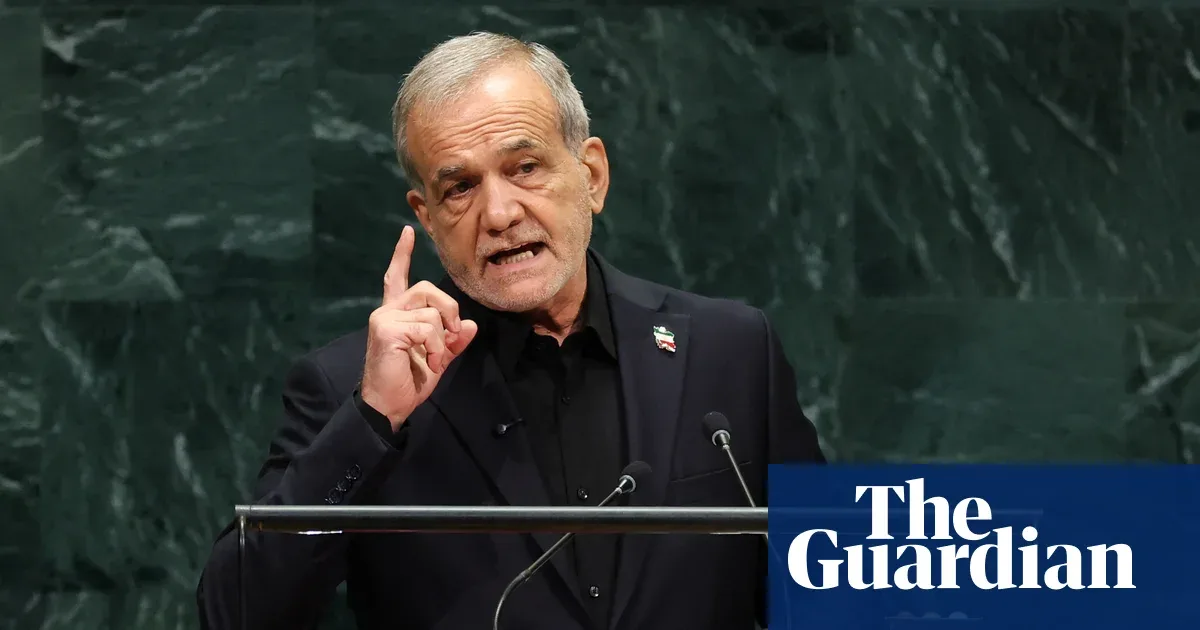
Iranian President Masoud Pezeshkian challenged US President Donald Trump in his maiden speech at the UN General Assembly in New York, calling the United States the party actually committing terrorism in the Middle East. At the same time, however, he stressed that Tehran is ready for dialogue provided there is no language of force.
The speech was a significant moment because it was Pezeshkian's first appearance at a UN forum since the US and Israel launched an all-out war against Iran. In his address, he repeatedly stressed that Iran will never bow to US pressure, but also opened the door to diplomacy. "President Trump and those who want to disturb us must understand that we are ready for dialogue, diplomacy, and negotiation, but without the language of force," he said.
A day earlier, Trump said in his UN speech that he was considering "destroying" Iran, but also praised the resumption of talks between Tehran and Washington. An unexpected three-hour meeting between Iranian Foreign Minister Abbas Araghchi and US Special Envoy Steve Witkoff on the sidelines of the assembly was described as constructive by both sides. It was the first such meeting since June, but it did not stop the US delegation from walking out at the start of Pezeshkian's speech.
Pezeshkian accused Washington of "terrorism" for killing Supreme Leader Ayatollah Ali Khamenei at the start of the war. He displayed photos of the slain leader and of more than 150 schoolchildren killed in the early days of the conflict, stressing that Tehran never started the war. "We only defended ourselves. We are not terrorists," he said. "Our innocent people have been the target of cowardly attacks and aggression imposed on our country."
He also stressed that Iran has the right to develop a peaceful civilian nuclear program and does not want to build nuclear weapons. Pezeshkian repeatedly stated that regional security solutions must come from agreements within the region, not from outside parties such as the US. Iran does not see its neighbors as security rivals, but as partners. "In today's world, those who cannot defend themselves will be trampled," he added.
However, a hard line also came from within. Secretary of Iran's Supreme National Security Council Mohsen Rezaei refused to call the talks with America negotiations. "Mr. Araghchi has announced Iran's conditions, and until those conditions are met, the Strait of Hormuz will not be opened and there will be no negotiations," he said. He also warned neighboring countries that have imposed travel bans on Iran at US urging. "If you stand with the United States, we will not stay silent," he threatened. "Their airports will have no flights either."
In Tehran, Iranian Foreign Ministry spokesman Esmail Baghaei confirmed that talks had taken place between the two sides, but did not confirm any change in Iran's negotiating position. He said interaction with the American side took place through Qatari mediation, with the aim of conveying Iran's conditions, including ending the war in all its dimensions, halting US aggressive actions, the naval blockade, economic war, and the release of Iranian assets.
Iran has set seven preconditions before returning to the negotiating table, and in the last 48 hours, Iran stated that the Strait of Hormuz could be reopened within seven days if those conditions are met. It is highly likely that the US and Gulf states will have to accept a shipping navigation route in the Strait of Hormuz that requires commercial vessels to enter through a sea lane largely in Iranian waters and under Iranian control, not Oman's.
The three-hour duration of the meeting indicates progress. The US is under pressure to lower oil prices and increase fuel availability ahead of the November election. The latest data shows that fewer than five identifiable tankers cross the strait per day. The blockade in the Strait of Hormuz is compounded by uncertainty over Houthi control of the second energy choke point, the Bab al-Mandab Strait connecting the Red Sea to the Indian Ocean.
There is no sign that Trump wants to restart a full-scale war with Iran or the Houthis, as Republicans struggle to divert the domestic political agenda from a highly unpopular conflict seen as being lost. Iran is under increasingly intense sanctions pressure, and the US naval blockade has made oil exports nearly impossible, costing the country badly needed foreign exchange. Iranian civilian aircraft on Wednesday faced the prospect of a global grounding due to the threat of US secondary sanctions on any entity dealing with Iran's civilian fleet. Iranian officials negotiated hard with neighboring countries to maintain an air bridge, but Oman and Iraq appear to have been forced to close their airspace to Iranian civilian aircraft.
For Indonesia, tensions in the Strait of Hormuz and Bab al-Mandab have a direct impact on energy prices and logistics costs. As an oil importer, Indonesia is vulnerable to crude oil price spikes that could widen the budget deficit and trigger inflation. The government needs to anticipate energy market turmoil by strengthening strategic reserves and diversifying import sources. In addition, instability in the Middle East can affect investment flows and global financial stability, which in turn impacts Indonesia's capital market.
Looking ahead, can Iran and the US reach an agreement that ends the blockade and reopens the Strait of Hormuz? Or will tensions escalate ahead of the US election? The world awaits the next move from both sides.