Jakarta Deputy Governor Responds to Two-Day CFD Proposal: Interesting, but Saturday Remains a Hurdle
Baca dalam 60 detik
- Wagub DKI Rano Karno menilai usulan CFD dua hari pada akhir pekan layak dipertimbangkan, namun operasional kantor pada Sabtu menjadi penghambat utama.
- Fraksi PKS DPRD DKI mengusulkan uji coba 2–3 bulan sebelum keputusan permanen, sementara Menteri Lingkungan Hidup dan Gubernur Pramono Anung sudah membahas wacana ini secara internal.
- Jika terealisasi, kebijakan ini berpotensi menurunkan emisi Jakarta sekaligus mengubah pola mobilitas akhir pekan, tetapi memerlukan kajian dampak ekonomi dan transportasi.
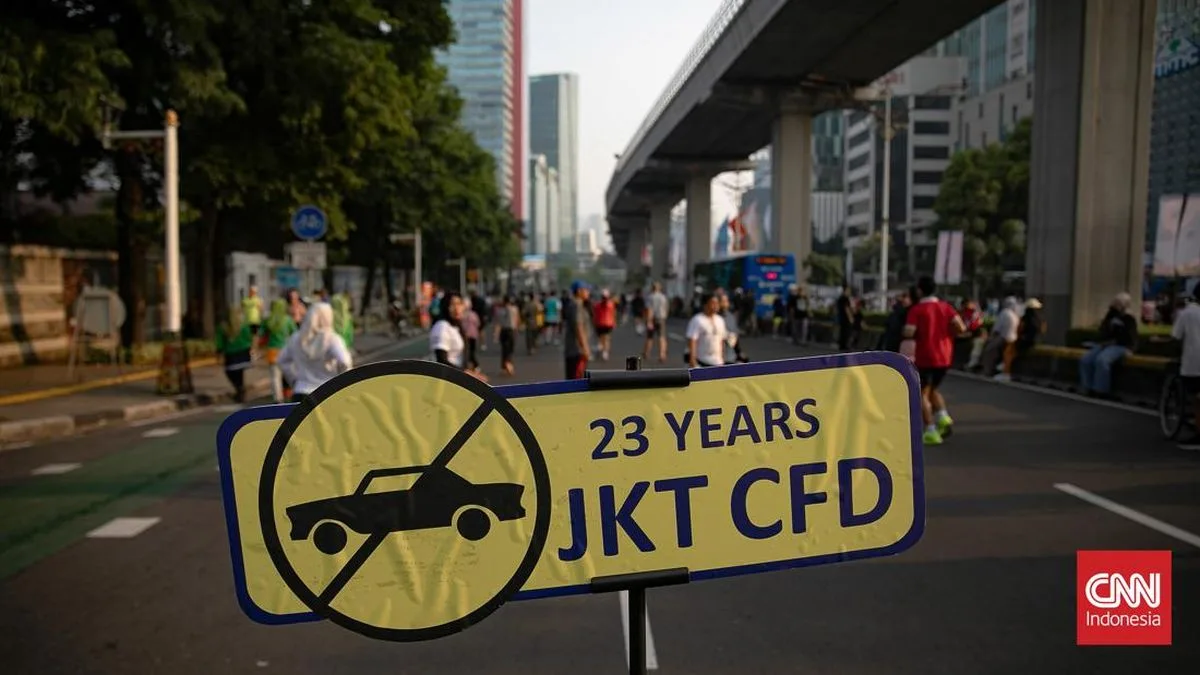
Deputy Governor of Jakarta Rano Karno said the proposal to hold Car Free Day (CFD) for two days over the weekend, Saturday and Sunday, is an interesting idea. However, he stressed that it requires careful consideration because many office activities still take place on Saturday. Rano made the statement after attending an event at City Hall, Central Jakarta, on Wednesday (23/9).
According to Rano, the experience of the one-hour lights-off policy that managed to cut emissions is an example that a similar measure could be effective. "It is an interesting idea, like when we turned off the lights for one hour. That is one way to reduce emissions. But it has to be considered because there are many factors," he said. He then compared Sunday, which he considered easier because of minimal office activity, with Saturday, which still leaves some work operations.
Nevertheless, Rano does not see implementing CFD on Saturday as difficult. He pointed to the relatively short duration of CFD, around 06.00 to 09.00, so it would not significantly disrupt activities. "It is actually not difficult. It is only brief, just like the morning CFD that ends at nine. But it is quite effective," he said. The PDIP politician also said he had once proposed the concept of Car Free Night to reduce carbon emissions and greenhouse gases in Jakarta.
The two-day CFD proposal first surfaced from the Chairman of the PKS faction of the Jakarta DPRD, M. Taufik Zoelkifli, on Sunday (20/9). He suggested a trial of two to three months before a permanent policy is set. "My suggestion is that we first trial it for 3 months or 2 months, CFD for two days, Saturday-Sunday," Taufik said. The idea then drew a response from Environment Minister Jumhur Hidayat, who pushed for accelerating improvements in the capital's air quality.
Jakarta Governor Pramono Anung said the proposal was quite rational and had been discussed within City Hall. "The proposal is quite rational, so internally at City Hall we have already held discussions. In due course we will certainly decide," Pramono said on Friday (11/9). The statement indicates that the idea is entering a serious review stage, although there is no definite deadline for when a decision will be made.
"Sunday is definitely easy. On Saturday, sorry, there may still be operations, going to the office. But it is actually not hard, this is only brief and not long." — Rano Karno, Deputy Governor of Jakarta
From a public policy perspective, expanding CFD to two days could have a double impact. On one hand, adding a car-free day can improve Jakarta's air quality, which often falls into the unhealthy category. On the other hand, the policy risks disrupting the mobility of workers and businesses in affected areas, especially on Saturday, which is still a working day for some sectors. Assessments of the economic, transportation, and environmental impacts need to be prepared before the trial begins.
Several urban planning observers consider that the success of a two-day CFD depends heavily on the readiness of alternative routes and public transportation modes. Without that, the policy will only shift congestion to other roads. In addition, the participation of residents and businesses around the CFD area is key so that the policy does not face rejection. The Jakarta provincial government is said to need to involve various parties in the trial process, including monthly periodic evaluations.
If realized, Jakarta would become one of the cities in Southeast Asia to implement car-free days for two consecutive days. The move is in line with the global trend of major cities expanding emission-free public spaces to encourage healthy lifestyles and reduce dependence on private vehicles. However, the biggest challenge remains enforcement of the rules and consistency of implementation on the ground.
Going forward, the public is waiting to see whether the Jakarta provincial government will soon announce a trial schedule or will still weigh various inputs. This decision will be a test for the local government in balancing environmental ambition with the economic reality of residents. Will a two-day CFD become a new breakthrough, or instead stir controversy amid the bustle of the capital?