Suppressed UK Climate Intelligence Report Now Presented to World's Foreign Ministers, Indonesia Urged to Stay Alert
Baca dalam 60 detik
- Menlu Inggris Ed Miliband membeberkan temuan laporan intelijen rahasia soal ancaman iklim dan El Niño kepada para menteri luar negeri di sela Sidang Umum PBB.
- Laporan yang sempat ditahan Downing Street itu menyimpulkan keruntuhan ekosistem global dapat memicu konflik, migrasi massal, dan krisis pangan.
- Indonesia berada di garis depan karena El Niño kerap memicu kekeringan, gagal panen, dan kenaikan harga pangan domestik.
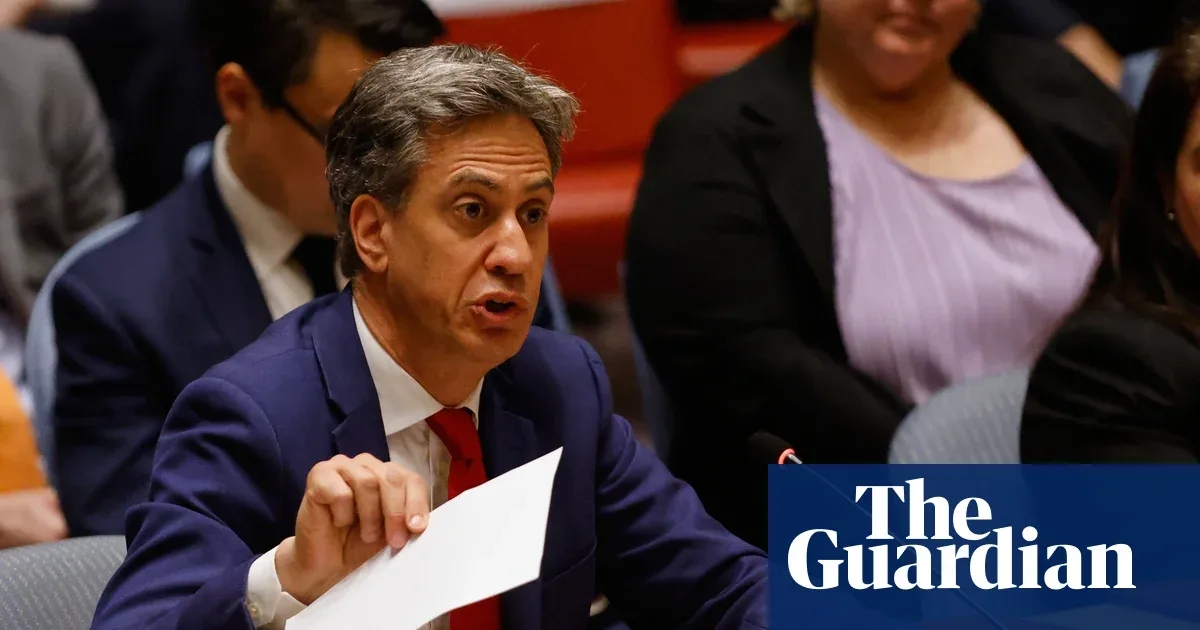
The UK government unexpectedly disclosed part of the findings of an intelligence report that had previously been withheld from the public, and presented them directly to foreign ministers of several countries on the sidelines of the UN General Assembly in New York. Foreign Secretary Ed Miliband laid out the results of a Joint Intelligence Committee (JIC) assessment concluding that the climate crisis and the collapse of natural systems are not merely environmental matters, but a real threat to national defense and security.
The presentation was made in a closed meeting with foreign ministers from European Union countries, Kenya, and several other nations. It was the first forum at the foreign-minister level to specifically discuss the link between climate change and security. Miliband stressed that the strengthening El Niño, worsened by global warming, will test global food security at an unprecedented level.
The JIC report itself was supposed to be released last October, but was held back by the office of Prime Minister Keir Starmer just before its publication date. An edited version was only released in January through a freedom of information request, while pressure to disclose the full document continued to be rejected by the government. Miliband's decision to present its contents to the international public instead raises questions about why the UK parliament is still barred from accessing the full version.
In his presentation, Miliband called this year's extreme heatwaves, failed harvests, and food inflation an early warning. According to him, climate shocks are now piling up and crossing national borders, threatening food and water supplies, driving displacement, pressuring markets, and leaving scars on economies. He stressed that climate change can no longer be left solely to environment ministers.
"We face an El Niño predicted to be the strongest in living memory. It will worsen climate shocks that ripple across borders, threaten food and water security, displace communities, pressure markets, and wound economies," Miliband said.
A similar view came from Richard Nugee, a retired general who is now a security expert. He argued that the government must treat the climate crisis as equivalent to sabotage by a hostile state. According to him, a bridge washed away by floods has the same impact as a bridge blown up by foreign agents. He also warned that the climate crisis could disrupt food, energy, and water security, and potentially leave farmers vulnerable to recruitment by terrorist groups.
Nugee was not surprised that the JIC report was held back and edited, since security reports are indeed very rarely published. However, he stressed that countries should already treat the climate threat as a national security matter, not merely an environmental issue.
Miliband's move did not stop at the presentation. He will appoint a new special envoy for climate security and form a ministerial task force involving military, security, and climate scientists. The task force will focus on national security and resilience risks from climate change and biodiversity loss. In addition, he announced £330 million in funding for the Global Environment Facility, the main international fund for nature protection, to be channeled to developing countries.
For Indonesia, the implications of this report cannot be ignored. As an archipelagic country heavily dependent on agriculture and fisheries, Indonesia has repeatedly fallen victim to El Niño. Prolonged droughts trigger crop failures, raise the price of rice and foodstuffs, and widen inequality in the regions. If the world begins to treat the climate crisis as a security threat, Indonesia stands to gain funding support and technology transfer, but will also be required to strengthen adaptation and mitigation policies at the national and regional levels.
The question is, will the Indonesian government take a lesson from the UK's move and start placing the climate issue within a national security framework, not just as an environmental agenda? Or will we keep waiting until the next disaster forces change?