Trump-Xi Meeting: Chinese Car Access to the US Becomes a High-Stakes Bet for the Auto Industry
Baca dalam 60 detik
- Pertemuan Trump-Xi memicu kekhawatiran bahwa produsen mobil China akan mendapat akses ke pasar AS, yang selama ini tertutup bagi mereka.
- Industri otomotif AS dan politisi bipartisan menyerukan pembatasan tetap diberlakukan, sementara ekspansi mobil China di Eropa dan Amerika Latin terus meningkat.
- Jika kesepakatan membuka pintu, produsen mobil China berpotensi membanjiri pasar global dan menekan harga, dengan implikasi bagi Indonesia sebagai pasar potensial dan mitra dagang China.
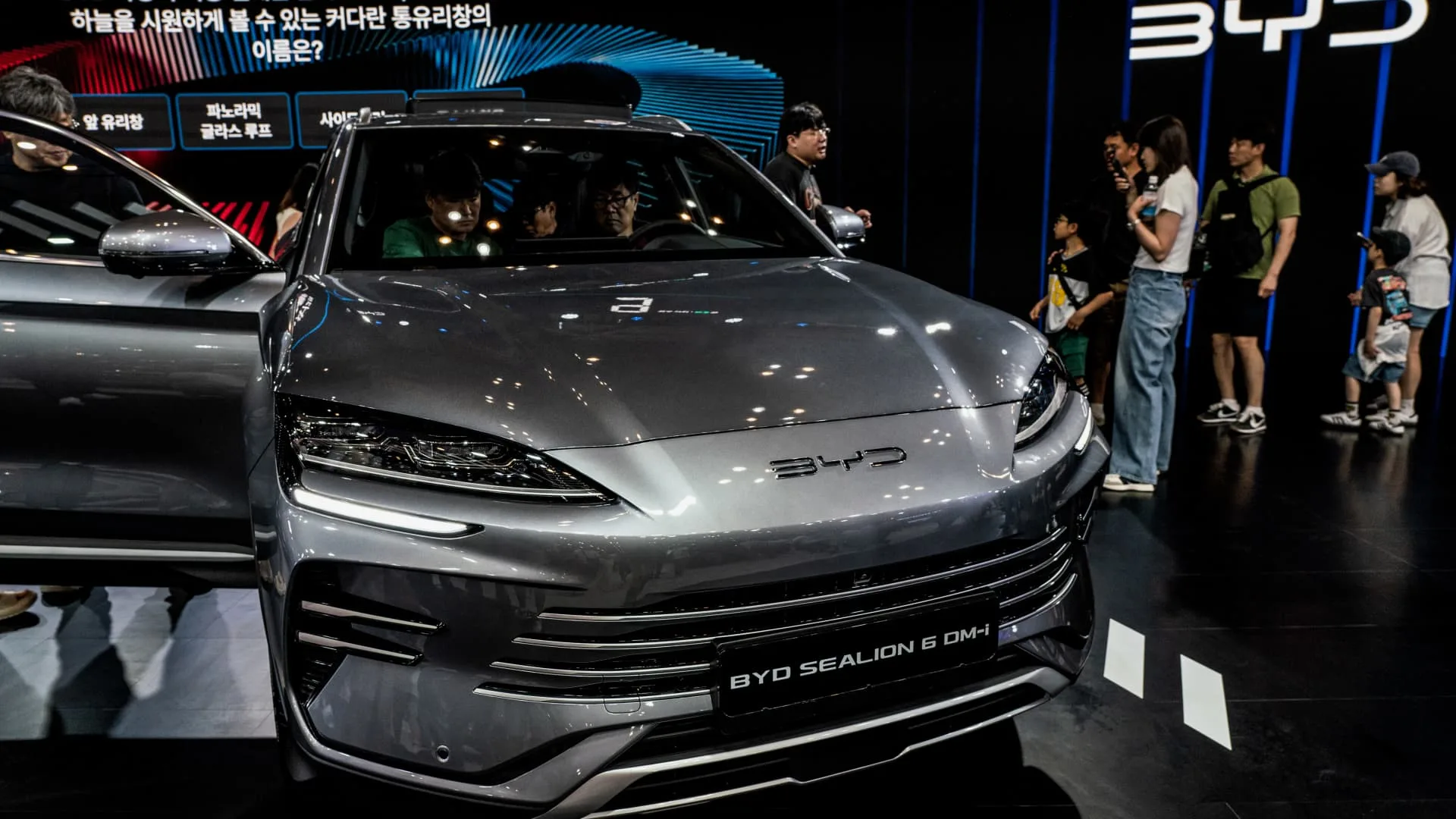
US President Donald Trump and Chinese President Xi Jinping meet this week, and one of the most sensitive issues lurking is the possibility of opening the US automotive market to Chinese carmakers. That move, according to industry players and policymakers, could become a Pandora's box that reshapes the global competitive landscape.
A few weeks ago, Trump said it might be fine for Chinese carmakers to enter the US as long as they build vehicles domestically. The statement triggered a sharp backlash from a consortium of automotive trade associations representing nearly the entire industry spectrum—from manufacturers and franchised dealers to component suppliers. More than two dozen Democratic lawmakers also sent a letter urging Trump to maintain existing restrictions.
“This is no longer a partisan issue,” Senator Elissa Slotkin of Michigan told reporters on Wednesday (23/9). “It's about whether we want to build cars in America and have a manufacturing base that can adapt when needed. If we do, we shouldn't let them in.”
The pressure comes as Chinese products grow more aggressive in capturing overseas markets, especially Europe, Central America, and South America. The global market share of Chinese brands jumped nearly 70% from 2020 to 2025, according to research firm GlobalData. In the European Union, their share, which was near zero in 2020, now stands at 12% as of August, based on data from Germany-based Dataforce.
Michael Dunne, an expert on China's auto industry and a former General Motors executive, warned that Europe is already flooded with Chinese vehicles and a similar scenario could unfold in the US. “Dozens of Chinese carmakers are currently locked in a fight-to-the-death price war at home,” he wrote in a post on Monday. “Blood everywhere. Access to the US, the world's most profitable car market, is like a giant oxygen tank.”
Dunne argues the concerns are not exaggerated. According to him, Chinese manufacturers will “quickly cripple the American auto industry, as they are now doing in Europe.” He also highlighted a fundamental difference between China and US allies such as Japan or South Korea. “As Xi Jinping has often alluded to, China's goal is to make other countries increasingly dependent on China and China increasingly less dependent on others. That is not a friendly stance,” he said.
The tension is also visible in US domestic dynamics. GM CEO Mary Barra is reported to be attending a state dinner for Xi, along with several other executives including Tesla CEO Elon Musk. However, Ford declined to disclose whether CEO Jim Farley would attend after the Department of Transportation criticized the company's ties with China, including a licensing deal with CATL. Meanwhile, Stellantis said CEO Antonio Filosa is overseas and has no plans to attend.
For Indonesia, this development is not merely a spectacle. China is a major trading partner and a large investor in the downstream sector, including electric vehicle batteries. If Chinese carmakers are increasingly squeezed in Western markets and pivot to Southeast Asia, Indonesia could become one of their expansion targets. On one hand, consumers may enjoy lower prices; on the other, the national automotive industry and local supply chain face competitive pressure that may not be evenly matched.
The Indonesian government needs to closely watch the direction of US policy because it could affect investment and trade flows in the region. If the US closes its door, China will become more aggressive in courting developing markets, including Indonesia. Conversely, if the US opens limited access, that precedent could weaken the position of countries that have so far restricted Chinese car imports on strategic industry grounds.
What is clear is that the Trump-Xi meeting is not just about trade diplomacy. It is a test of whether concerns over China's industrial dominance can shift the direction of US economic policy—and how the echoes of that policy will be felt all the way to Indonesia's automotive market.