Workers Prepare Wave of Protests, Demand Labor Protection Bill Be Better Than Job Creation Law
Baca dalam 60 detik
- KSBSI mengancam menggelar aksi massa jika RUU Pelindungan Ketenagakerjaan tidak segera disahkan dan kualitasnya di bawah UU Cipta Kerja.
- Salah satu poin krusial yang ditolak buruh adalah aturan yang membolehkan UMKM membayar upah di bawah ketentuan upah minimum tanpa definisi jelas.
- DPR menargetkan pengesahan pada Oktober 2026 untuk memenuhi tenggat Mahkamah Konstitusi, sementara buruh mengusulkan pemberlakuan kembali UU Ketenagakerjaan lama bila gagal.
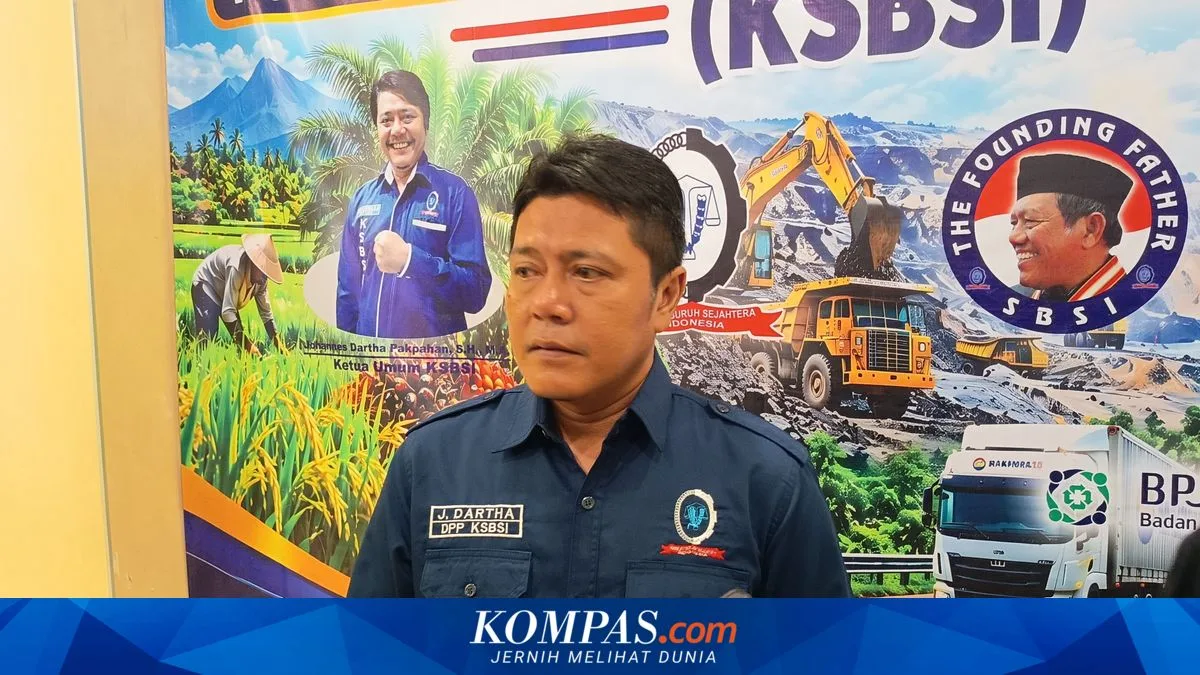
The Confederation of Indonesian Prosperous Labor Unions (KSBSI) has issued an ultimatum to the government and the House of Representatives (DPR): if the Labor Protection Bill is not passed soon or its contents are not better than the Job Creation Law, mass action will be held. The threat was delivered directly by KSBSI Chairman Johannes Dartha Pakpahan in East Jakarta on Wednesday (23/9/2026) and will be finalized at a National Working Meeting attended by representatives from 31 provinces.
Johannes stressed that the union has not yet decided on the pattern of the movement — whether it will move from the center to the regions or vice versa. But one thing is certain: the decision will be made at the working meeting forum. "We are preparing. It is just a matter of how the movement and its wave will take shape," he said, adding that if the resulting law is not better than the Job Creation Law, the option of protests remains open.
The heart of the problem that makes workers reject the draft bill lies in the MSME clause. Under the Job Creation Law, micro, small, and medium enterprises are allowed to pay wages below the minimum wage provisions. The problem is that the definition of MSMEs — especially how many workers fall into that category — is not explained in detail in the labor law. According to Johannes, this loophole has the potential to legalize low wages and harm workers in the small business sector.
The workers' demand is not without legal basis. Constitutional Court Decision No. 168/PUU-XXI/2023 ordered lawmakers to separate the labor cluster from Law No. 6 of 2023 on Job Creation. The court gave two years from the reading of the decision on 31 October 2024, meaning the final deadline falls on 31 October 2026. If the deadline passes, there is a risk of a legal vacuum or broader regulatory uncertainty.
Deputy Speaker of the DPR RI Cucun Ahmad Syamsurijal confirmed that deliberations on the bill already have a timeline and will be pursued in this session. "God willing, in this session because there is already a deadline from the Constitutional Court. In October it can be passed," Cucun said at the DPR RI Building on Tuesday (22/9/2026). However, that statement has not answered workers' concerns about the substance.
"If by the October deadline no law can be formed that can accommodate the best interests, if you ask me personally, reinstate Law 13 until we finish drafting the new one." — Johannes Dartha Pakpahan, KSBSI Chairman
On the other hand, the Great Coalition of Indonesian Labor Struggle also expressed disappointment with the draft prepared by the DPR. This means pressure is not coming from just one confederation but from a broader spectrum of labor unions. The situation puts the DPR and the government in a difficult position: chasing the Constitutional Court deadline while ensuring the substance does not trigger new resistance.
For market players and businesses, regulatory uncertainty in labor is a costly variable. Companies need certainty about wage structures, workers' rights, and industrial dispute rules before making investment or expansion decisions. If the resulting bill instead triggers a wave of large protests, the risk of operational disruption and negative sentiment toward the business climate could increase. Conversely, if the bill is passed with weak compromises, the potential for legal disputes and further protests still looms.
The government and the DPR have about one month to prove that this bill is not merely a formality to comply with the Constitutional Court's order. The question is, will they accommodate workers' demands on the MSME definition and wages, or will they continue with the existing draft and face a wave of protests after October?