Constitutional Court Judge Questions Gibran's Education Verification, KPU Admits It Did Not Check with Education Office
Baca dalam 60 detik
- Hakim Konstitusi Saldi Isra mempertanyakan mengapa KPU tidak melakukan verifikasi langsung ke dinas pendidikan terkait syarat pendidikan Gibran Rakabuming Raka pada Pilpres 2024.
- Ketua KPU Mochammad Afifuddin menjawab bahwa pihaknya tidak mendatangi dinas pendidikan karena telah menerima surat keterangan penyetaraan ijazah dari kementerian.
- Perbedaan standar verifikasi antara Pilpres dan Pilkada menjadi sorotan dalam sidang sengketa hasil pemilu di Mahkamah Konstitusi.
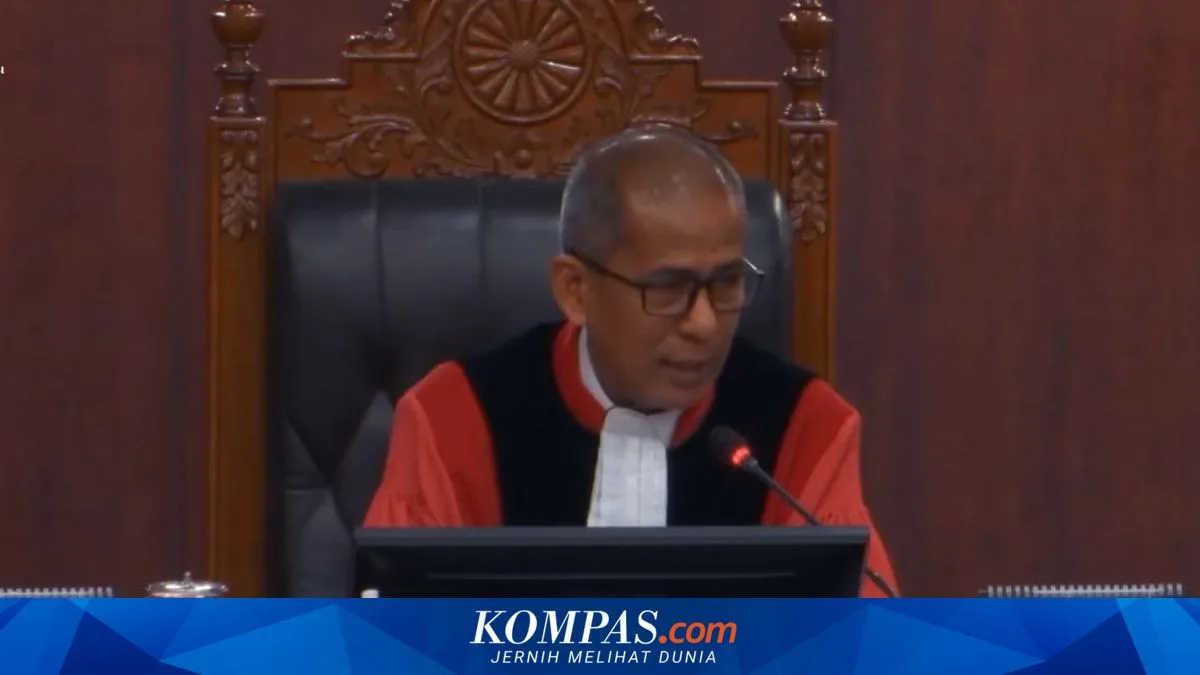
Jakarta — Constitutional Court (MK) judge Saldi Isra questioned the consistency of the General Elections Commission (KPU) in verifying the educational requirements of vice-presidential candidate Gibran Rakabuming Raka in the 2024 presidential election. At a follow-up hearing on the election results dispute at the MK building on Wednesday (23/9/2026) evening, Saldi highlighted why the KPU did not conduct a direct check with the education office regarding the validity of Gibran's Certificate of Equivalency for his diploma.
The question arose when Saldi compared the verification process carried out by the KPU in the presidential election with the 2024 regional elections. According to him, regional KPU offices actively visited education offices to confirm the authenticity of candidates' documents for regional heads. "Even regional KPU offices in regional head elections go everywhere to verify, but here the KPU did not come, did it?" Saldi said, as quoted from the hearing.
Responding to this, KPU Chairman Mochammad Afifuddin admitted that his office did not conduct field verification at the education office. He argued that the KPU had received a certificate of diploma equivalency signed by an official of the relevant ministry. "Because it was considered to have come from an institution with the authority, we considered it correct," Afifuddin said.
This debate emerged in the hearing of Case No. 01/PHPU.PRES-XXIV/2026 filed by the petitioner regarding Gibran's educational requirements. Saldi stressed that the KPU should not have relied solely on written documents but should also have traced back to the institution that issued the diploma. He even recalled Afifuddin's statement during the regional elections asking regional KPU offices to examine matters in detail, including the school of origin and the issuer of the paket C diploma.
"Pak Afif in the regional head elections was even very insistent, Pak, telling the KPU, 'please check where the school is? If there is a paket C, check where it was issued?' and all sorts of things. So this is why it was important to ask earlier," Saldi asserted.
Afifuddin then explained that the KPU adhered to the principle of institutional authority. According to him, the certificate issued by the ministry was considered valid and did not need further verification with the education office. However, that argument instead raised questions about double standards in the administration of elections.
Constitutional law observers assess that this issue is not merely administrative but concerns the integrity of the candidacy process. If the KPU is inconsistent in verifying candidates' requirements, public trust in the election organizing body could erode. Moreover, this case has surfaced amid scrutiny of the quality of Indonesian democracy after the 2024 presidential election.
For investors and market participants, legal uncertainty in election disputes can affect the investment climate. Maintained political stability is a primary prerequisite for the entry of long-term capital. Therefore, the MK's ruling in this case will be an important signal for the business world regarding regulatory certainty and enforcement of election rules.
The MK itself has not decided whether it will summon relevant parties to provide further testimony. The hearing will continue with the agenda of listening to testimony from witnesses and experts from both the petitioner and the respondent. The public is waiting to see whether the constitutional judges will dig deeper into the verification procedure that the KPU should have carried out.
If the MK finds procedural violations, it is not impossible that its ruling will affect the legitimacy of the 2024 presidential election results. However, if the petitioner's arguments are not proven, the KPU will stand by its argument. What is clear is that this polemic has opened space for public discussion about the importance of transparency and accountability at every stage of the election.