Ancient Wall Beneath Paris Shakes Up City-Origin Theory: Lutetia on Île de la Cité or Nanterre?
Baca dalam 60 detik
- Struktur Gallo-Romawi sepanjang 20 meter ditemukan di bawah Hôtel-Dieu, Île de la Cité, Paris, diduga bagian benteng Lutetia.
- Temuan ini memperkuat klaim bahwa pusat permukiman kuno Paris berada di pulau tersebut, bukan di Nanterre seperti teori saingan.
- Kementerian Kebudayaan Prancis menyebut bukti awal mengarah pada periode 200 SM–10 SM, termasuk jejak kebakaran yang mungkin terkait Perang Lutetia 52 SM.
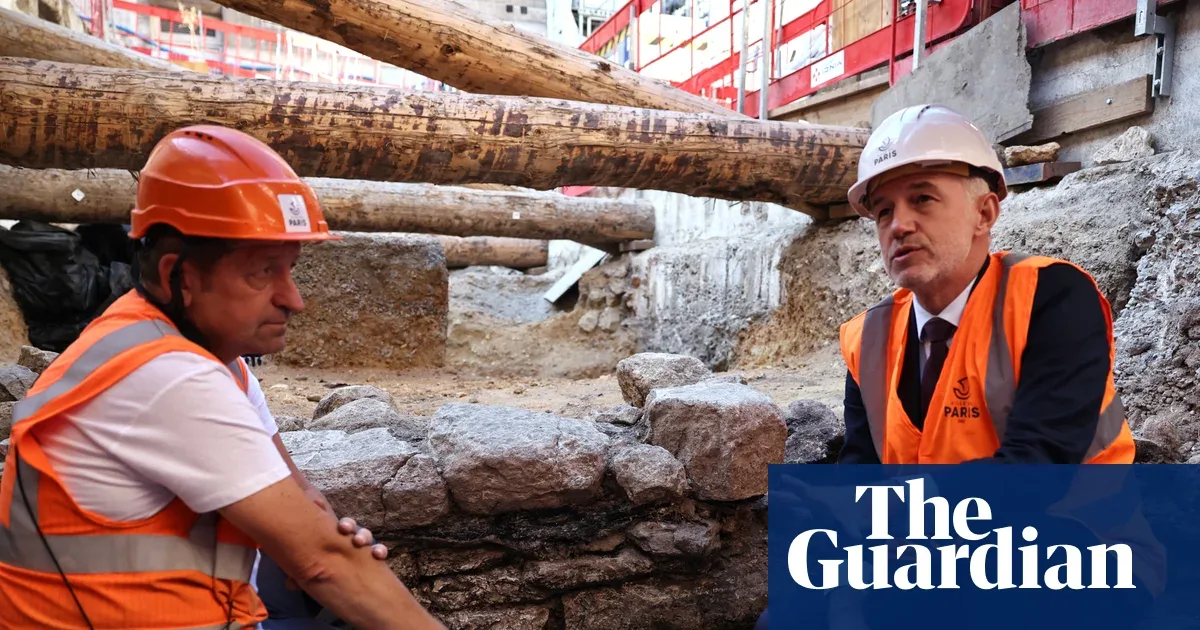
A wall more than two millennia old has been found beneath the heart of Paris, sparking an archaeological debate over the location of the first settlement that became the seed of the French capital. The Gallo-Roman structure stretches about 20 meters and lies beneath the Hôtel-Dieu hospital building, on Île de la Cité, not far from Notre-Dame Cathedral.
According to the French Ministry of Culture, the discovery is being hailed as a major breakthrough because it could confirm that the center of Lutetia—the ancient name of Paris—was indeed on that island in the Seine. Until now, Île de la Cité has been regarded as the core location of the ancient settlement, but a number of archaeological studies have put forward a rival theory placing Lutetia in Nanterre, on the western outskirts of Paris.
The wall, made of stone and wood, is thought to be part of a fortification built by the Parisii, a Gallic community that inhabited the banks of the Seine during the Iron Age. Notably, the structure shows traces of burning. This matches Julius Caesar's account in Gallic Wars that the Gauls burned their city before the Battle of Lutetia against the Romans in 52 BC.
Culture Minister Catherine Pégard said in a statement that the find was one of the most important remains for understanding Gallic Lutetia. She stressed, however, that scientific caution was still needed to determine the function and chronology of the structure. “The convergence of evidence at this stage is truly remarkable,” she said.
“We may be looking at one of the most important remains ever found for understanding Gallic Lutetia. Scientific caution still requires us to verify its function and chronology, but the convergence of evidence at this stage is truly remarkable.” — Catherine Pégard, French Culture Minister
Lutetia was first mentioned in the seventh book of Julius Caesar's Gallic Wars, which describes it as being on an island in the Seine. That vague description has for centuries given rise to speculation about its exact location. The discovery of this wall is one piece of physical evidence that may answer the riddle.
Île de la Cité itself is the largest island in the Seine in the Paris area and later became the center of the Roman settlement of Lutetia. If the wall is indeed part of a defensive fortification, the narrative that the ancient city center was on that island gains strong support. Conversely, the Nanterre theory backed by some archaeological research will face a new challenge.
Indonesian Context: Lessons for Cultural Heritage Preservation
For Indonesia, this discovery is not merely foreign archaeological news. The country has similar heritage buried beneath modern cities, such as the Banten Lama Site, Kota Tua Jakarta, or temple complexes in Java. France's approach—involving the culture ministry, carbon dating, and systematic excavation beneath public buildings—shows the importance of integrating infrastructure development with cultural heritage preservation.
Domestically, projects such as the Jakarta MRT or toll road construction often come into contact with historical sites. An adequate regulatory framework—including the requirement for archaeological feasibility studies before construction—is key to ensuring that finds are not simply lost. France offers an example of how scientific investigation can proceed alongside public projects, though it still requires strict verification.
In addition, this discovery underscores that a nation's historical narrative can change as new evidence emerges. For Indonesia, which has many unexplored sites, investment in archaeological research and modern dating technology could open a new chapter in understanding the archipelago's past. The public, too, is becoming more critical of historical claims long considered settled.
Going forward, the question is not only whether this wall is truly part of Gallic Lutetia, but how far the find will trigger further excavation around Île de la Cité and Nanterre. If the evidence strengthens, Paris's history textbooks may need revision—and that is a reminder that great cities always hold layers of story waiting to be uncovered.