Irish Prime Minister Defends National Team Coach Amid Dispute With Israel Over Gaza
Baca dalam 60 detik
- Perdana Menteri Irlandia Micheál Martin menolak kecaman Federasi Sepak Bola Israel terhadap pelatih Heimir Hallgrímsson terkait pernyataannya soal Gaza.
- Kontroversi ini memicu seruan boikot dari lebih dari 160 atlet Irlandia dan memaksa dua laga Nations League dipindahkan ke venue netral.
- Kasus ini menyoroti dilema federasi olahraga dalam menyeimbangkan tekanan politik dan sanksi kompetisi internasional.
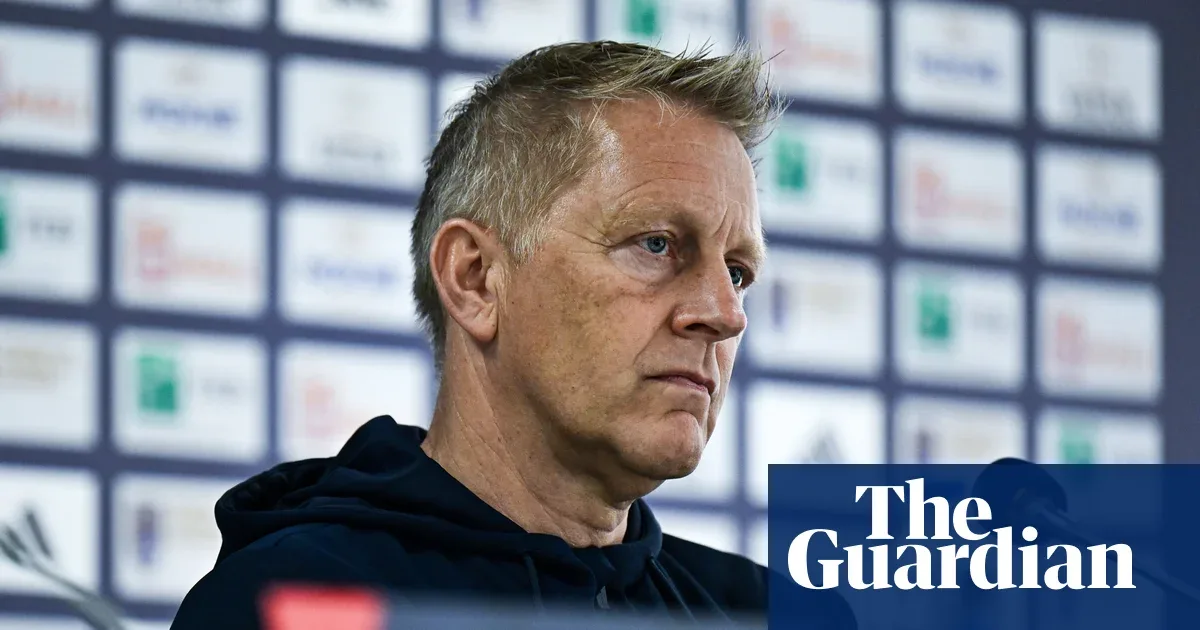
Irish Prime Minister Micheál Martin publicly defended his country's national football team coach, Heimir Hallgrímsson, after the Israel Football Association accused him of “stupidity, ignorance, and hypocrisy” over comments about the war in Gaza. The support was voiced by Martin while he was in New York to attend the UN General Assembly, marking a rare diplomatic escalation in the world of sport.
“That statement is unacceptable and must be withdrawn,” Martin told reporters, as quoted by international media. He stressed that Israel cannot keep denying what the world already knows and understands. Hallgrímsson's remarks that sparked the anger came before two Nations League matches against Israel, when he said, “We don't play with genocide, we play against genocide. We play against Israel, not with Israel.”
Martin said the Icelandic coach's comments reflected deep concern over the scale of death and destruction in Gaza, referring to statements by UN Secretary-General António Guterres. The support underscores Ireland's long-standing position as a strong backer of the Palestinian cause, in line with the country's long history under British rule. Dublin officially recognized the state of Palestine in 2024 alongside Spain and Norway, and has repeatedly criticized Israel's military operations in Gaza.
Hallgrímsson, who is preparing for the match against Kosovo, thanked Martin for his support. He acknowledged that his remarks at an earlier press conference had diverted attention from the important match against Kosovo. “Maybe from a leadership point of view, it wasn't wise for me to draw this kind of attention. But to answer the question, we are grateful for all the support we have received. This is a difficult time for us,” he said.
The dispute comes amid a wave of protests in Ireland. A number of demonstrators gathered outside the team's hotel in Dublin on Monday, and further demonstrations are planned ahead of the match. The Football Association of Ireland (FAI) last November passed a motion calling on UEFA to suspend Israel from international competitions. However, the FAI said it had little choice but to fulfill the schedule, or face sporting and financial sanctions.
The two matches scheduled for 27 September and 4 October had to be moved to neutral venues. Ireland's home match on 4 October was moved from Aviva Stadium, Dublin, to Backa Topola, Serbia, due to concerns about security disruptions. Meanwhile, the 27 September match, which is officially Israel's home fixture, will be held in Debrecen, Hungary.
“We don't play with genocide, we play against genocide. We play against Israel, not with Israel.” — Heimir Hallgrímsson, Ireland national team coach
Israel strongly rejects the accusation that its actions in Gaza constitute genocide. According to official Israeli data, the Hamas attack on 7 October 2023 killed 1,221 people and took 251 hostages, 44 of whom have died. Israel then launched a massive retaliatory operation that, according to the Gaza Ministry of Health, has killed 73,919 people and displaced nearly the entire population at least once. Figures from the body operating under Hamas are generally considered reliable by international institutions.
For Indonesia, this case mirrors how geopolitical issues can seep onto the football pitch. As the country with the largest Muslim population and a staunch supporter of Palestine, Indonesia often faces a similar dilemma when it has to compete in international events involving Israel. PSSI and the government have repeatedly refused to face Israel, even at the cost of losing the chance to host the 2023 U-20 World Cup. Public pressure at home is usually far greater than the calculation of sporting sanctions, so every federation is required to carefully read domestic sentiment and diplomatic risk.
Going forward, the question is not only whether these matches will proceed without disruption, but how far sports federations can maintain neutrality when geopolitical conflict demands a stance. If UEFA and FIFA remain unmoved, the wave of protests in Ireland could become a precedent for other countries to take a similar path—or instead trigger a new split in European football.