AirAsia on the Brink: Malaysia Prepares Emergency Scenario, Who Will Take In Its Passengers?
Baca dalam 60 detik
- Pemerintah Malaysia mulai menjajaki opsi pengalihan rute dan penumpang AirAsia ke Malaysia Airlines dan Batik Air jika tekanan finansial maskapai itu memburuk.
- Lonjakan harga avtur hingga 66% pada kuartal II 2026 dan beban utang jangka pendek 18,4 miliar ringgit mempercepat pembahasan skenario penyelamatan.
- Bagi Indonesia, gejolak AirAsia berpotensi mengubah peta konektivitas ASEAN dan menjadi peringatan bagi maskapai nasional yang bergantung pada bahan bakar impor.
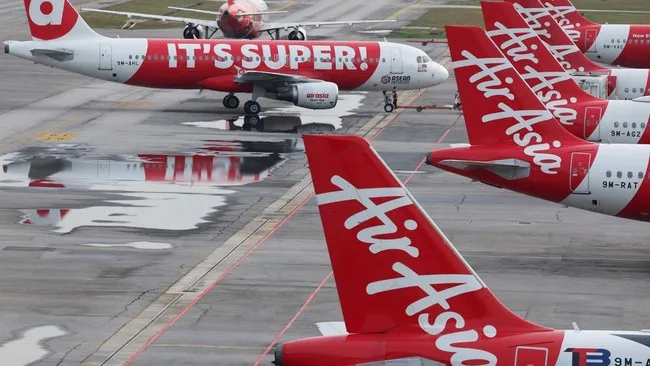
The Malaysian government is preparing emergency measures to anticipate the worst-case scenario from the financial crisis engulfing AirAsia. Two sources familiar with the discussions said Malaysia Airlines and Batik Air have been asked about their capacity to absorb AirAsia's routes and passengers, with communication between the government and the two carriers intensifying in recent weeks.
The talks involve Malaysia's Ministry of Finance and the state airport operator, Malaysia Airports Holdings Berhad (MAHB). Besides encouraging expansion by rival carriers, the government is also weighing support so AirAsia can attract fresh capital from external investors. This is not just an ordinary business maneuver: AirAsia controls about 40% of Malaysia's aviation market and 60% of the domestic share, so any disruption to its operations could cripple the neighboring country's air connectivity.
The pressure on AirAsia did not appear suddenly. Jet fuel prices soared due to geopolitical tensions in the Middle East, particularly the US-Israel conflict over Iran. A 66% increase in a single quarter is a severe blow to the low-cost carrier business model, which operates on thin margins. However, some analysts argue the jet fuel spike only accelerated long-looming structural problems: mounting debt and an urgent need for restructuring.
Two Reuters sources estimate AirAsia needs at least US$3 billion in new capital, far above the funding target the company is currently pursuing. AirAsia management, through Group Deputy CEO Farouk Kamal, stressed it would not respond to speculation about financial or operational conditions that have not been officially announced. "AirAsia remains focused on maintaining business continuity and operational stability across all our markets, and continues to see strong underlying demand across our network," he said, as quoted from an official statement.
Malaysia Airlines and Batik Air are said to be willing to take over AirAsia's operations on a large scale, provided aircraft lease agreements are also transferred. Another alternative under discussion is organic expansion to absorb routes and passengers, rather than acquiring the entire business. Whichever option is chosen, the Malaysian government clearly wants to ensure there is no service vacuum that could disrupt the mobility of its citizens.
Indonesian Context: A Warning for National Carriers
For Indonesia, this dynamic is not merely cross-border news. AirAsia Group has an extensive network in Indonesia through Indonesia AirAsia, which serves domestic and international routes. If restructuring in Malaysia leads to fleet or route reductions, connectivity from cities such as Jakarta, Denpasar, and Medan to Malaysia could be disrupted. Conversely, national carriers such as Garuda Indonesia, Lion Air, and Citilink could potentially take over the market share left behind, especially on the lucrative Jakarta-Kuala Lumpur and Bali-Kuala Lumpur routes.
However, that opportunity comes with caveats. High jet fuel prices are also hitting Indonesian carriers, while the fluctuating rupiah adds to operational cost burdens. Investors in the aviation sector need to watch whether the AirAsia turmoil will trigger regional consolidation, or instead set a bad precedent for other carriers with similar debt structures. The Indonesian government, through the Ministry of Transportation and the Transportation Fund Management Agency, may need to prepare a similar scenario to anticipate external shocks.
"We will not comment on market speculation. Our focus is on ensuring services continue and finding the right funding solutions," said Farouk Kamal.
What is clear is that the pressure on AirAsia reflects the vulnerability of Southeast Asia's aviation industry amid global uncertainty. If oil prices keep climbing and geopolitical conflicts drag on, it is not impossible that other carriers will face a similar dilemma. The question is whether Malaysia will actually execute this emergency scenario, and where Indonesia stands in the future map of ASEAN air connectivity.