Prabowo Promises Massive Investment, a New Signal for Capital Markets and Labor
Baca dalam 60 detik
- Presiden Prabowo Subianto memastikan gelombang penanaman modal asing berskala besar akan masuk dalam hitungan minggu.
- Realisasi investasi semester I 2026 menembus Rp1.010 triliun, sementara sepanjang 2025 tercatat Rp1.931 triliun dengan 2,7 juta lapangan kerja baru.
- Pemerintah bersandar pada inflasi rendah 2,92 persen dan defisit fiskal di bawah 3 persen untuk meyakinkan investor global.

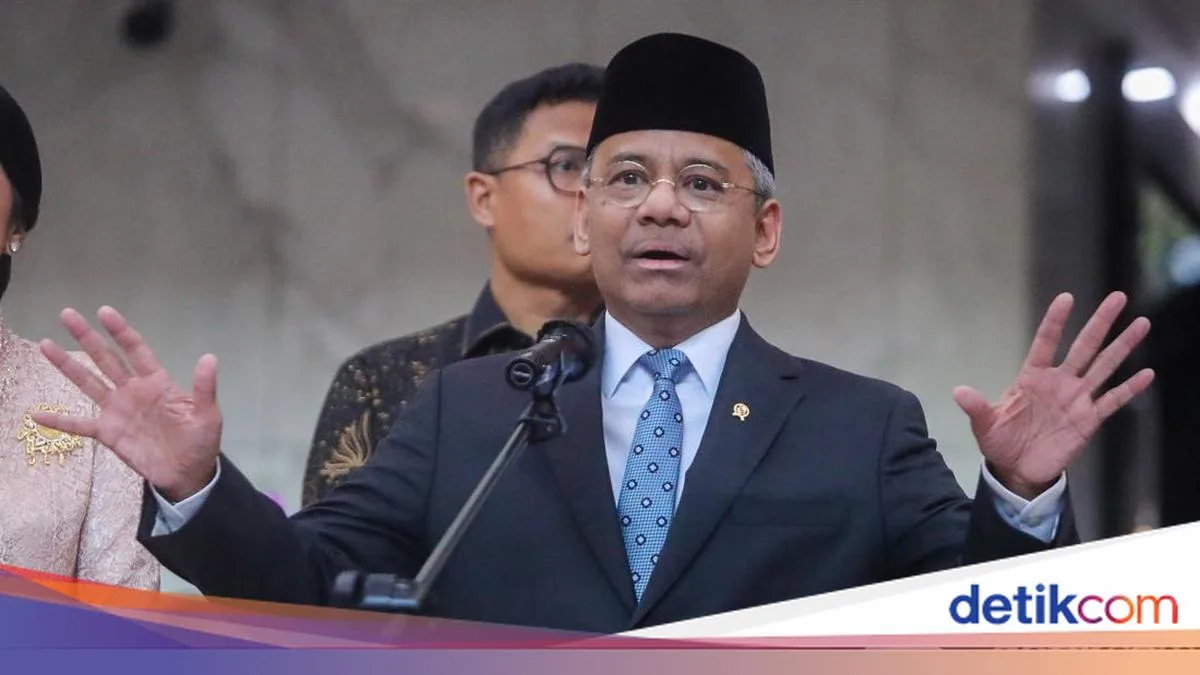
President Prabowo Subianto has assured that Indonesia will soon receive a large-scale injection of investment in the coming weeks, a claim he made amid pressure from global economic uncertainty that continues to hang over developing countries.
In the "Presiden Prabowo Menjawab" program released by the Government Communication Agency, the head of state expressed confidence that major global investors have taken serious interest in Indonesia. He cited domestic economic fundamentals as the main reason behind that interest. "I have met the world's big players, they come to Indonesia, they know our economic fundamentals are strong and safe," Prabowo said.
The figures Prabowo laid out give a sense of how far the government wants to go in convincing the market that the investment engine is still running. By mid-2026, investment realization had reached Rp1,010 trillion, or about half of the full-year 2025 figure of Rp1,931 trillion. The government also claims to have created 1.4 million new jobs so far this year, after recording 2.7 million new positions in 2025.
Notably, Prabowo stressed that the investment flow does not come from government spending but purely from private activity entering amid global market turmoil. This narrative matters because the government has often been criticized for an economy whose growth is driven more by household consumption and state spending than by productive investment.
Prabowo also compared Indonesia's fiscal position with that of several other countries. According to him, Indonesia's budget deficit remains below the 3 percent threshold, far more contained than the Philippines at around 6 percent, India at 4.6 percent, and France at 5.4 percent. He highlighted inflation at 2.92 percent as among the lowest in the world. "Our economy is good. Our inflation is among the lowest in the world. Imagine that," he said.
"The whole world believes Indonesia will become the world's 6th, 5th, 4th economy by 2050, which means 25 years from now." — President Prabowo Subianto, citing a Goldman Sachs projection.
For readers in Indonesia, especially retail investors and capital market players, this signal needs to be examined coolly. The promise of massive investment is indeed exciting, but its realization depends heavily on regulatory certainty, ease of licensing, and domestic political stability. So far, a number of foreign investors have complained about bureaucratic hurdles and regulatory uncertainty in the regions as key inhibiting factors. If the promised wave of investment truly materializes, sectors such as infrastructure, green energy, and mineral processing could be the biggest beneficiaries.
On the employment side, the additional jobs claimed by the government are an important indicator for measuring the quality of growth. However, Indonesia's labor market still faces structural challenges in the form of a skills mismatch between graduates and industry needs. Without serious improvements in vocational education, an investment boom could absorb only a limited number of skilled workers.
The government appears to want to make macroeconomic stability its main card for attracting foreign capital. Controlled inflation and a low fiscal deficit are indeed selling points in the eyes of rating agencies and institutional investors. However, maintaining this momentum is not easy when global commodity prices fluctuate and geopolitical pressure remains high.
The remaining question: will this promise of massive investment be followed by the structural reforms long awaited by businesses, or will it amount to political rhetoric ahead of the next budget cycle? In the coming weeks, the market will test for itself how real that commitment is.