Jakarta LRT Kelapa Gading–Manggarai Officially Opens: 28 Minutes, a New Hub for the Capital's Transport
Baca dalam 60 detik
- Presiden Prabowo Subianto menandai dimulainya layanan komersial LRT Jakarta lintas Kelapa Gading–Manggarai pada 16 September 2026.
- Perjalanan ujung ke ujung dipangkas menjadi sekitar 28 menit, memperkuat integrasi angkutan berbasis rel di koridor timur–selatan Jakarta.
- Kehadiran rute ini berpotensi menggeser pola mobilitas pekerja komuter sekaligus menekan beban lalu lintas dan emisi di kawasan padat tersebut.
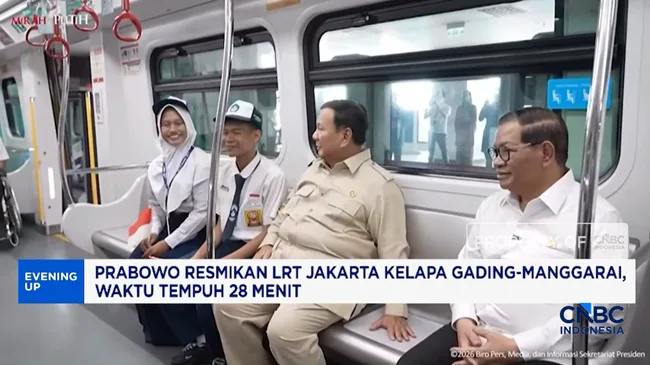
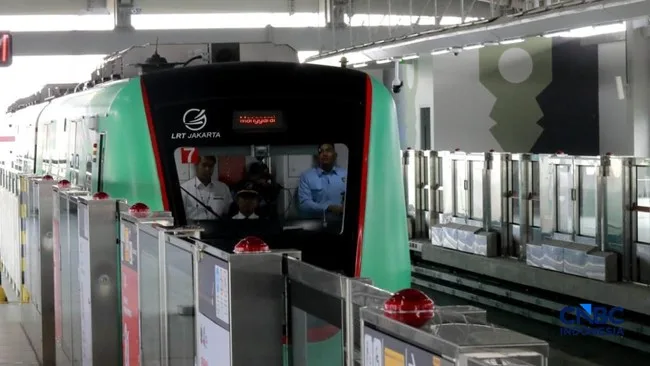
President Prabowo Subianto officially inaugurated the operation of the Jakarta LRT on the Kelapa Gading–Manggarai line on Wednesday, 16 September 2026. The inauguration marks a new chapter for rail-based transport services in the capital, with a claimed end-to-end travel time of only about 28 minutes — an achievement that road-based transport modes have long struggled to match during peak hours.
The route connects residential areas and business centers in North Jakarta with the Manggarai transit hub, which for years has been known as one of the busiest points in the commuter rail network. For residents of Kelapa Gading and its surroundings, the presence of the LRT means a more predictable travel alternative compared with relying on private vehicles or buses stuck in congestion along the Perintis Kemerdekaan and Casablanca corridors.
What sets this inauguration apart is not merely the ceremony. The government positions the project as part of a strategy to expand the reach of mass transit in the Jabodetabek area, while reducing dependence on private vehicles. If passenger load patterns match projections, this route could become a new backbone for the daily movement of workers who live in northeastern Jakarta but work in the golden triangle area, or vice versa.
However, the real test has only just begun. Service quality — from departure frequency and schedule reliability to comfort during peak hours — will determine whether people genuinely shift away from cars and motorcycles. The experience of several previous mass transit projects shows that infrastructure without support for fare integration, pedestrian access, and adequate feeder transport tends to absorb passengers suboptimally.
This inauguration marks that the development of public transport infrastructure continues, with emphasis on interregional connectivity and efficiency in residents' travel time.
On the fiscal side, the LRT project absorbs large investment and demands substantial annual operating costs. The public therefore has the right to demand transparency regarding ticket revenue projections, subsidy schemes, and the occupancy targets set. Without that, the risk of a long-term budget burden is difficult to avoid.
For businesses and investors, the presence of this route opens new opportunities. Areas around stations have the potential to see property value increases, retail growth, and transit-oriented development (TOD). Local governments and developers are expected to move quickly to prepare zoning and supporting facilities so that economic benefits are not enjoyed by only a handful of parties.
On the other hand, the construction of the LRT network also reinforces the narrative that Indonesia is serious about building a greener urban transport system. Shifting some passengers from private vehicles to electric trains has the potential to reduce carbon emissions and air pollution, although the magnitude of the impact depends on the energy mix of the power plants used.
The remaining question: will the Kelapa Gading–Manggarai LRT become a catalyst for Jakarta's mobility transformation, or merely add to the list of infrastructure projects that are not yet fully integrated? The answer is not determined at the inauguration, but rather by operational discipline and maintenance commitment in the years ahead.