Expert Unpacks the Masalembo Mystery: Not Supernatural, Here Is the Scientific Explanation
Baca dalam 60 detik
- Insiden KM Virgo Transport 8 di perairan Masalembo memicu spekulasi mistis, namun pakar menegaskan risiko pelayaran di sana murni akibat dinamika laut dan cuaca.
- Kawasan yang dijuluki 'Segitiga Bermuda Indonesia' ini memiliki arus kompleks, gelombang silang, dan awan badai yang bisa membahayakan kapal secara tiba-tiba.
- Bagi Indonesia, pemahaman ilmiah ini krusial untuk meningkatkan standar keselamatan pelayaran di jalur padat seperti Masalembo.
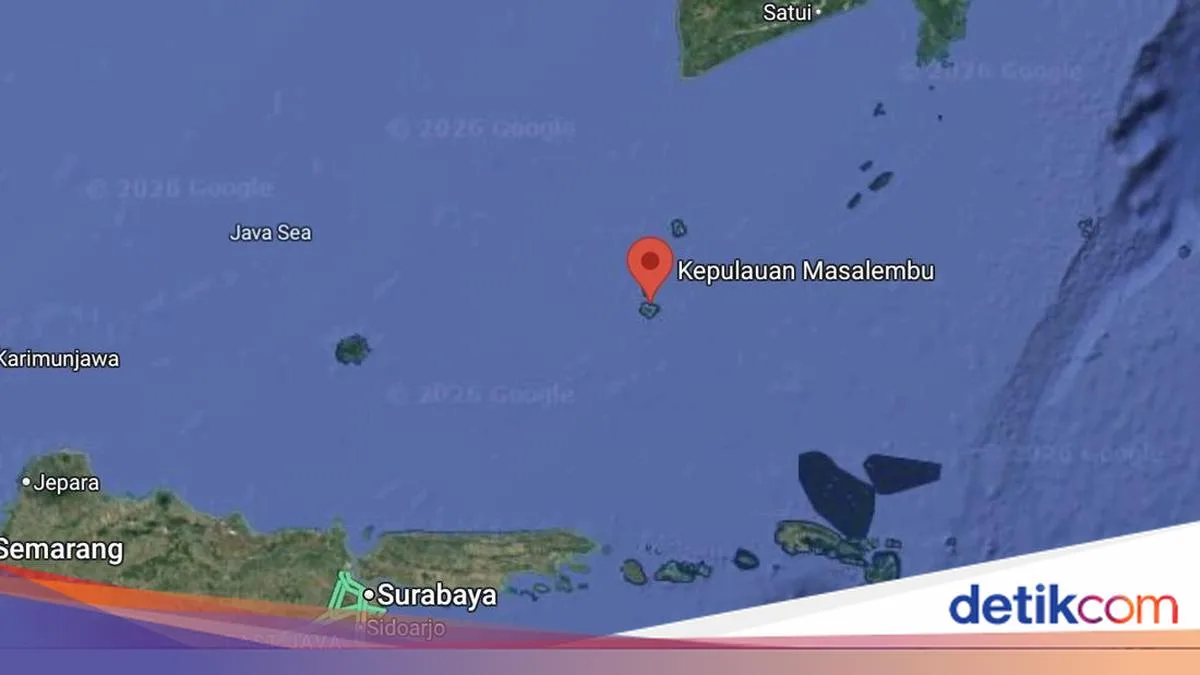
The accident involving the motor vessel (KM) Virgo Transport 8 in the waters of Masalembo, Java Sea, has once again thrust the area's name into the spotlight. The nickname 'Indonesia's Bermuda Triangle' is often attached to these waters, fueling mystical stories that circulate in the community. However, disaster experts stress that the shipping risk in Masalembo can be explained rationally through the interaction of complex natural factors.
A member of the Indonesian Disaster Experts Association (IABI), Dr Daryono, assesses that the high risk in Masalembo waters is not caused by supernatural matters. According to him, ship accidents are better understood as the result of a combination of wind, waves, currents, tides, atmospheric conditions, bathymetry, vessel characteristics, cargo, and navigation decisions. "That complexity does not mean Masalembo has a mysterious or unique marine phenomenon that automatically causes ships to sink," he said in a written statement, Wednesday (16/9/2026).
Geographically, Masalembo lies at the crossroads of three major bodies of water: the Java Sea, the Makassar Strait, and the Flores Sea. The Makassar Strait serves as the main channel for ocean currents from the Pacific Ocean toward southern Indonesian waters. Differences in temperature, salinity, and depth create highly dynamic current patterns. Daryono explains that density differences between water layers can trigger ocean stratification and current shear, potentially causing turbulence and even internal waves. "This phenomenon should not be immediately assumed to be the cause of a ship losing buoyancy or control," he stressed.
Besides currents, weather factors also worsen the risk. Masalembo is influenced by the Asian-Australian monsoon winds, whose direction and speed shift. This condition often triggers cross-sea, the meeting of two or more wave systems from different directions. For a ship, waves striking from various directions are like being shaken from side to side (rolling) and front to back (pitching) at once. "Cross-sea can increase ship motion, especially rolling and pitching, and add dynamic loads to the vessel's structure," said Daryono.
Not only that, the warm Masalembo sea is a favorite spot for the formation of cumulonimbus clouds. These clouds can unleash sudden strong winds through gust fronts. "When cumulonimbus clouds develop strongly, heavy rain, lightning, downdrafts, and gust fronts can occur. Rapidly shifting wind gusts can cause sea conditions to change in a relatively short time," he explained. These sudden changes increase the load and motion of ships, making navigation far more challenging.
For Indonesia, a scientific understanding of Masalembo is not merely discourse. The area is a vital shipping lane connecting various islands and supporting economic activity. The high frequency of accidents in these waters demands serious attention to safety aspects, from ship maintenance and crew training to weather early warning systems. Investors and businesses in the maritime logistics and transport sector need to factor this risk into operational planning and insurance.
"The shipping risk in this area is better understood as the result of the interaction of various factors, including wind, waves, currents, tides, atmospheric conditions, bathymetry, vessel characteristics, cargo, as well as navigation decisions and procedures," said Dr Daryono.
Going forward, the big question is whether maritime authorities will improve safety infrastructure and weather monitoring systems in Masalembo. Without concrete steps, the nickname 'Indonesia's Bermuda Triangle' will only continue to be a myth that obscures the root problem: natural complexity that demands extra vigilance.