Prabowo Tasks Danantara to Finance Jakarta LRT, New Signal for Capital Infrastructure Funding
Baca dalam 60 detik
- Presiden Prabowo Subianto memerintahkan Danantara untuk turut membiayai pembangunan LRT Jakarta, merespons permintaan Gubernur Pramono Anung.
- Perintah itu disampaikan saat peresmian rute Kelapa Gading–Manggarai dan membuka peluang perluasan jalur hingga JIS, Velodrome, dan Halim.
- Langkah ini menandai pergeseran skema pembiayaan transportasi publik, dengan Danantara berpotensi menjadi penyandang dana utama proyek strategis daerah.
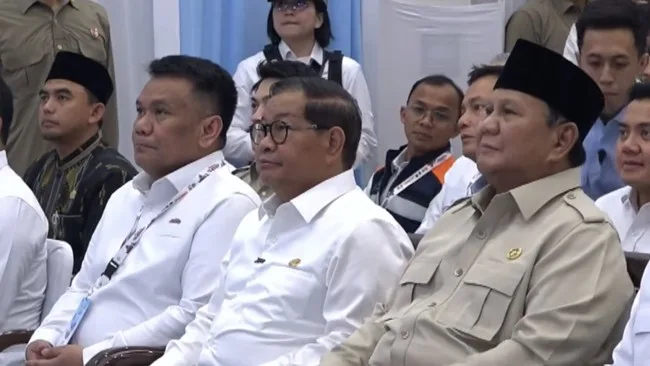
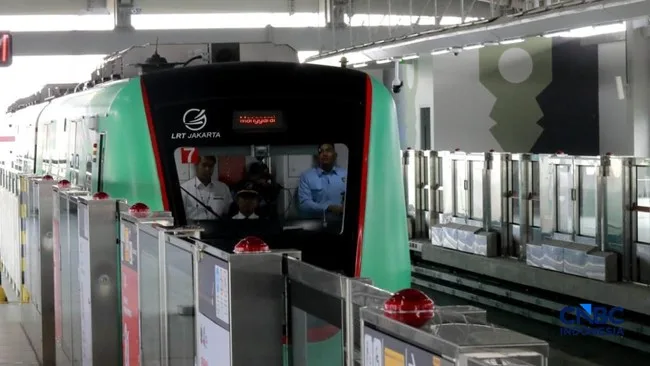
President Prabowo Subianto directly tasked the Badan Pengelola Investasi (BPI) Danantara to take part in financing the construction of the Jakarta LRT. The instruction came after DKI Jakarta Governor Pramono Anung expressed hope that Danantara would be involved, in his remarks at the inauguration of the Kelapa Gading–Manggarai route at Manggarai LRT Station, Wednesday (16/9/2026).
The head of state's response was firm: Danantara was told it "must help" the capital. According to Prabowo, Jakarta is not merely the property of Jakarta residents, but an asset of all Indonesians. Therefore, the presence of state investment funds in a rail-based transport project is seen as a logical consequence of Jakarta's status as the national economic center.
The statement clarifies the direction of infrastructure funding policy going forward. If previously LRT construction relied on the DKI regional budget and central government support through the Ministry of Transportation, now Danantara enters as a key player. This scheme could reduce the regional fiscal burden, but it also raises questions about governance, returns, and Danantara's investment priorities, which have so far touched more on the downstreaming and energy sectors.
In his remarks, Pramono Anung stressed that LRT construction does not stop at the newly inaugurated route. The DKI provincial government is studying an expansion to JIS, Velodrome, and Halim that will connect with the Whoosh high-speed train. This connectivity is considered crucial to creating intermodal integration in eastern Jakarta and its surroundings.
"There was a bit of hope from the Governor, for Danantara to help. I think Danantara must help," Prabowo said at the event.
Prabowo also highlighted the vision of Jakarta as a garden city. He encouraged owners of large buildings to develop vertical gardens, with local and central governments ready to step in if the private sector struggles. The idea aligns with the ASRI program, which will be launched together with regional heads and legislators from the city/regency to provincial levels.
For market players and investors, Danantara's entry into the Jakarta LRT project can be read as a signal of an expanded mandate for the state investment management institution. Danantara has so far been positioned as a strategic investment instrument focused on productive sectors. Involvement in public infrastructure could open options for blended financing, including project bond issuance or public-private partnerships (KPBU) involving Danantara's managed funds.
However, some analysts warn that this assignment should not blur the principle of prudence. They argue there needs to be clarity on the funding structure, repayment period, and risk-sharing among Danantara, the DKI provincial government, and the central government. Without a transparent framework, concerns about moral hazard and hidden fiscal burdens could surface.
From the perspective of readers in Indonesia, especially outside Jakarta, this decision prompts questions about development fairness. If Danantara can be tasked with financing the capital's LRT, will a similar pattern be applied to transport projects in Surabaya, Bandung, Medan, or Makassar? The public is waiting to see whether this policy will become a national precedent or remain limited to Jakarta as the nation's showcase.
Going forward, eyes will be on Danantara's concrete steps: whether it will immediately prepare a feasibility study, partner with strategic investors, or wait for a new regulatory umbrella. What is clear is that Prabowo's order has changed the landscape of public transport financing in the capital, and its implications will be felt far beyond the Kelapa Gading–Manggarai route.