Kelapa Gading–Manggarai LRT Officially Opens, House Stresses Intermodal Integration
Baca dalam 60 detik
- Presiden Prabowo Subianto meresmikan LRT Jakarta jalur Kelapa Gading–Manggarai, menambah opsi transportasi massal di koridor timur Ibu Kota.
- Anggota Komisi V DPR Danang Wicaksana menilai kehadiran layanan ini memperkuat konektivitas kawasan, tetapi mengingatkan integrasi antarmoda dan aspek keselamatan menjadi penentu keberhasilan.
- Bagi investor dan pelaku usaha, jalur ini berpotensi mengubah peta aksesibilitas properti serta pola perjalanan harian di Jakarta dan sekitarnya.

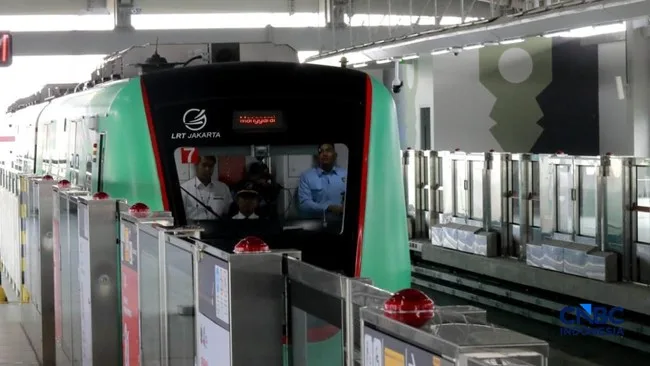
President Prabowo Subianto inaugurated the Kelapa Gading–Manggarai line of the Jakarta Light Rail Transit (LRT) at Manggarai Station, Jakarta, on Wednesday. The inauguration marks the start of operations for a new corridor connecting a densely populated residential area in North Jakarta with a major transport hub in South Jakarta.
Member of Commission V of the Indonesian House of Representatives (DPR RI), Danang Wicaksana, described the move as a strengthening of alternative transport for residents. According to him, the development of urban mass transit is not merely the addition of a mode, but part of efforts to build an integrated, safe, and comfortable travel system. He assessed that connectivity between areas through public transport has a direct impact on residents' work, education, and economic activities.
In his statement in Jakarta, Danang appreciated the inauguration. He stressed that the presence of the LRT strengthens public transport services that have long been the backbone of mobility for residents of Jakarta and its surroundings. However, he also underlined several prerequisites for the service to truly be in demand: safety, punctuality, passenger comfort, and ease of transferring between modes.
"What is no less important is how this LRT is integrated with other modes of transport. The public must find it easy to move from one mode to another," said Danang.
The statement highlights a classic problem of public transport in agglomeration areas: the availability of lines is often not matched by easy access to and from stations. Without integration of fares, schedules, and supporting facilities such as TransJakarta stops, park and ride, and proper pedestrian paths, prospective passengers tend to return to private vehicles.
Danang hopes the presence of this line will encourage more residents to switch to public transport. According to him, increased use of mass transit also helps reduce traffic congestion and improve mobility efficiency in urban areas. He stressed that public transport must continue to be developed so that it becomes the main choice, with services that are safe, comfortable, affordable, and integrated so that public trust increases.
In his speech, President Prabowo called the inauguration of the Kelapa Gading–Manggarai LRT line one form of national transformation. Previously, Jakarta Governor Pramono Anung also stated that TransJakarta stops intersecting with the Jakarta LRT were active again, marking efforts to connect services at the operational level.
For readers in Indonesia, especially investors and professionals, this line has the potential to change the accessibility map in Jakarta's eastern corridor. The Kelapa Gading area and its surroundings have long been known as a residential and business center with high dependence on private vehicles. A direct connection to Manggarai—which is linked to the KRL and TransJakarta—can shorten travel times, expand the reach of the workforce, and in turn influence property and retail demand around the stations.
From a policy perspective, the success of this LRT will be a test of the government's commitment to building an integrated transport ecosystem. If physical and fare integration runs smoothly, this line can set a precedent for the development of other networks in the agglomeration area. Conversely, if intermodal access is hampered, the large investment risks failing to produce the expected mode shift.
The question now is: how quickly will the operator and local government complete the remaining integration nodes, and will fares and service frequency be able to compete with the comfort of private vehicles? The answers to these two things will determine whether the Kelapa Gading–Manggarai LRT truly becomes the backbone of residents' mobility or merely a new line on the capital's transport map.