House Commission Presses National Police to Come Clean on SGD 4.7 Billion Counterfeit Money in South Tangerang
Baca dalam 60 detik
- Komisi III DPR meminta Polri menjelaskan secara terbuka perkembangan kasus dugaan peredaran uang palsu Dolar Singapura senilai 340.000 SGD yang ditangani Polres Tangerang Selatan.
- Perkara sudah naik ke tahap penyidikan sejak 9 September 2026, tetapi belum ada satu pun tersangka yang ditetapkan.
- Anggota Komisi III dari Fraksi PAN, Slamet Ariyadi, mendorong penelusuran jaringan yang lebih luas hingga aktor intelektual.
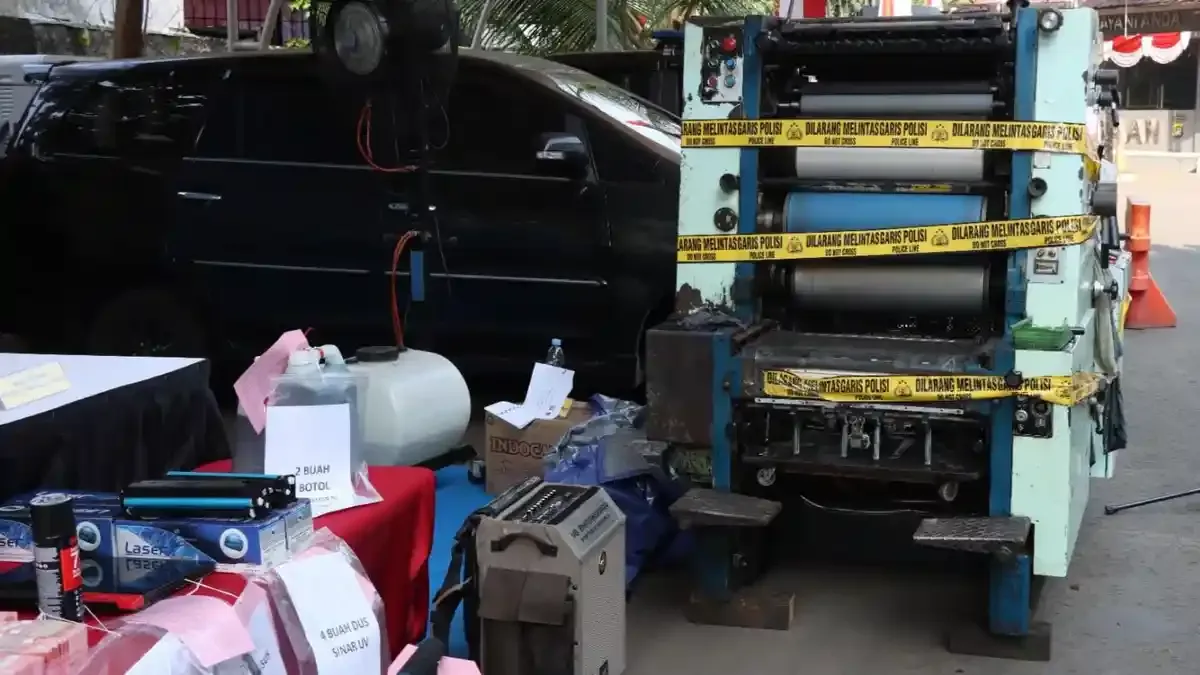
Commission III of the Indonesian House of Representatives (DPR RI) has highlighted the slow handling of an alleged circulation of counterfeit Singapore dollars (SGD) worth 340,000 SGD, or around Rp4.7 billion, handled by the South Tangerang City Police. Calls for the National Police to be transparent emerged after the case was elevated to the investigation stage through an Investigation Commencement Order (Sprindik) on 9 September 2026, yet no suspect has been named to date.
Commission III member from the PAN faction, Slamet Ariyadi, said information disclosure becomes crucial precisely when an investigation proceeds without a suspect. According to him, the public has the right to know what investigators have done, the obstacles they face, the next legal steps, and the completion target. "We ask the National Police to clearly explain what has been done, what the obstacles are, the next legal steps, and the completion target," he told journalists on Wednesday (16/9/2026).
The case began with a report received by the Metro Jaya Regional Police on 3 July 2026. The alleged losses reached 340,000 SGD, a significant figure for counterfeit money circulating in the capital's buffer zone. However, more than two months later, the case status remains at the investigation stage without a suspect — a situation that Slamet said could raise public questions.
Slamet stressed that the investigation must not stop at those allegedly directly involved. He urged the police to trace the possibility of a larger network behind the circulation of the counterfeit SGD, including those suspected of being the masterminds. "If a wider network is found, it must be uncovered down to the masterminds and other parties involved," he said.
"We urge the National Police to handle this case professionally, transparently, and thoroughly." — Slamet Ariyadi, Commission III member of the DPR RI from the PAN faction
For readers in Indonesia, especially businesses and investors, this case touches on two things at once. First, trust in the integrity of foreign exchange transactions in the Greater Jakarta area, which serves as the main gateway for cross-border business flows. Second, legal certainty in the financial sector, where slow law enforcement can trigger a higher perception of risk among market players.
The Singapore dollar is one of the most frequently used currencies in Indonesia–Singapore bilateral transactions, from trade in goods and services to remittances. The emergence of counterfeit money in this denomination could disrupt the confidence of small and medium-sized businesses that often conduct cross-border cash transactions, especially in border areas and trading centers.
From a regulatory standpoint, Commission III's pressure reflects growing political pressure on the National Police to speed up the handling of financial cases. Transparency in investigations is not only about accountability but also a signal to the market that the state is present to safeguard the integrity of the payment system. Unclear legal status can widen room for speculation and reduce trust in the foreign exchange supervision mechanism.
Going forward, the public will be watching whether the South Tangerang City Police soon name a suspect or instead expand the investigation into a larger network. If there are indeed masterminds behind the circulation of these counterfeit SGD, a thorough uncovering will be a test of the National Police's commitment to eradicating cross-jurisdictional financial crime. The question is, how quickly can investigators turn the case status from investigation into concrete enforcement?