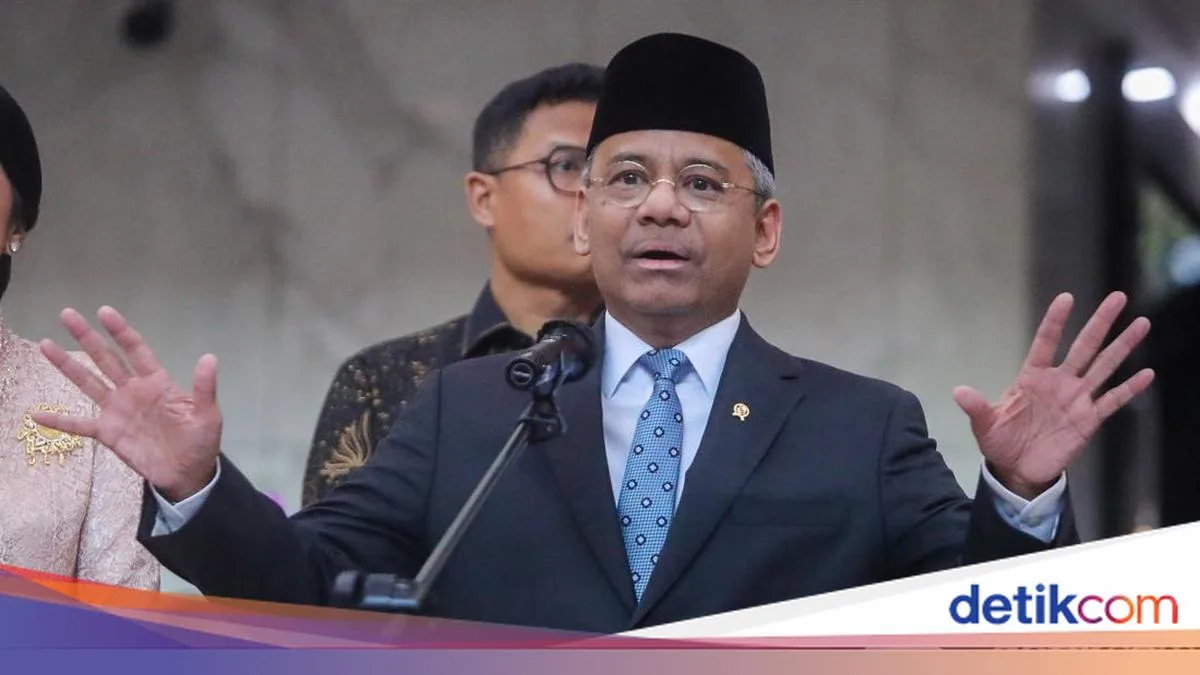
Suahasil Nazara in the Finance Minister's Seat: Positive Signal, but the Fiscal Credibility Test Has Just Begun
Baca dalam 60 detik
- Penunjukan Suahasil Nazara sebagai Menteri Keuangan mendapat respons beragam dari pengamat internasional, dari optimisme hingga keraguan.
- Rekam jejak panjang di Kemenkeu dinilai memangkas risiko transisi, tetapi ruang fiskal yang menyempit menjadi pekerjaan rumah utama.
- Komitmen menjaga defisit di bawah 3% PDB akan menjadi tolok ukur awal kepercayaan pasar terhadap arah kebijakan fiskal ke depan.

JAKARTA — The appointment of Suahasil Nazara as Minister of Finance to replace Sri Mulyani Indrawati immediately drew the attention of international analysts. For the market, the question is not merely who he is, but how quickly he can convince investors that Indonesia remains fiscally disciplined amid swelling state spending pressures.
Several foreign observers highlighted Suahasil's background as no newcomer to the Ministry of Finance. He previously served alongside Sri Mulyani as deputy minister for seven years and headed the fiscal policy agency in the 2015–2019 period. The combination of internal experience and closeness to the previous era is seen as initial capital for maintaining policy continuity.
Senior Asia analyst at the Economist Intelligence Unit, Qi Hang Tay, assessed the appointment as a step that reduces transition risk. According to him, Suahasil's understanding of budget mechanisms and the ministry's bureaucracy is an added value that outside figures do not have. However, he also cautioned that the biggest challenge actually comes from the financing demand side.
"The main constraint is that Nazara must fund Prabowo's costly growth agenda amid increasingly limited fiscal space," Tay said, while predicting a less expansionary fiscal policy and a more cooperative relationship with Bank Indonesia.
From London, senior Asia economist at Capital Economics, Gareth Leather, called the development a positive signal. Nevertheless, he stressed that more evidence of improvement in policymaking is needed before concluding that Indonesia has fully recovered from the market confidence turmoil. Leather said the new finance minister needs to clarify priorities and give consistent signals to investors about the fiscal direction.
For readers in Indonesia, especially market participants and financial professionals, the appointment has direct implications for three things: the direction of interest rates, government bond (SUN) yields, and the rupiah exchange rate. If Suahasil can keep the deficit below 3% of GDP and communicate spending priorities transparently, pressure on SUN yields could ease and room for Bank Indonesia to cut interest rates would open up further. Conversely, unclear fiscal signals could trigger volatility in the bond market and weaken the rupiah.
Suahasil's first statement as minister, promising to safeguard budget credibility, is initial capital. However, that promise remains rhetoric until proven in budget documents and first-quarter realization. The market usually gives about 100 days to assess consistency between words and actions, especially on subsidy spending, priority programs, and deficit financing.
Going forward, the crucial question is no longer who sits in the Finance Minister's seat, but how he balances the demands of government spending with the fiscal discipline that has long been the anchor of investor confidence. If he fails, it is not only the market that responds, but also the country's debt rating and borrowing costs. Conversely, if he succeeds, Suahasil has the opportunity to cement a legacy of prudent fiscal policy amid global uncertainty.