Swinney Rejects Ban on New North Sea Drilling as SNP Faces U-Turn Accusations
Baca dalam 60 detik
- Pemerintah Skotlandia di bawah John Swinney menolak klausul RUU Energi Inggris yang menghentikan izin eksplorasi minyak dan gas baru di Laut Utara.
- Swinney berargumen bahwa bahan bakar fosil masih dibutuhkan dan eksplorasi domestik lebih rendah emisi dibanding impor, memicu tuduhan U-turn dari Partai Hijau.
- SNP akan berupaya menghapus larangan tersebut dari RUU; jika gagal, mereka akan menolak keseluruhan undang-undang meski mendukung beberapa ketentuan lain.
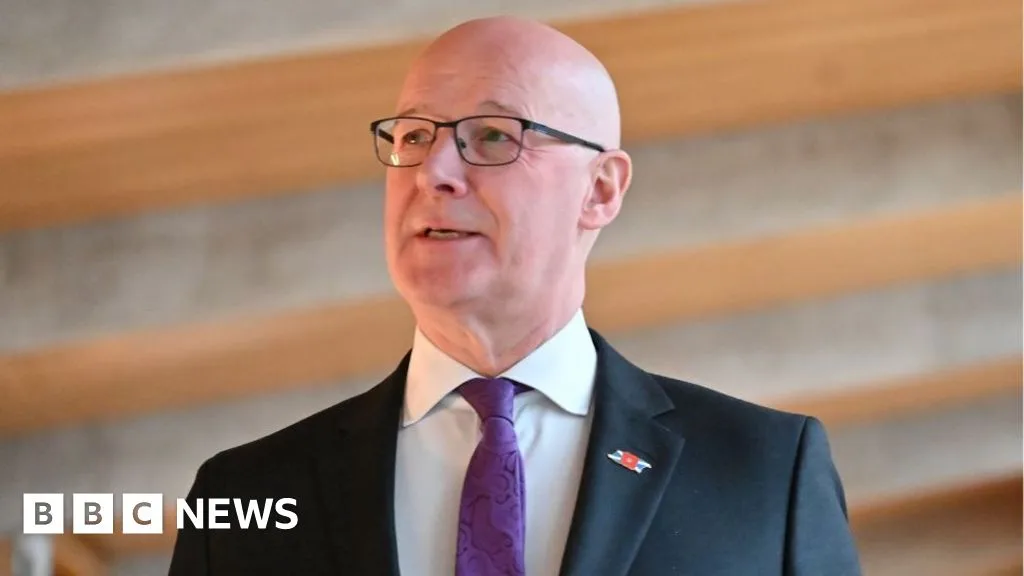
The Scottish government has openly opposed London's plan to stop granting new permits for oil and gas exploration in the North Sea. The stance was delivered by First Minister John Swinney before Scottish parliamentarians, marking a shift in the position of the Scottish National Party (SNP), which had previously backed a precautionary principle on new drilling.
In a question-and-answer session with MSPs, Swinney stressed that fossil fuels would still be used "for years to come". He therefore argued there was a rational basis for considering oil and gas development in Scottish jurisdiction, provided its carbon emissions were lower than those of imported fuels. The statement immediately drew reactions from coalition partners and opposition parties.
The Energy Independence Bill being debated in the UK parliament is a Labour Party manifesto promise not to grant permits for new oil and gas fields. If passed, the law would remove the North Sea transition authority's ability to issue new licences. However, the bill still allows increased production from existing fields within territorial boundaries or surrounding areas.
The UK government argues the move is part of a fair energy transition, while still supporting growth and investment in North Sea communities. Energy Minister Miatta Fahnbulleh said the bill would help build a clean energy future whose impact is felt directly by households and communities. The bill would also remove the standing charge on gas and speed up grid connections.
"It is a rational basis to consider oil and gas development in our own jurisdiction if emissions are lower than imported oil and gas," Swinney said, as quoted from his statement in parliament.
Swinney's stance differs from the position the Scottish government took in 2023. At the time, under Nicola Sturgeon's leadership, Edinburgh set a presumption against new oil and gas drilling. Now, with war breaking out in the Middle East disrupting global energy supplies, Swinney's administration appears to be softening its position. However, Scottish ministers still insist that any development must align with carbon reduction targets.
The Scottish Green Party, previously the SNP's coalition partner at Holyrood, sharply criticised the change of stance. Co-leader Gillian Mackay called it a "surprising U-turn" and a "shameful climbdown". According to her, when even the UK government takes a firmer position, it shows how far the SNP has shifted from its original commitment. The criticism highlights a rift within Scotland's independence-supporting camp over energy policy.
On the other hand, Reform UK Scotland welcomed Swinney's statement. Its leader, Malcolm Offord, said the move scrapped the SNP's old presumption against new oil and gas exploration. Support from this right-wing party shows that the energy issue has become a political dividing line that is no longer simply between pro- and anti-drilling, but also concerns energy sovereignty and a just transition.
The SNP will seek to remove the ban on new drilling from the bill. If that effort fails, they will reject the entire law even though they support several other provisions in it. The move puts the SNP in a difficult position: on one hand it must maintain its image as a party that cares about the environment, on the other it faces pressure to protect jobs and domestic energy supply.
For Indonesia, the dynamics of energy politics in the UK mirror how even developed countries face a similar dilemma. Indonesia, as a coal and liquefied natural gas (LNG) exporter, needs to watch whether global energy transition policy will tighten further or instead soften due to economic and geopolitical pressure. The UK's decision could influence international energy prices and the direction of investment in the oil and gas sector, including for Indonesian companies operating abroad.
Looking ahead, will the UK parliament pass the bill without the amendments the SNP wants? Or will pressure from Scotland force a compromise that slows the energy transition? The answer will determine not only the future of the North Sea, but also the credibility of both governments' climate commitments.