45 WJES 2026 Recommendations: West Java Pushes for Investment That Absorbs Local Workers
Baca dalam 60 detik
- Bank Indonesia Jabar dan ISEI Bandung merumuskan 45 rekomendasi kebijakan hasil riset 269 peneliti dan konsultasi dengan 16 OPD.
- Wagub Erwan Setiawan menekankan investasi harus berdampak pada warga sekitar, bukan sekadar pembangunan pabrik.
- Kesenjangan kompetensi tenaga kerja dengan kebutuhan industri, terutama sektor kendaraan listrik, menjadi sorotan utama.
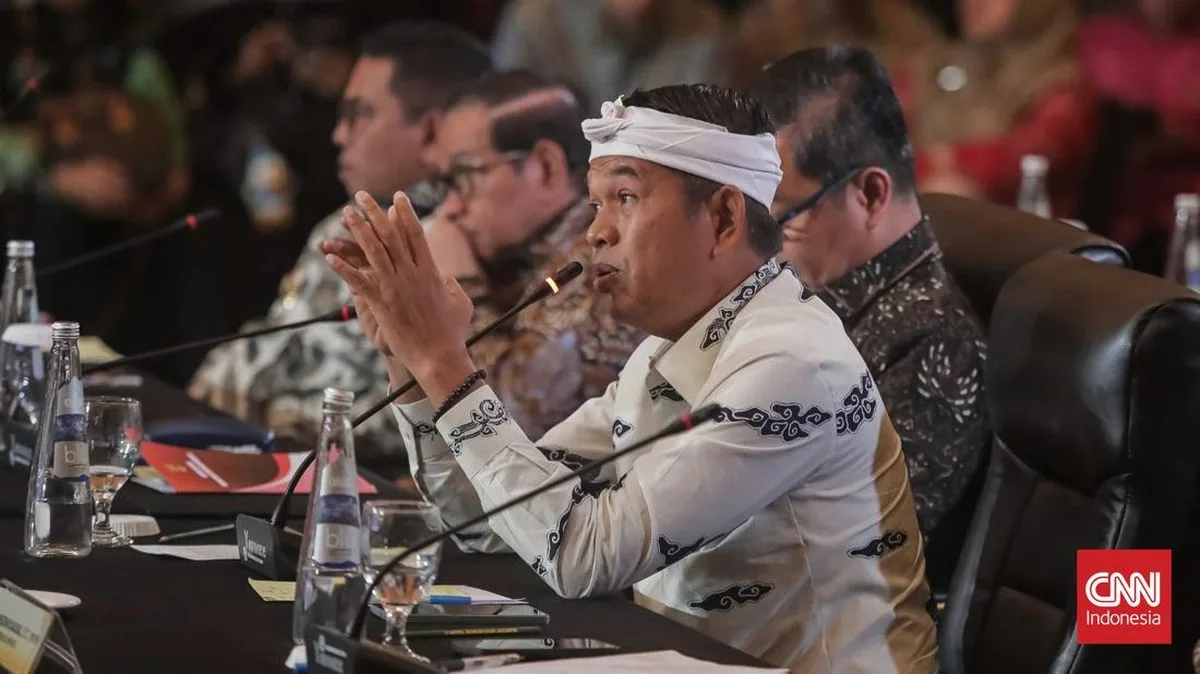
Bank Indonesia (BI) for West Java Province, together with the Bandung branch of the Indonesian Economists Association (ISEI), has completed 45 policy recommendations to strengthen the resilience and transformation of West Java's economy. The recommendations were drawn from research by 269 researchers from various regions and intensive consultations with 16 regional government agencies (OPD) under the West Java provincial administration, then discussed at the 2026 West Java Economic Society (WJES) National Seminar at Bale Pasundan, Bandung, on Tuesday (3/11).
WJES 2026 carried the theme "Strengthening the Resilience and Economic Transformation of West Java for Inclusive and Competitive Growth". Of all the papers submitted, eight of the best were selected for presentation. The results do not stop at academic study: all recommendations were symbolically handed over to West Java Deputy Governor Erwan Setiawan in the form of a compilation book, which is expected to serve as an instrument supporting regional economic development.
Erwan welcomed this forum for collaboration among government, academics, and business. According to him, the WJES recommendations must be applicable in development policies and programs, not merely academically superior. He stressed that strengthening West Java's economy must be accompanied by improving the quality of human resources (HR), expanding job opportunities, and investment that benefits the community.
"I am not anti-outsider. Investors from anywhere are welcome to come to West Java, whether local or foreign. But please pay attention to the surrounding community. Give priority for jobs to the surrounding community," Erwan said in a written statement on Thursday (5/11).
The statement implies two sides of the issue. On one hand, Erwan urges investors not to focus solely on building factories and raising production, but also to improve the quality of HR and the welfare of residents around industrial areas. On the other hand, he reminds local communities to prepare themselves to meet company qualifications. Erwan even highlighted the practice of pressuring companies to hire local residents even when they lack the relevant skills.
"Don't let some factories be built through local thugs, demanding that their residents be employed, but without the ability. I hope our people are also ready to compete for jobs at those companies," he said.
The issue of workforce readiness also drew the attention of the Head of the BI Representative Office for West Java Province, Junanto Herdiawan. He assessed that a gap remains between workforce competence and industry needs. For example, the growth of the electric vehicle industry has not been fully matched by adjustments to vocational education curricula in a number of schools. "This is a link and match problem that we must improve. How can vocational education adapt to the evolving needs of industry," he said.
Junanto explained that involving 16 OPD in drafting the recommendations was an effort to ensure research results match regional development needs. Collaboration among government, academics, and other stakeholders is increasingly necessary amid policies of efficiency and regional budget reallocation. Such synergy is expected to produce well-targeted development ideas.
For West Java, one of the engines of national economic growth, the quality of investment and workforce readiness will determine future competitiveness. The WJES 2026 recommendations offer a framework to bridge the interests of investors, government, and the community. However, the biggest challenge lies in implementation: can the regional government translate the 45 recommendations into concrete programs, especially in aligning vocational education with the ever-changing needs of industry?