Rp100 Trillion Hack at Binance Shakes Crypto Market, Standard Chartered Predicts Continued Pressure
Baca dalam 60 detik
- Insiden keamanan di Binance yang diduga merugikan sekitar US$6,3 miliar memicu aksi jual besar-besaran di pasar aset digital.
- Likuidasi posisi long mencapai US$1,5 miliar, dengan Bitcoin dan Ether menjadi kontributor terbesar kerugian trader.
- Standard Chartered menilai tekanan harga belum berakhir dan melihat peluang pergeseran struktural ke bursa terdesentralisasi.
The global crypto market was hit by a wave of selling after Binance confirmed an alleged security breach affecting digital assets worth around US$6.3 billion—equivalent to more than Rp100 trillion. The incident is one of the largest hacks in the history of the crypto asset industry, surpassing the Bybit case in 2025 that recorded US$1.5 billion in losses and was linked to North Korean actors.
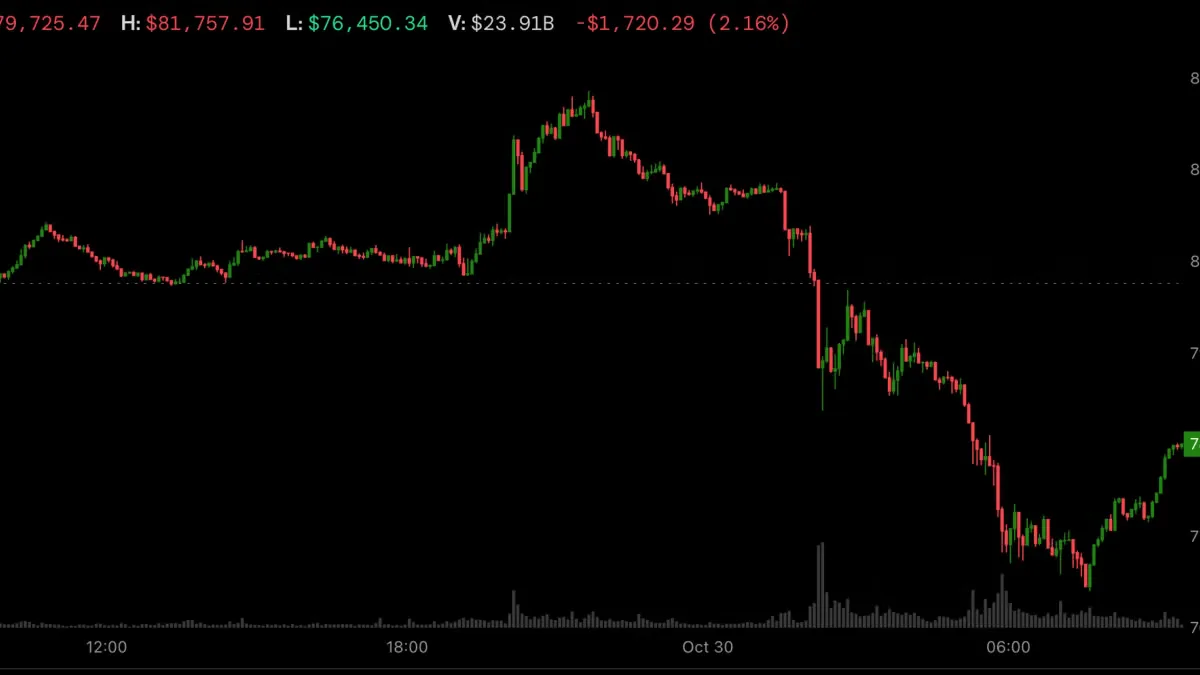
Bitcoin's price on Friday morning fell more than 3% in 24 hours to around US$77,400, having touched the US$76,000 level a few hours earlier. Ether, BNB, XRP, and Solana saw similar declines, even slightly deeper. The sell-off erased most of the gains built up over the week, reflecting how fragile market sentiment is toward platform security issues.
The most brutal impact was felt by highly leveraged futures traders. Market data showed total liquidations reached US$1.5 billion, with long positions—bets that prices would rise—bearing the largest share. Bitcoin accounted for US$468 million in liquidations, followed by Ether with US$358 million. The figures confirm that the correction was driven not only by spot panic but also by the unwinding of excessive positions in the derivatives market.
In its official statement, Binance suspected the security gap originated from a compromised engineer's laptop, allowing unauthorized fund withdrawals. Former Binance CEO Changpeng Zhao—who remains the largest shareholder—commented briefly on the incident on platform X: “This looks like a hack.” The statement reinforced suspicions that the attack was external, not merely an internal system failure.
Stablecoin issuers moved quickly to stem the potential for a wider collapse. Tether CEO Paolo Ardoino announced the freezing of more than US$1.567 billion in USDT linked to the incident. Meanwhile, Circle CEO Jeremy Allaire said the company froze more than US$800 million in USDC in coordination with law enforcement. First Digital also confirmed that stolen FDUSD had been frozen. These steps show that the stablecoin ecosystem now plays a key role as a liquidity defense line during a crisis.
“Our priority is to protect FDUSD holders and stop bad actors from moving stolen funds. Protecting users is a shared responsibility,” said Vincent Chok, founder and CEO of First Digital, in a written statement.
The Binance incident was not the only blow. A day earlier, decentralized betting platform Polymarket suspended international trading after hackers drained more than US$2.6 million from user accounts. Two consecutive attacks on leading platforms in less than 48 hours triggered systemic concerns about the security of crypto infrastructure, especially amid increasingly massive institutional adoption.
Geoffrey Kendrick, Head of Digital Assets Research at Standard Chartered, assessed that price pressure would continue. According to him, the market would only find a new equilibrium after the frozen assets are released and investigation details emerge. “The negative sell-off still has room to continue. Only after assets are reopened and the details of the hack emerge will we find a new base,” he said via email.
Kendrick also sees an opportunity for a structural shift: investors may at some point be pushed to move to decentralized exchanges (DEX). He cited Uniswap, which has never been exploited, and maintained a UNI price target of US$100 by 2030. According to him, the largest centralized exchange hack could actually accelerate the rise in the DEX-to-CEX trading ratio. For now, however, DEX tokens such as UNI, Aster, PUMP, JUP, and LIT remain under pressure in line with the overall market. The exception came from Hyperliquid (HYPE), which instead surged 15% after Intercontinental Exchange—parent of the New York Stock Exchange—announced a partnership with Trade.xyz to bring Hyperliquid-based perpetual futures trading to the US market, pending regulatory approval.
For Indonesia, the shock is a test of the resilience of the domestic crypto asset ecosystem, which continues to grow. Domestic regulators and industry players need to pay attention to two things: first, the risk of asset concentration on global centralized exchanges used by local investors; second, the urgency of cybersecurity standards and cross-jurisdictional asset-freezing mechanisms. Without stronger governance, the growing trust of Indonesian retail investors in crypto could be eroded by similar incidents.
Going forward, the main question is not simply how long price pressure will last, but whether the industry will genuinely shift to a more decentralized model—or instead tighten centralized controls for the sake of security. The answer to that dilemma will determine the direction of the crypto market for the rest of the year.