Polymarket Launches 5-Minute Crypto Bets in the US, Manipulation Risk Looms
Baca dalam 60 detik
- Polymarket resmi mengoperasikan kontrak prediksi kripto berdurasi lima menit di platform AS yang diawasi CFTC, memperluas akses spekulasi jangka sangat pendek.
- Skema pembayaran biner Rp16.000 per saham memudahkan pemula, tetapi para analis memperingatkan potensi konflik kepentingan dan manipulasi harga settlement.
- Regulator tengah menyelidiki kepatuhan Polymarket terhadap kesepakatan 2022, sementara studi menunjukkan indikasi pergerakan harga menjelang kedaluwarsa kontrak.

Polymarket has officially launched five-minute crypto prediction contracts on a US platform operated by QCX LLC and overseen by the Commodity Futures Trading Commission (CFTC). The move marks a new chapter in ultra-short derivatives trading in traditional financial markets, while raising questions about the integrity of the underlying asset price.
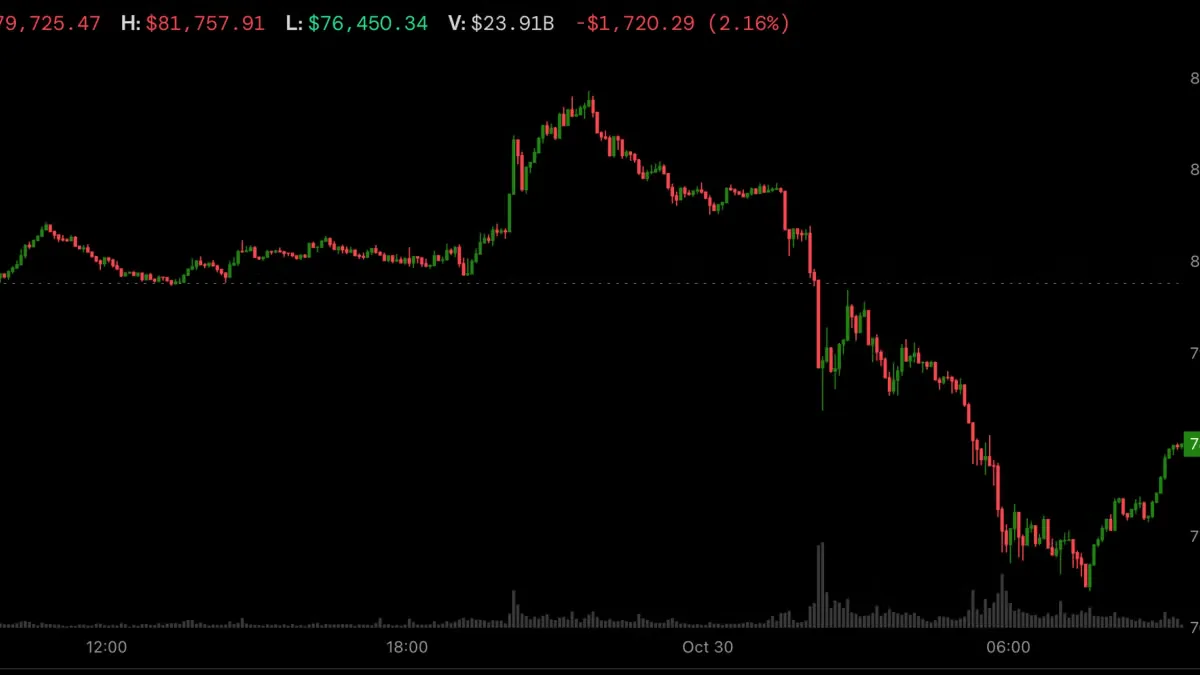
The contracts, introduced on 28 October, let users bet on whether the price of bitcoin, ether, solana, or XRP will end above or below its starting level within a five-minute period. Unlike conventional options, whose returns depend on the size of the price move, these instruments offer a binary outcome: a fixed payout of USD1 per share if the prediction is correct, and zero if it is wrong. Even a small change in the closing price can decide win or loss.
The all-or-nothing structure does simplify the transaction process. But that simplification cuts both ways. On one hand, the entry threshold for retail investors is lower; on the other, the complexity of competition and the risk of manipulation remain hidden behind a user-friendly interface.
"A button marked 'up' or 'down' makes the decision look simple. It doesn't tell you about the sophistication of your competitors," Mati Greenspan, CEO of Quantum Economics, told CoinDesk.
The main concern is not unfounded. A working paper published on arXiv on 30 June examined Polymarket's five-minute bitcoin contracts, which were launched earlier in February. The study found sharp spikes in bitcoin trading activity just before contract expiry. In some cases, researchers suspect actors bought or sold bitcoin to influence the outcome of bets. The findings predate Polymarket's change to its settlement rules in August 2026 and do not apply to the new US product.
Since August 2026, Polymarket has revised its settlement method. The US platform now uses a real-time dollar index from CF Benchmarks that averages 60 observations over the final 60 seconds. The global platform, meanwhile, uses a 60-second time-weighted average price (TWAP) from Chainlink. The approach is meant to dampen price spikes just before expiry, though it does not entirely eliminate the possibility of sustained price pressure.
"A 60-second average can blunt a last-second spike. It's a speed bump, not a force field," Greenspan said.
Nexo analyst Iliya Kalchev added that a one-minute average makes manipulation more expensive, because actors must hold the price high or low for longer while facing the risk of opposing positions from other traders. According to him, bitcoin is relatively harder to manipulate because of its high liquidity, while smaller cryptos, especially during quiet weekend trading, are more vulnerable.
Kalchev also expects market makers may respond by widening bid-ask spreads, accepting smaller orders, or pulling quotes as contracts approach expiry. Such steps would raise the cost of large bets, but the incentive to move prices in a favorable direction remains.
On the regulatory side, the CFTC is reportedly investigating whether Polymarket violated a 2022 settlement agreement that required it to block US users from its offshore platform. The regulator is also reviewing consumer protection and onboarding procedures on the company's US platform. Neither the CFTC nor Polymarket has commented on the report. Last August, the CFTC warned prediction market operators about compliance failures related to trading incentives and market abuse.
Neither Greenspan nor Kalchev has seen evidence that the newly launched US contracts have moved crypto spot prices. But both agree the risk will grow if the contracts attract enough money to make influencing the settlement price profitable, especially in thinly traded cryptos.
For Indonesia, the development is a mirror for regulators in overseeing increasingly complex crypto derivative products. The Financial Services Authority (OJK) and Bappebti need to scrutinize price-manipulation gaps that may arise from very short-duration instruments, especially if they are later adopted on domestic crypto exchanges. Without strict oversight, product innovation could turn into a speculation arena that harms retail investors.
Going forward, the question is no longer whether ultra-short prediction markets will spread to other jurisdictions, but how quickly regulators can build a supervisory framework that matches the pace of product innovation. If the CFTC and Polymarket can prove that average-based settlement is effective enough, the model could become a new standard. Conversely, if manipulation persists, the stakes are not just money but public trust in the integrity of the crypto market as a whole.