Bitcoin Slips Below US$80,000: Hawkish Fed Signal and Samsung Shock
Baca dalam 60 detik
- Harga Bitcoin melemah ke kisaran US$79.800 pada perdagangan Asia, mematahkan reli dua hari sebelumnya.
- Kekecewaan pasar terhadap kinerja divisi semikonduktor Samsung memicu aksi jual global yang merembet ke aset kripto.
- Sikap hawkish bank sentral AS menahan imbal hasil riil tetap tinggi, membatasi selera investor terhadap aset berisiko.
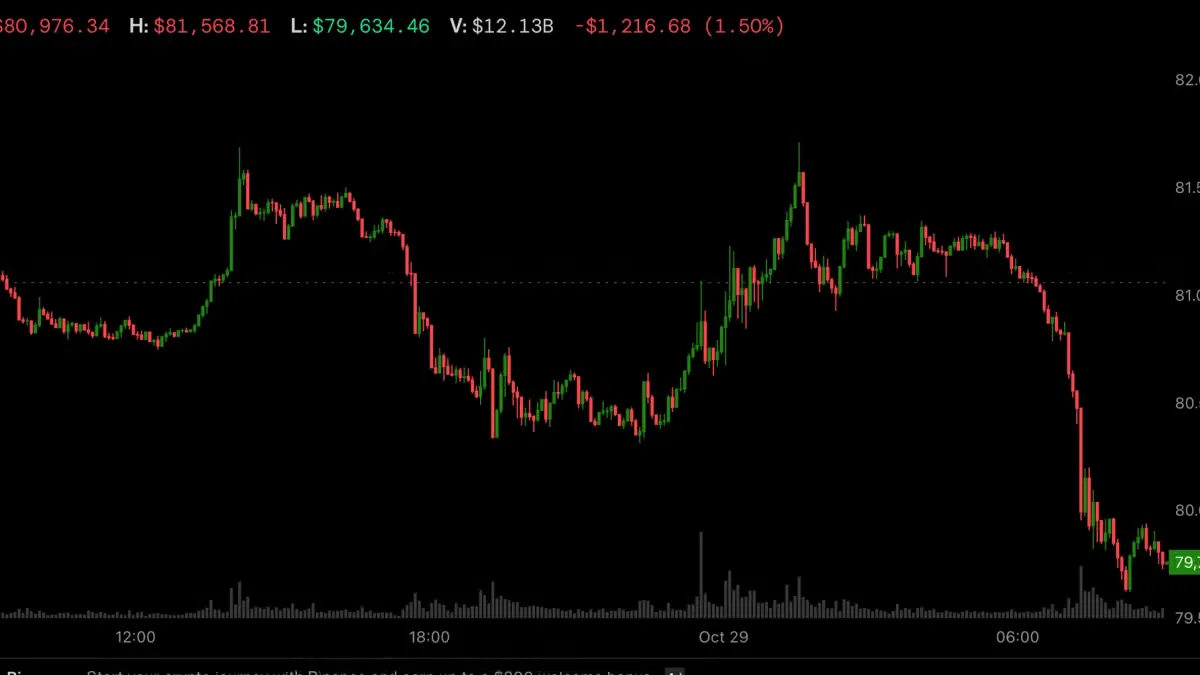
Bitcoin's price fell back below the psychological level of US$80,000 on Thursday (29/10/2026) Asia time, reversing the previous two days' gains. The largest cryptocurrency slid from above US$81,700 to around US$79,800, dragging down most other tokens and triggering massive liquidations in the derivatives market.
The main trigger came from Seoul. Samsung Electronics shares plunged more than 5% after its semiconductor division posted operating profit of 106.5 trillion won for the July–September period. The figure did surge 15-fold year-on-year, but it still fell short of the analyst consensus of 108.5 trillion won. The company also announced a capital expenditure plan of 84.4 trillion won, or about US$63 billion, this year, up nearly 60%—a signal of aggressive expansion that instead fueled concerns over short-term margins.
Although the group's consolidated net profit still grew 39%, the market reaction remained negative. South Korea's Kospi index fell more than 2%, while Nasdaq futures were down 1.4%. The wave of risk aversion quickly spread to the crypto market, pressuring Bitcoin, Ether, XRP, Solana, and a number of other tokens.
The second factor weighing on sentiment was the Federal Reserve's decision. The US central bank chose to hold its benchmark interest rate in the 3.75%–4% range, a move market participants called a hawkish hold. Fed Chair Kevin Warsh acknowledged progress in controlling inflation, but stressed that price pressures were still too high. ING even expects the Fed to raise interest rates again in December, following the hike last September.
"Real yields are still attractive, and there is ample income available in high-quality bond markets," said Rick Rieder, Chief Investment Officer of Global Fixed Income at BlackRock, as quoted. He advised investors to avoid overly bold bets on the direction of interest rates. "We still like moderate duration, taking advantage of current income opportunities while remaining patient as this highly divergent economy develops."
For the crypto market, the Fed's hawkish tone means real yields—bond yields after subtracting inflation—could stay at high levels. This condition has historically reduced the appeal of speculative assets such as Bitcoin, because investors can earn attractive returns from far safer fixed-income instruments.
Selling pressure in the derivatives market was unavoidable. Market data showed US$356 million worth of futures positions were liquidated in the past 24 hours, with long positions—bets that prices will rise—accounting for US$205 million. Bitcoin futures liquidations reached US$94 million, while Ether futures were around US$72 million. The figure reflects how fragile leveraged positions are amid macroeconomic uncertainty.
For Indonesian investors, this dynamic is a reminder that the domestic crypto market is not immune to global turmoil. Although Bitcoin trades 24 hours, sentiment from Wall Street and Seoul often spills over into domestic crypto exchanges, particularly through stablecoin movements and liquidity on global platforms. Appreciation of the rupiah against the US dollar can also affect the appeal of crypto asset returns for local investors.
Going forward, market attention will focus on the release of US inflation data and further signals from the Fed ahead of the December meeting. If expectations of an interest rate hike strengthen, Bitcoin may struggle to reclaim the US$80,000 level convincingly. Conversely, if economic data softens, risk assets could regain appeal. The question is whether the crypto market can hold up amid a wave of monetary tightening that has not yet ended?