Iran Threatens to Sink US Warships in Strait of Hormuz, Aramco Facility Attacked
Baca dalam 60 detik
- Panglima IRGC Ali Ozmaei menyatakan Teheran tengah menghitung setiap detik untuk menenggelamkan kapal perang Amerika Serikat di pintu masuk Selat Hormuz.
- Serangan terhadap gedung administrasi Saudi Aramco di Dhahran memicu kebakaran tanpa korban, memperpanjang rentetan aksi milisi Houthi terhadap infrastruktur Saudi dalam sepekan terakhir.
- Presiden Trump menegaskan tidak akan menyerang Iran sebelum pemilu sela 3 November, sementara Centcom membantah klaim Teheran bahwa Selat Hormuz berada di bawah kendali Iran.
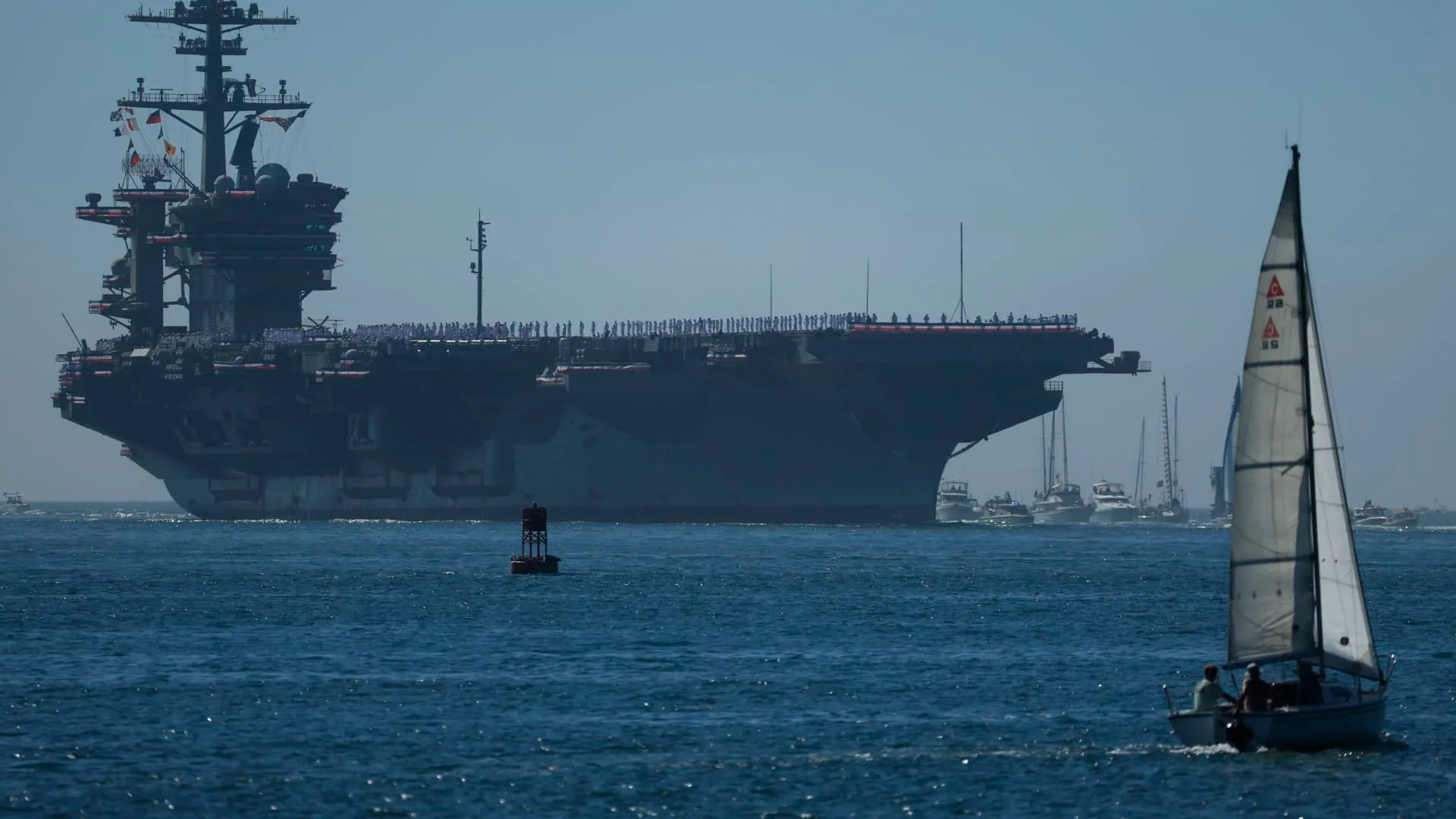
Tensions in the Gulf region flared sharply after the commander of the Islamic Revolutionary Guard Corps (IRGC), Ali Ozmaei, said Tehran was "counting every second" to sink American warships approaching the entrance to the Strait of Hormuz. The statement was made in a television interview broadcast by Iranian state-affiliated media on Wednesday and immediately triggered fresh concerns over the shipping lane that carries nearly a fifth of the world's oil supply.
Ozmaei openly challenged Washington. According to him, if America believes the Strait of Hormuz is still open, its warships are welcome to come closer. He said Iranian forces were impatiently waiting for the moment to cripple the US fleet in those strategic waters. The statement came just a day after President Donald Trump stressed that the American military would not launch an attack on Iran before the midterm elections on 3 November.
At the same time, Saudi Arabia reported that an administrative building belonging to oil giant Saudi Aramco in Dhahran was targeted in an attack the previous night. The Saudi Energy Ministry said the incident caused a fire, but there were no casualties. The attack was part of a wave of actions by the Iran-backed Houthi militia based in Yemen, which has intensified attacks on targets in the Kingdom over the past week.
King Khalid International Airport in Riyadh was earlier targeted in an attack that caused a number of casualties, flight cancellations, and property damage. Local authorities extended the airport closure until Saturday. Yemen's civil war has also re-entered a phase of full-scale combat between the Houthis and the internationally recognized government, amid regional escalation triggered by the US-Iran conflict.
The Centcom commander denied Iran's claim that the Strait of Hormuz is under Tehran's control. In a statement on platform X, Centcom stressed that the IRGC naval commander does not have an adequate fleet, and that American forces together with regional partners remain in control of the shipping lane. Centcom also said that a day earlier US forces helped Gulf states ship more than 19 million barrels of crude oil through the strait.
"If America thinks the Strait of Hormuz is open, come closer. We are waiting for US warships to approach the entrance of the strait so we can sink them," Ozmaei said, as quoted by Iranian state-affiliated media.
A report by The Wall Street Journal said Iran is reinforcing defenses around sensitive sites, including nuclear facilities, and has conveyed a message to regional officials that Tehran will retaliate against any new US attack with retaliatory action across the Middle East. The move is seen as preparation for a possible war in the coming weeks.
On the shipping lane, a cargo ship was reported to have caught fire and sunk in the Strait of Hormuz after allegedly hitting a sea mine while passing through. CNBC has not been able to independently verify the report. The maritime security organization United Kingdom Maritime Trade Operations later reported that a container ship was hit by an "unknown projectile" based on verified sources.
For Indonesia, the escalation in the Gulf carries direct implications for energy price stability and maritime logistics costs. As a crude oil importer, Indonesia is highly vulnerable to spikes in Brent prices and shipping insurance premiums, which typically surge when geopolitical risk in the Strait of Hormuz rises. The government needs to anticipate pressure on energy subsidies and the trade balance if the conflict is prolonged.
The question now is whether the IRGC's aggressive statements are merely rhetorical maneuvering ahead of the US midterm elections, or a genuine signal of preparation for open confrontation. What is clear is that the Strait of Hormuz has once again become the most dangerous point on the global geopolitical map, and every ship passing through it is now betting on an increasingly fragile stability.