AI Helps Early Detection of Skin Cancer, But Is No Substitute for a Dermatologist's Eye
Baca dalam 60 detik
- Teknologi AI-assisted dermoscopy menawarkan cara baru memantau perubahan tahi lalat dari waktu ke waktu, namun akurasinya masih bervariasi antarsistem dan belum teruji merata pada semua warna kulit.
- Angka kejadian melanoma di Amerika Serikat melonjak sekitar 150% sejak awal 1990-an dan diproyeksikan terus naik hingga 2040, menjadikannya kanker kedua paling umum didiagnosis.
- Kesadaran masyarakat Indonesia terhadap risiko kanker kulit masih rendah meski paparan sinar UV di wilayah tropis tergolong tinggi, sehingga edukasi dan skrining mandiri menjadi krusial.
Skin cancer continues to record an alarming rise in cases. In the United States, the incidence of melanoma—the deadliest form of skin cancer—is estimated to have surged by around 150% since the early 1990s, and is projected to become the second most commonly diagnosed cancer by 2040. This figure is a wake-up call that early detection is no longer an option but a necessity.
The problem is that many moles or skin lesions that develop into cancer produce no early symptoms such as pain or itching. Some even hide in concealed areas: under the nails, on the palms, or on the soles of the feet. This makes self-examination and professional screening increasingly vital, especially for at-risk groups.
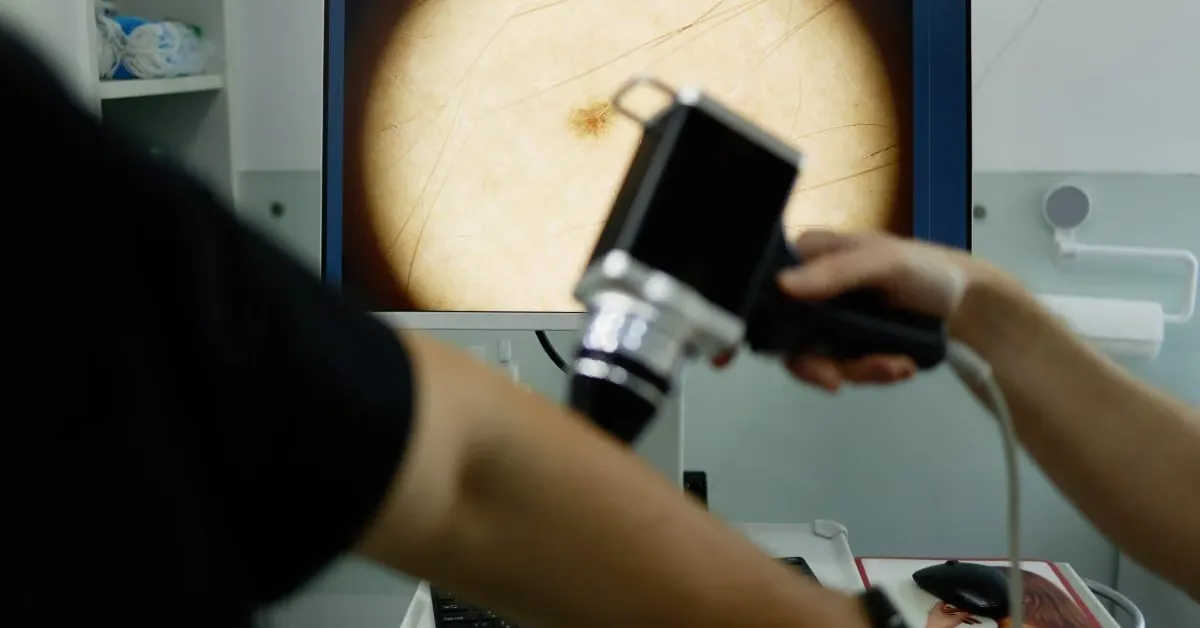
As that need grows, artificial intelligence (AI) technology is beginning to enter the field of dermatology. A trial conducted by Medical News Today at Cadogan Clinic, London, using the Canfield IntelliStudio3 system, showed how AI-assisted dermoscopy can map and analyze skin lesions in detail. The process begins by marking all moles, followed by a high-resolution 360-degree scan, then comparing the results with previous data.
Susan Mayou, a senior dermatologist and co-founder of Cadogan Clinic, stressed that AI has an advantage in documenting and comparing lesions over time. "Subtle changes in a mole that are hard to see with the naked eye can be far easier to identify when high-quality images are compared with previous assessments," she said. AI can also flag lesions that require further attention, providing an extra layer of information to support clinical decisions.
However, Mayou cautioned that AI must not replace clinical judgment. "AI should complement, not replace, the expertise of a dermatologist. Examining skin involves more than analyzing a single image. We consider the patient's history, risk factors, the appearance of the lesion, the overall pattern of moles, and changes they may have noticed themselves," she explained.
"There is an evidence gap, particularly in real-world populations and across skin tones. NICE specifically highlights the need for further evidence on the performance of automated systems in people with black and brown skin." — Susan Mayou, MD
This gap is an important note, especially for Indonesia, which has a diversity of skin tones. Although skin cancer is often associated with fair skin, Mayou stressed that melanoma can occur in anyone. "Skin cancer is also harder to recognize on darker skin, so awareness of unusual or changing lesions becomes very important," she added. In tropical regions with year-round ultraviolet exposure, this risk cannot be ignored.
For early detection, Mayou recommends the ABCDE method: Asymmetry, irregular Border, uneven Color, increasing Diameter, and Evolution (change over time). In addition, the "ugly duckling" sign—a single mole that looks different from the others—also warrants attention. "The most important warning sign is change. If a mole changes in size, shape, or color, especially within weeks or months, get it checked immediately," she stressed.
Mayou does not recommend a specific age to begin routine screening. An individualized approach is key. "For people at average risk, knowing your own skin and examining it regularly is important from adulthood. Professional assessment becomes very valuable if you have risk factors or find a new, changing lesion," she said. Groups that need to be more vigilant include those with fair skin, a history of excessive sun exposure, many moles, a family history of melanoma, or a weakened immune system.
Although AI offers efficiency, Mayou remains cautious. "I would be careful about calling any AI system perfect. Accuracy can vary greatly between technologies, and performance is influenced by image quality, the type of lesion, and patient characteristics," she said. She emphasized that the final clinical interpretation must remain in the hands of trained health professionals.
Going forward, the question is no longer whether AI will be part of dermatology, but how quickly these systems can be validated for diverse populations—including in Indonesia. Without inclusive evidence, the promise of equal early detection for all skin tones still leaves a great deal of work to be done.