USGA Relaunches GHIN App: Pro Stats and Community Challenges Take Center Stage
Baca dalam 60 detik
- USGA memperbarui aplikasi GHIN dengan antarmuka baru, statistik performa, dan fitur tantangan komunitas.
- Fitur statistik memungkinkan pegolf menganalisis pola permainan, sementara GHIN Challenges menghadirkan kompetisi lokal berbasis handicap.
- Langkah ini menandai pergeseran GHIN dari sekadar pencatat skor menjadi platform analitik dan jejaring sosial bagi pegolf.
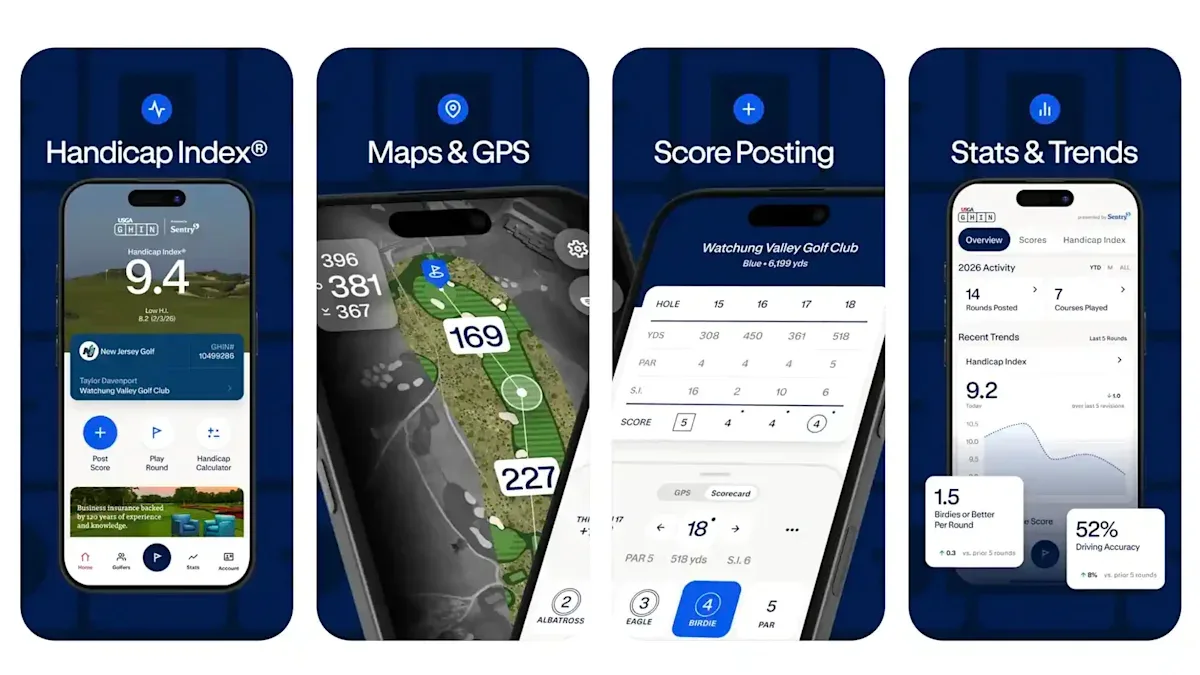
The United States Golf Association (USGA) has officially launched a major update to the GHIN app, bringing a range of features that change how golfers interact with their game. The app, long known as a score-posting tool, has now evolved into an analytics and community platform, with the addition of in-depth statistics and challenges between golfers at the local level.
The update includes a redesigned interface, an easier score-posting process, better course graphics, expanded GPS capabilities, year-round performance tracking, and a new feature that connects users with other golfers in their community. Based on a week of testing, the two most prominent features are the statistics section and GHIN Challenges.
The statistics section, inspired by the GHIN Rewind feature, presents performance data across the season. Users can see scoring trends, birdie counts, three-putts, Handicap Index progression, and per-hole performance. This data allows golfers to identify weaknesses in their game, much like professional players do. For example, a golfer might realize that their recovery ability after mistakes is poor, so they need to take a more conservative approach when the ball is in the rough or a bunker.
GHIN Challenges leverages Allied Golf Associations to provide local leaderboards. Golfers can compete using their Handicap Index and net score, making casual rounds more competitive. For those who often play at public courses, this feature offers a new way to stay connected and motivated. These shared leaderboards also serve as an added incentive to make every round more meaningful.
"After a week, my impression is that the GHIN app is not just a place to post scores. It gives golfers a better way to understand their game, find enjoyable competition, and stay connected with the community," the reviewer wrote in the original article.
The update marks a shift in USGA's strategy for the digital market. Where GHIN previously functioned only as a handicap database, it is now trying to emulate fitness platform models like Strava or Garmin Connect, which combine performance tracking with social interaction. This move has the potential to increase user engagement, especially among younger generations accustomed to data-driven and gamified apps.
Even so, challenges remain. Adoption of these new features depends on how actively local golf associations manage challenges and update leaderboards. In addition, golfers outside the United States may not get the full benefit because the features are tied to the GHIN system managed by the USGA. However, for the global golf market, including Indonesia, which has a growing golf community, a model like this could serve as a reference for local sports app developers.
Looking ahead, it will be interesting to see whether the USGA expands these features internationally or partners with golf organizations in other countries. If successful, GHIN could become a new standard in amateur golf performance tracking, while strengthening the USGA's position as a global golf authority. The question is, will other national golf associations follow suit or instead develop similar platforms independently?