PKB Proposes Special Committee on Gibran's Diploma, Golkar Says Summoning KPU Is Enough
Baca dalam 60 detik
- PKB mendorong pembentukan panitia khusus untuk menyelidiki tidak adanya bukti ijazah Gibran Rakabuming Raka sebagai syarat pencalonan wapres 2024.
- Golkar menilai Komisi II DPR cukup memanggil KPU dan Bawaslu untuk mengklarifikasi proses pencalonan, tanpa perlu pansus atau hak angket.
- MK sebelumnya menyatakan tidak menemukan dokumen ijazah Gibran, tetapi menyerahkan tindak lanjut ke lembaga berwenang sesuai UUD 1945.
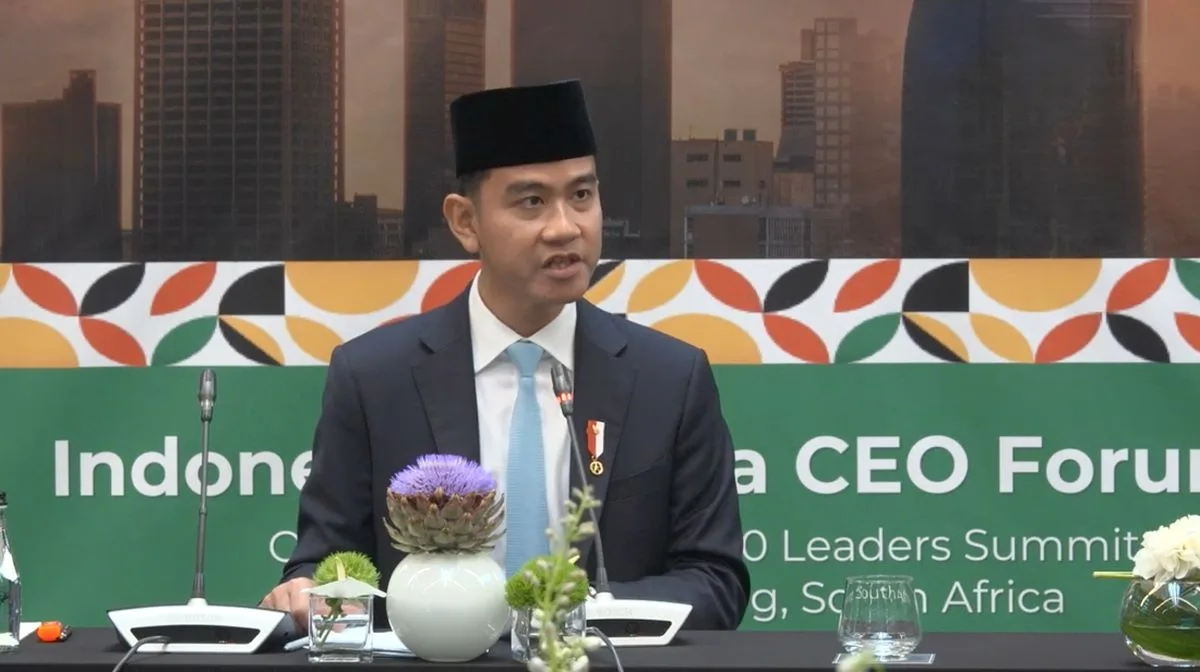
The proposal to form a special committee (pansus) to follow up on the Constitutional Court's (MK) ruling regarding the absence of evidence of Vice President Gibran Rakabuming Raka's diploma as a requirement for candidacy in the 2024 Presidential Election has begun to circulate in the DPR. A member of Commission II from the PKB faction, Eka Widodo, believes a pansus is needed to clarify the facts objectively, while the Golkar faction rejects it and offers a lighter step: summoning the election organizers.
The statement by Edo—as Eka is known—was made in response to the MK's consideration stating it found no document proving Gibran holds a high school-equivalent diploma from abroad. According to Edo, state institutions with constitutional authority must ensure the fulfillment of the requirements for presidential and vice-presidential candidates. He stressed that the proposal is not a form of disregarding the MK's ruling, but rather the exercise of the DPR's oversight function.
"We must respect the MK's ruling. But the Court's considerations must also be read in full. If there are indeed factual issues that need to be ascertained, then the state institution with the authority must carry out verification objectively, transparently, and based on evidence," Edo said in a written statement, Thursday (8/10).
Edo referred to Articles 7A and 7B of the 1945 Constitution of the Republic of Indonesia, which regulate the mechanism for removing the president and/or vice president if proven to have committed violations or no longer meet the requirements. He said the DPR can use oversight instruments, including a pansus, to investigate thoroughly. However, he stressed that a pansus is not a tool to judge or take over the authority of other institutions, but to clarify the facts: whether the educational documents truly exist, how the equivalency process was carried out, who verified it, and whether the procedure complied with the law.
On the other hand, a member of Commission II from the Golkar faction, Ahmad Doli Kurnia, holds the view that there is no need for a pansus, an inquiry right, or any other form of investigation. According to him, Commission II only needs to summon the General Elections Commission (KPU) and the Elections Supervisory Agency (Bawaslu) to explain why Gibran's candidacy process passed even though the MK stated his diploma did not exist.
"Commission II should summon the election organizers, yes, summon the election organizers, ask why the candidacy process could happen yesterday which was ultimately proven by the Constitutional Court to have no diploma. Well, let whoever it is explain, the KPU, Bawaslu, and all that," Doli said.
Doli also believes the impeachment discourse depends entirely on the agreement of political party leaders in the DPR. He said the discussion of impeachment has entered the political realm, no longer purely a legal matter. Golkar itself is a party supporting Prabowo-Gibran in the 2024 Presidential Election, with Chairman Bahlil Lahadalia who now serves as Coordinating Minister for Downstreaming and Energy Transition.
The MK's ruling itself began with a lawsuit filed by several parties, including Denny Indrayana, who questioned the validity of Gibran's educational requirement. During the hearing, the petitioner stated that the document used was only an equivalency certificate from the Ministry of Education, not a diploma or proof of graduation. The MK ultimately declared the lawsuit inadmissible because the petitioner lacked legal standing. However, in its considerations, constitutional judge Adies Kadier revealed that factually Gibran is no longer a vice-presidential candidate, so the diploma issue falls within the domain of other authorized institutions.
The difference in stance between PKB and Golkar reflects the dynamics of the Prabowo-Gibran government coalition. Although both support the government, PKB, led by Muhaimin Iskandar—a former rival in the 2024 Presidential Election—chooses to push for deeper oversight, while Golkar takes a more conservative position by relying on existing mechanisms. The DPR's next steps will determine whether this issue stops at Commission II or escalates into a larger constitutional precedent.
If a pansus is actually formed, the public will await how far the DPR dares to investigate thoroughly without getting trapped in practical political interests. Conversely, if only the summoning of the KPU and Bawaslu is carried out, the accountability of the candidacy process remains an open question. How the DPR balances its oversight function and coalition stability will be a test of the parliament's credibility in the eyes of voters.