Airport in Réunion Opts for Natural Ventilation, Saves 60% Energy Without AC
Baca dalam 60 detik
- Bandara Roland Garros di Réunion mengandalkan desain atap dan ventilasi alami untuk mendinginkan terminal, menghindari penggunaan AC.
- Langkah ini memangkas tagihan energi hingga €150.000 per tahun dan emisi karbon delapan kali lebih rendah dibanding bangunan berpendingin udara.
- Model ini sulit diterapkan di kota besar Indonesia karena polusi udara dan kebiasaan masyarakat yang sudah terbiasa dengan AC.
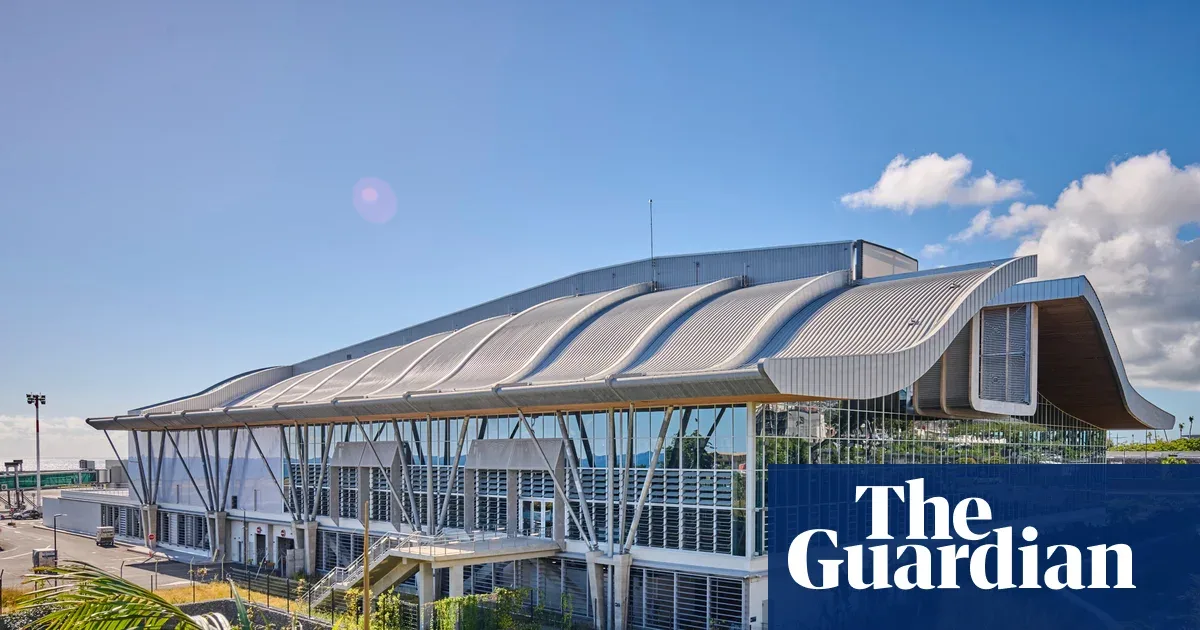
Roland Garros Airport on Réunion Island, a French territory in the Indian Ocean, proves that a modern airport terminal does not have to rely on air conditioning (AC). Since it opened in 2024, the airport's arrivals terminal has relied on natural ventilation designed specifically to lower indoor temperatures, an approach rarely found in large-scale transport infrastructure.
The terminal's roof design is key. The roof of the rectangular building curves upward from both of its long sides, but does not meet in the middle; instead it forms a kind of "canyon" that creates a low-pressure area. This pressure difference draws tropical winds in through vents on each side, which can be adjusted according to weather conditions. Ceiling fans 7.5 meters in diameter help distribute air throughout the space.
In the wet summer season, when temperatures reach 30°C with high humidity, this airflow lowers the perceived temperature by four to five degrees, approaching the level of comfort usually provided by AC. In the dry season, the airflow is reduced, and when a cyclone hits, the entire building is sealed shut.
Marc Delanoë, the airport's Director of Sustainable Development, said the decision not to use AC was a risky bet made back in 2016. "I was responsible for proving to management that this could be done. The more we delved into the studies, the more convinced we were that we were right," he said. He added that local architects had long applied natural ventilation in various buildings on Réunion, so his team only needed to scale it up.
"We wanted to break the assumption that summer comfort is only about room temperature. Our goal was to keep the indoor air temperature equal to the outdoor temperature, while creating airflow of 1 meter per second to lower the perceived temperature," said Éric Bussolino, Technical and Environmental Director at AIA Life Designers, the project's lead architecture firm.
Delphine Robert, a member of the local tourism welcome team who works one day a week at the terminal, said she is more comfortable working there than in other offices. "The air circulation is very good. I often got sick because of air conditioning that was too cold in the office, so working in a space with natural air is far more pleasant," she said.
Even so, Delanoë acknowledged that this model is difficult to apply in large cities in mainland Europe where the air is polluted. "Pollutants would concentrate indoors, it wouldn't work," he said. He also highlighted the habits of Europeans who are already used to AC at home and in cars, making it hard for them to adapt to warmer room temperatures.
For Indonesia, the story of Roland Garros Airport offers both a lesson and a challenge. With a similar tropical climate, a number of airports in Indonesia such as Soekarno-Hatta or Ngurah Rai could potentially adopt natural ventilation to reduce energy consumption. However, air pollution levels in major cities such as Jakarta and Surabaya are a major obstacle. In addition, passenger expectations of cool and sterile waiting areas mean the transition to passive cooling requires a gradual approach, for example combining natural ventilation with radiative cooling or evaporative coolers.
The Indonesian government, through the Ministry of Transportation and PT Angkasa Pura, is promoting the "green airport" concept at several airports. The study from Réunion airport can serve as a reference that initial investment in passive design can yield long-term operational savings. However, without regulations mandating energy efficiency and incentives for green buildings, the adoption of such technology will still depend on the initiative of each airport operator.
Going forward, the question is no longer whether natural ventilation can fully replace AC, but how far dense, polluted tropical cities can integrate passive cooling strategies into their public infrastructure. If an airport can do it, why not office buildings and shopping centers?