Dollar Strengthens, Bitcoin Plunges Below US$83,000: Market Bets The Fed Will Raise Rates Again
Baca dalam 60 detik
- Pasar berjangka CME FedWatch memperkirakan empat kenaikan suku bunga The Fed hingga Juni 2027, membawa fed funds ke kisaran 4,75%-5%.
- Imbal hasil obligasi AS melonjak ke level tertinggi multi-tahun, menekan aset berisiko termasuk bitcoin yang anjlok di bawah US$83.000.
- Penguatan dolar dan kenaikan yield global berpotensi memicu arus modal keluar dari pasar berkembang, termasuk Indonesia.
Selling pressure once again hit the crypto market after bitcoin slipped below US$83,000, about 5% off its local peak of US$87,500. The decline came amid a surge in US government bond yields across all tenors, forcing investors to recalculate their expectations for The Federal Reserve's monetary policy.
CME FedWatch shows market participants now expect The Fed's benchmark rate to end in the 4.75%-5% range by June 2027. That projection assumes four 25 basis point hikes from the current level of 3.75%-4%. This month alone, The Fed has raised rates by 25 basis points. This is a clear signal that the era of cheap money will not return anytime soon.
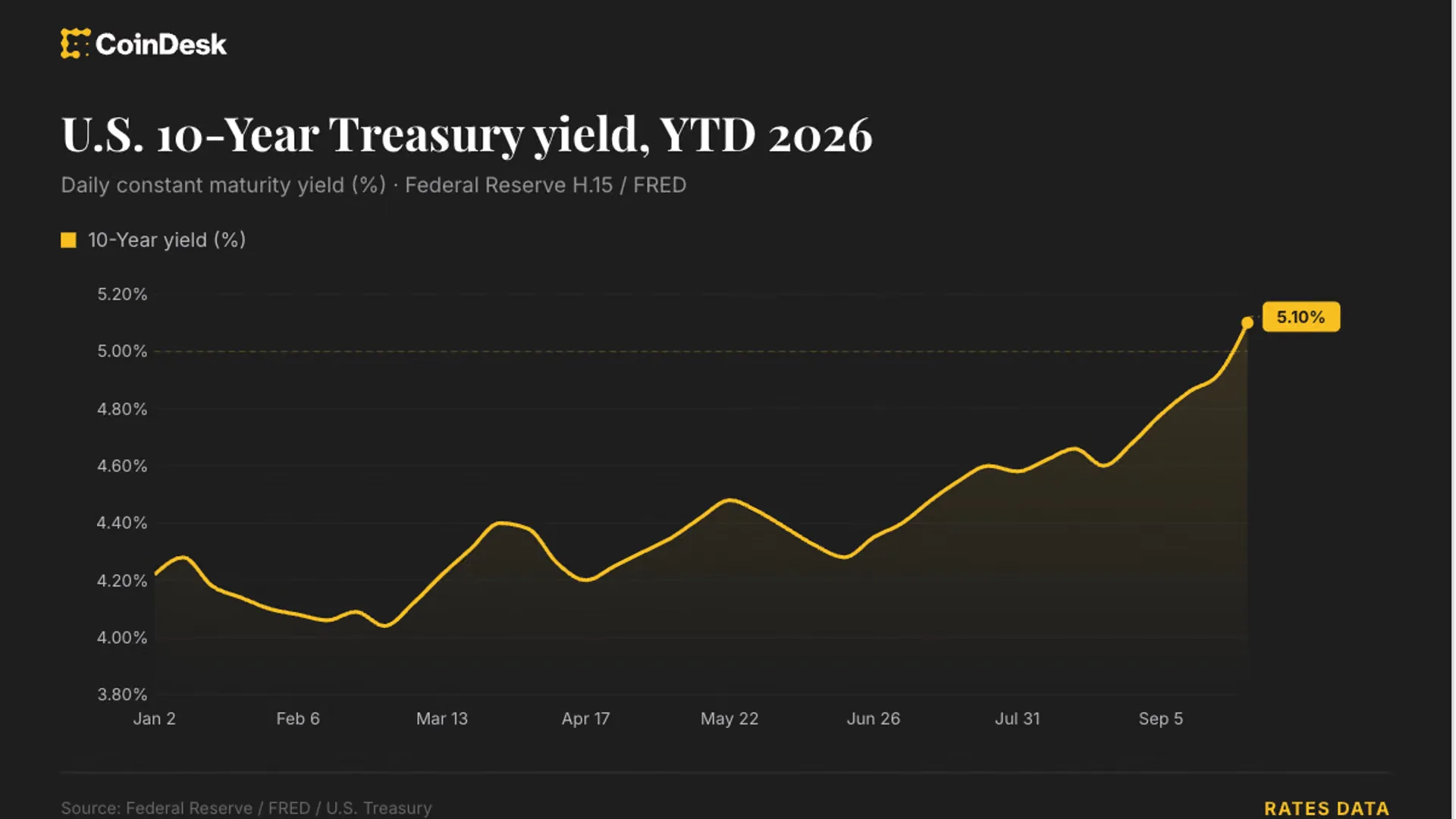
The yield surge is not confined to the US. Government bonds in France, Germany, the UK, and Japan are also under selling pressure. The yield on 20-year US Treasuries is approaching 5.5%, pushing the long-duration bond ETF TLT to an all-time low below US$80. Meanwhile, the 10-year yield has breached 5.1%, a level last seen in 2007. Creeping global borrowing costs are an alarm for emerging markets.
A stronger dollar and high yields are broadly pressuring risk assets. The US dollar index has broken above 101, up 3% since the start of the year. Bitcoin, often viewed as an inflation hedge, is instead under pressure as global liquidity tightens. Gold has not escaped either; although it still holds above US$4,200, the precious metal has slumped 25% from its historic January peak. This phenomenon shows that rising real yields and expectations of tight monetary policy are more dominant than the safe-haven narrative.
There are three main drivers behind the yield surge. First, the US economy remains solid: the S&P Global Composite PMI, covering manufacturing and services, beat expectations in September, rising nearly 4.3% to 58.4. Second, tensions in the Middle East are clouding the inflation outlook, which has also pushed up oil and diesel prices. Third, large financing needs for AI infrastructure are adding to the supply of bonds competing with Treasuries. The combination of strong growth, inflation risk, and high demand for capital is what is pushing yields higher.
"The question now is whether the prospect of Fed rate hikes will continue to lift yields and the dollar," runs the common thread emerging from market analysis.
On the other side, the Japanese yen continues to weaken against the dollar, now back at 159 per dollar. This reverses most of the yen's recovery from around 153 after last month's US-Japan intervention. The yen's weakness adds pressure on Asian currencies, including the rupiah, as investors tend to place funds in dollar assets that offer more attractive yields.
Indonesian Context
For Indonesia, the combination of a strong dollar and soaring US Treasury yields is a tough test. Bank Indonesia faces a dilemma: raise interest rates to stem foreign capital outflows, or stay accommodative to support domestic growth. Selling pressure in the government bond (SUN) and stock markets could worsen if outflows continue. Foreign investors holding rupiah bonds will demand a higher risk premium, meaning government and corporate borrowing costs could rise. On the other hand, commodity exporters may benefit from a strong dollar, but slowing global demand could offset that gain.
The domestic crypto market is not immune either. Bitcoin and other digital assets traded on Indonesian exchanges will follow global movements. Falling prices could trigger panic selling among retail investors, while trading volume may rise on short-term speculation. The Financial Services Authority (OJK) and Bappebti need to monitor this volatility so it does not create systemic risk in a still-developing sector.
Looking ahead, the question is not only how high The Fed will raise rates, but how long the market can tolerate expensive capital costs. If the expectation of four hikes materializes, pressure on global risk assets will continue, and countries with current account deficits like Indonesia must prepare for a wave of foreign fund outflows. Do the government and the central bank have enough buffers to dampen the turmoil?