When Istisqa Prayer Is Not Enough: The Unique Javanese Tradition of Calling for Rain, from Pouring Dawet to Washing Saddles
Baca dalam 60 detik
- Masyarakat di sejumlah daerah Jawa memiliki beragam ritual turun-temurun untuk memohon hujan, mulai dari menyiram dawet cendol hingga membasuh pelana kuda.
- Praktik ini hidup berdampingan dengan salat istisqa yang dianjurkan dalam Islam, mencerminkan akulturasi budaya lokal dan ajaran agama yang telah berlangsung lama.
- Tradisi semacam ini menjadi penanda kuatnya ikatan komunal di pedesaan, sekaligus menghadapi tantangan modernisasi dan perubahan iklim yang kian ekstrem.
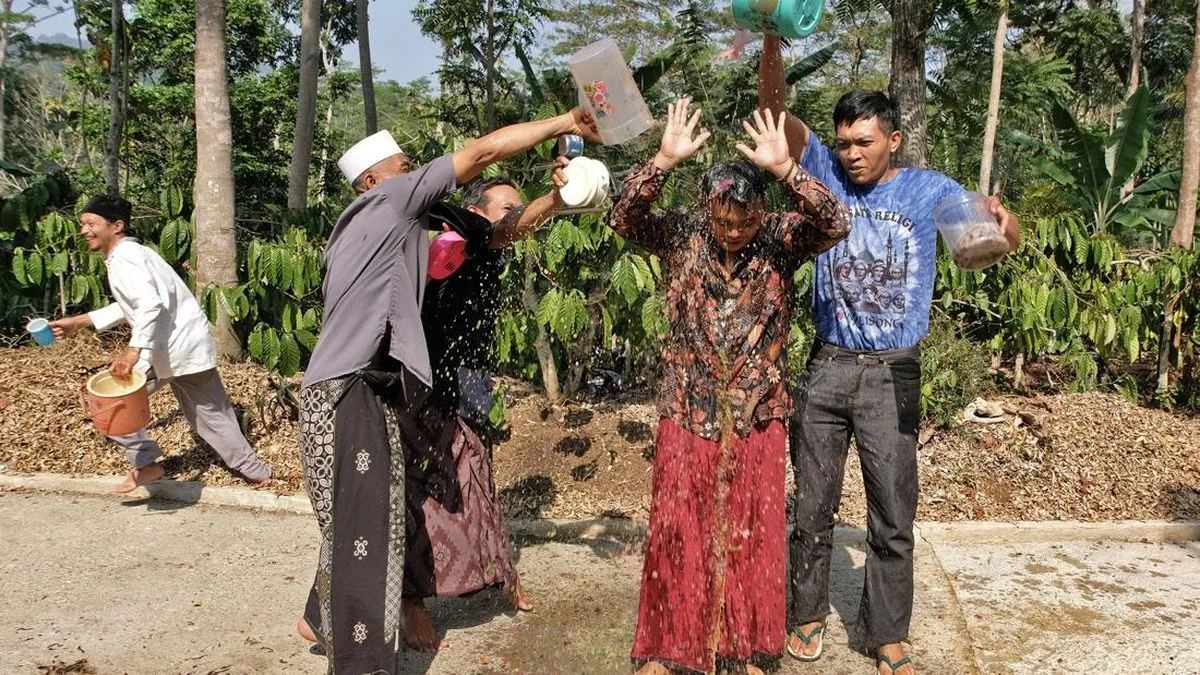
Amid a prolonged dry season, some residents of Java are not relying solely on istisqa prayer to ask for rain. They are reviving ancestral rituals rich in meaning, such as pouring dawet cendol and washing horse saddles, as a collective effort to call down water from the sky.
These practices are not merely a cultural spectacle. For agrarian communities, rain determines life: crop failure, dried-up wells, and clean water crises are real threats that drive them to preserve tradition. Unlike istisqa prayer, which rests on religious law, these rituals stem from local wisdom passed down across generations, often blended with prayers and offerings.
CNN Indonesia reported that rain-invoking traditions in Java take many forms. Some resemble a people's festival by pouring dawet onto the streets, while others are more sacred, washing saddles as symbols of the vehicles of ancestors or rain-guarding deities. These variations show that the same message—a plea for nature's bounty—is creatively interpreted by each community.
Cultural anthropologists often view this phenomenon as evidence that Javanese society can absorb outside influences without losing its identity. Istisqa prayer, which arrived with the spread of Islam, did not erase older rituals but runs parallel to them. In many cases, religious figures and village elders lead events side by side, showing a subtle social negotiation between doctrine and custom.
Yet behind the cultural charm, serious problems loom. Climate change makes seasonal patterns increasingly hard to predict. Longer dry seasons and uneven rainfall force farmers and villagers to find ways to survive. Rituals become a kind of collective catharsis—not only asking for rain but also strengthening solidarity when uncertainty presses in.
"This tradition is not just about asking for rain, but also about tending collective memory and the social bonds of residents," said a cultural observer, describing the essence of the practice.
For readers in Indonesia, especially young people living in cities, this phenomenon can be a mirror showing that climate adaptation is not always synonymous with advanced technology. Local knowledge stored in ritual has strategic value: it teaches patience, mutual cooperation, and respect for nature. As the government pushes climate change mitigation, voices from these villages deserve a hearing as part of community-based solutions.
Going forward, the question is not whether this tradition will survive, but how it will adapt. If extreme dry seasons become the new norm, will these rituals remain relevant or be displaced by scientific approaches such as weather modification? What is clear is that as long as Javanese people still place hope in the sky, pouring dawet and washing saddles will continue to be a symbolic language connecting humans with nature and their ancestors.