Constitutional Court Justice Arsul Sani Recounts Personal Experience at UTS During Gibran Diploma Verification Hearing
Baca dalam 60 detik
- Hakim Konstitusi Arsul Sani mengungkap pernah menempuh kursus bahasa Inggris di Insearch Language Center, yang kini menjadi UTS College, untuk menguji secara kritis status pendidikan Gibran Rakabuming Raka.
- KPU bersikeras proses verifikasi dokumen pendidikan Gibran telah sesuai dengan PKPU 19/2023, namun pemohon menilai ada kejanggalan dalam keabsahan ijazah dan indikasi pelanggaran terstruktur.
- Sidang PHPU ini berpotensi membatalkan penetapan presiden-wakil presiden terpilih dan memicu pemilihan wakil presiden baru oleh MPR dalam 60 hari, dengan implikasi besar bagi stabilitas politik nasional.
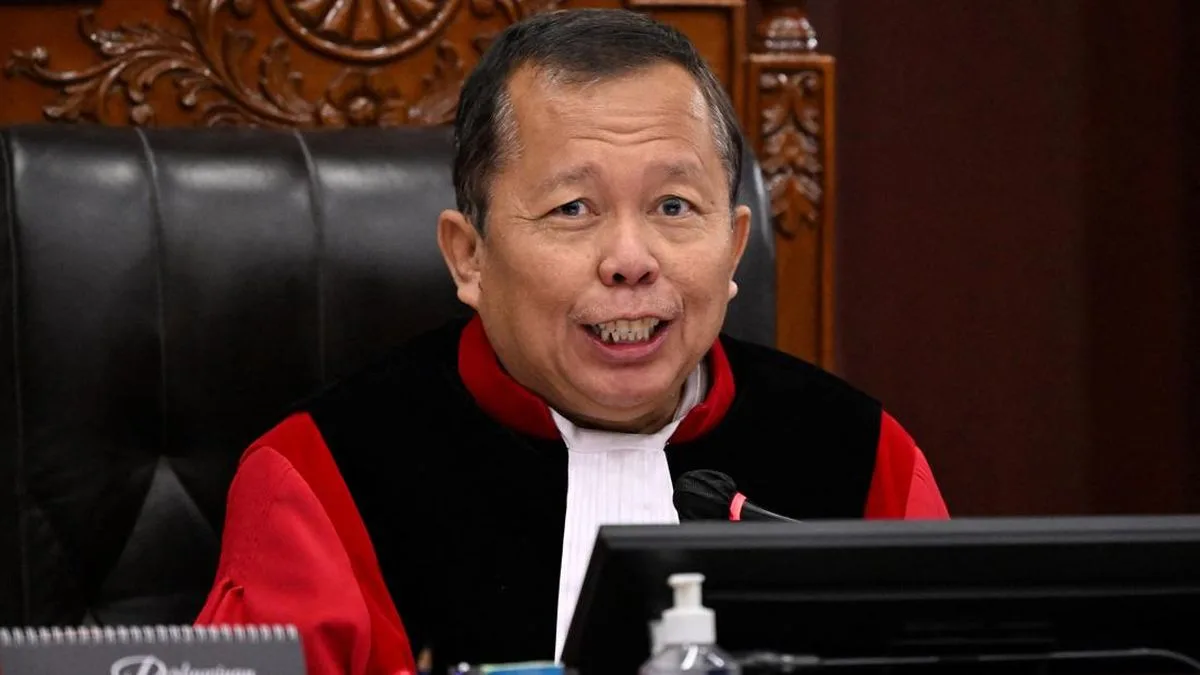
The Constitutional Court (MK) held a follow-up hearing in the 2024 presidential election results dispute (PHPU) case, with the agenda of examining the educational requirements of vice-presidential candidate Gibran Rakabuming Raka. During the hearing, Constitutional Court Justice Arsul Sani drew attention after revealing his personal experience taking an English course at Insearch Language Center, an institution that has since transformed into University of Technology Sydney (UTS) College, Australia. This admission became the basis for Arsul to sharply question the General Elections Commission (KPU) over its verification of Gibran's educational documents.
Arsul, also known as a senior politician, began his questioning by referring to KPU Official Report Number 1859/2023, which stated that all requirements of the prospective ticket of Prabowo Subianto and Gibran had been verified and declared complete. However, he pressed the KPU to transparently explain which documents were actually verified, particularly regarding Gibran's secondary education in Singapore. "Was it only the equivalency certificate from the Ministry of Education, or also the diploma, certificate award, or diploma from the school in Singapore?" Arsul pressed, as quoted from the hearing.
Furthermore, Arsul questioned the equivalence of Gibran's graduation documents with the General Certificate of Education (GCE) standard at the O-Level or N-Level. He then linked this to his own experience taking a three-week English course at Insearch UTS. "I happen to be a UTS alumnus, so I understand the ins and outs of Insearch very well," he said. Armed with that knowledge, Arsul demanded clarity on the status of the pathway program Gibran took, whether it was matriculation, foundation, or a similar program, because this is crucial to determining the validity of the equivalency diploma.
Responding to the lawsuit, the KPU's legal counsel asserted that Gibran's candidacy contained no legal defect. They referred to Article 18 paragraph 3 of KPU Regulation 19/2023, which stipulates that prospective candidates who graduated from a foreign high school may use higher-education graduation documents to fulfill the requirement. The KPU stated it had verified the validity of Gibran's high-school-level equivalency certificate and concluded that the entire process complied with laws and regulations. "We have verified the truth of those requirement documents and they were legally declared complete," a KPU representative stressed.
However, the petitioners led by Denny Indrayana maintained their position that there was a legal defect in the appointment of Gibran as vice president. They alleged a structured, systematic, and massive (TST) process to pass Gibran, including the alleged invalidity of the equivalency certificate for the diploma from Insearch UTS Australia. In their petitum, the petitioners asked the Constitutional Court to disqualify Gibran and annul KPU Decision Number 504 of 2024 on the appointment of the elected ticket. If granted, the MPR would be asked to hold a session to elect a new vice president within 60 days after the verdict is read out.
"I once took a three-week English course there. I also understand what Insearch UTS is, because I happen to be a UTS alumnus too," Arsul Sani said at the hearing.
This debate highlights the importance of educational document verification standards for prospective national leaders, especially those who pursue international education paths. In Indonesia, this case could become a precedent for election organizers in assessing the validity of candidates' qualifications in the future. In addition, this legal process at the Constitutional Court has the potential to affect domestic political stability, given that its outcome could change the composition of national leadership. The public and market players are certainly watching this development, because political uncertainty can affect the investment climate and economic policy.
Going forward, the Constitutional Court is expected to deliver a ruling that is not only legally fair but also capable of dampening potential political turmoil. Is the verification of prospective leaders' educational documents strict enough, or is regulatory reform needed to prevent similar disputes? The public awaits the answer in a ruling that will be an important milestone for Indonesian democracy.