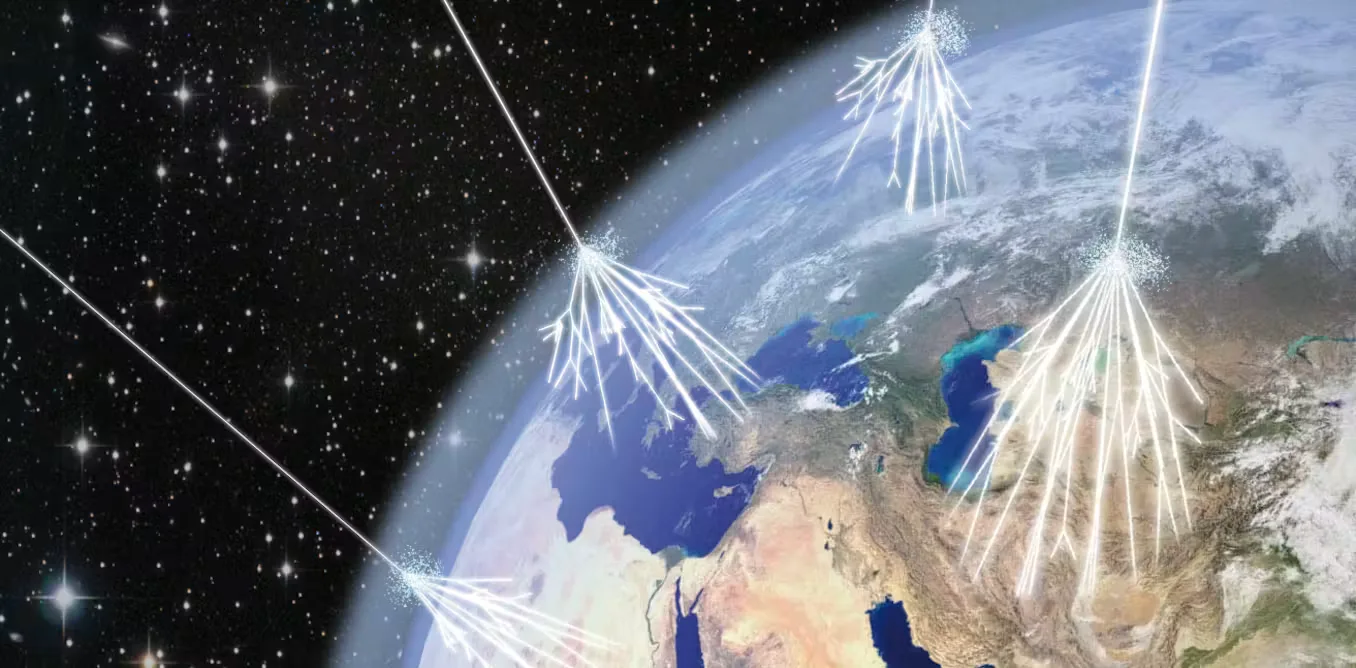
Can Aliens Detect Earth? Our Planet-Hunting Technology Isn't Capable Yet
Baca dalam 60 detik
- Metode transit dan kecepatan radial yang dipakai astronom saat ini belum sanggup mengidentifikasi planet seukuran Bumi di orbit bintang mirip Matahari.
- Teleskop Roman yang dijadwalkan meluncur 2026 akan memakai teknik mikrolensa gravitasi untuk menyensus planet bermassa Bumi pada jarak orbit setara.
- Keterbatasan ini menegaskan bahwa sinyal Bumi terlalu lemah, sehingga peradaban luar pun akan kesulitan menemukan kita dengan cara yang sama.
If an intelligent civilization in another solar system were observing the Sun with the technology we currently use, they would most likely not find Earth. This conclusion stems from an analysis by Sara Seager, Professor of Planetary Science and Physics at the Massachusetts Institute of Technology (MIT), who asserts that current-generation planet-finding instruments are not yet capable of detecting an Earth-sized and Earth-mass planet orbiting a Sun-like star.
For two decades, astronomers have relied on two primary approaches: the transit method, which measures a small dip in starlight as a planet passes in front of it, and the radial velocity method, which detects a star's wobble due to a planet's gravitational pull. NASA's Kepler Telescope, now retired, was specifically designed for the transit mission. In theory, its photometric precision was sufficient to capture Earth's signal. However, in practice, Sun-like stars proved to be far more variable in brightness than previously anticipated. These fluctuations drowned out the very faint planetary signals, meaning the detection of an Earth analog never materialized.
The radial velocity method faces a similar hurdle. Current ground-based instruments are sensitive enough to sense the tug of an Earth-mass planet, but noise from starspots, surface granulation, and other effects is still too significant to be fully filtered out. According to Seager, Earth's signal is simply too small to emerge above this noise. "Giant planets don't obscure Earth; the problem is that Earth's signal is intrinsically very weak—its mass is small, its size is small, and its light is very dim compared to its host star," she stated.
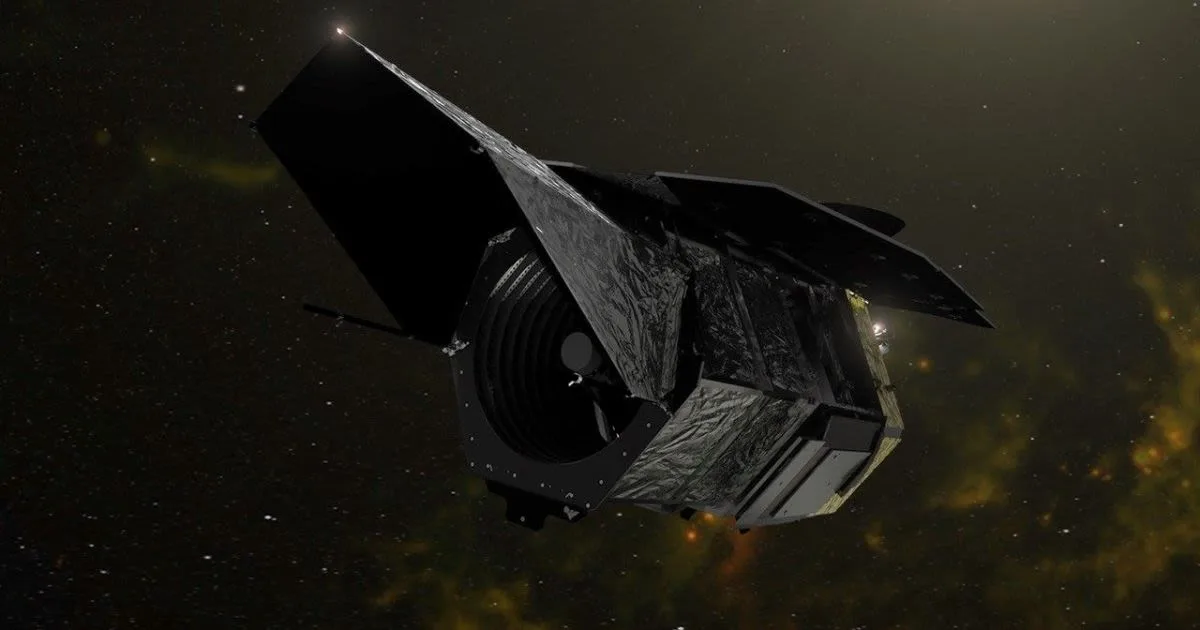
New hope comes from the Nancy Grace Roman Space Telescope, slated for launch on August 30, 2026. This mission will employ the gravitational microlensing technique, which occurs when a star with a planet passes in front of a more distant background star. The foreground system acts as a lens, temporarily magnifying the background star's light. The effects of the lensing star and its planet can be separated, allowing planets around the nearby star to be detected. Roman will conduct a census of planets in the region about half the distance between the Sun and the center of the Milky Way Galaxy. According to Seager, gravitational microlensing is so sensitive that it can find Earth-mass planets at Earth-equivalent orbital distances, provided the lensing geometry is favorable.
For Indonesia, this development is not merely an astronomical discussion. Planet-finding technology drives innovation in precision optics, light sensors, and large-scale data analysis—expertise also needed by national industry and research sectors. The National Institute of Aeronautics and Space (LAPAN) and the domestic astronomy community can utilize public data from the Roman mission for exoplanet studies, while simultaneously strengthening human resource capacity in astrophysics. Furthermore, the awareness that Earth is difficult to detect from afar can bolster the argument for environmental preservation: our planet is unique and fragile, and efforts to maintain its habitability become increasingly relevant.
Seager added that these limitations are not due to giant planets obscuring Earth's existence, but because Earth's signal scale is inherently tiny. This finding confirms that the search for life beyond Earth requires a technological leap, not just an increase in instrument sensitivity. With Roman's launch, astronomers hope to fill the gap left by Kepler and expand understanding of how common Earth-sized planets are in the galaxy.
The big question now is: if other civilizations face similar constraints, are we truly isolated, or are there methods yet to be conceived? The answer may await in Roman's microlensing data—or in the next generation of telescopes capable of seeing Earth from afar.