Courtney Love Opens Up About Discomfort as a Rock Icon: 'I Don't Have Social Skills'
Baca dalam 60 detik
- Courtney Love mengaku tidak siap dengan tekanan ketenaran yang datang setelah Hole meledak pada 1990-an.
- Ia menyoroti minimnya dukungan label untuk musisi non-pop, termasuk soal merchandise yang harus ia urus sendiri.
- Love membagikan resep kreatifnya: menulis jurnal tangan setiap pagi dan berani merasa aman untuk gagal.
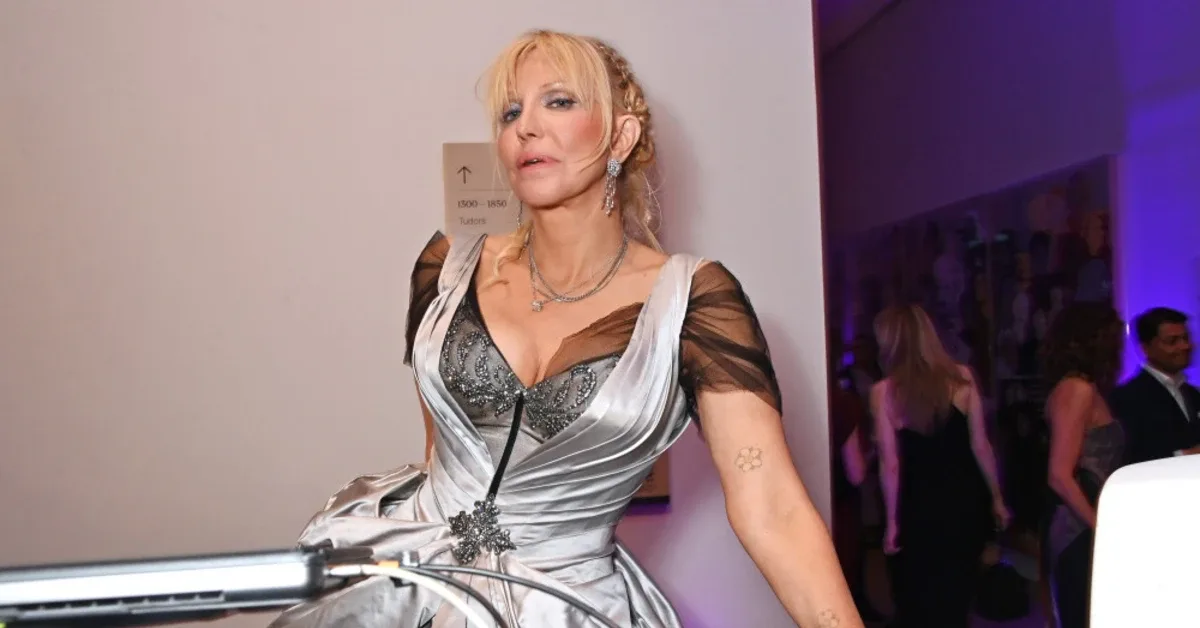
Hole vocalist Courtney Love has once again opened up about the darker chapters of her career journey. In a recent interview with Interview Magazine, the 62-year-old admitted she was never truly comfortable with the celebrity status that has clung to her since the late 1980s. "I didn't have the guts for it. I didn't have the social skills or the support infrastructure," she said, describing how alien she felt to the glamorous world that demands flawless appearances and smooth social relations.
Her discomfort was not without reason. Love recalled the early days of touring the world with Hole in the 90s, when she felt left to fend for herself by her record label. According to her, pop musicians received preferential treatment, while for alternative genres, merchandise revenue was the main support. "If you're pop, you get support. If not, it's from merch sales," she reminisced. She even had to order her own hair accessories like tiaras and headbands from China. Now, those very items are selling for hundreds of dollars on eBay. "Because I was right, and they were wrong. I'm grateful I can still tell this story," she added.
Love's story is more than just nostalgia. She highlights the rarely exposed dark side of the music industry: how labels often neglect non-mainstream musicians, especially concerning career management and psychological well-being. This is relevant to the Indonesian music landscape, where many indie musicians have to independently manage production, distribution, and even merchandise. The role of labels remains imbalanced, and the pressure to appear perfect on social media exacerbates the mental vulnerability of artists.
"I've had a lot of successes and failures. Failures are very difficult to overcome. I don't have much advice because I haven't really succeeded, but I keep trying. The things you have to do are very simple. You have to stay weird and exercise. If you're an addict—like me—you have to pray. Then sit down and write 20 pages by hand. The writing should be small, the smaller the better. You write garbage pages. It doesn't matter what you write. It's your way of releasing something creative every morning. It sounds stupid, but it helps. You have to feel safe to fail."
Love's statement about her handwritten journaling routine aligns with clinical psychology findings on the benefits of expressive writing for mental health. Writing freely without the burden of perfection can help reduce anxiety and pave the way for trauma recovery. For Indonesia's increasingly competitive creative industry, this message serves as a reminder that mental resilience is as important as talent.
Looking ahead, the question is not only whether Courtney Love will release another album, but how the global music ecosystem—and Indonesia's—can create a more supportive environment for vulnerable artists. Labor regulations in the creative sector, access to mental health services, and fair income distribution are collective responsibilities. Without these, Love's story has the potential to repeat itself for the next generation of musicians.