Korlantas Denies Door-to-Door Vehicle Tax Raids: Hoax, No Legal Basis
Baca dalam 60 detik
- Korlantas Polri memastikan narasi razia gabungan polisi dan leasing pada akhir September 2026 adalah informasi palsu.
- Pemeriksaan kendaraan di jalan harus mengikuti UU Lalu Lintas, sementara penggeledahan rumah hanya untuk penyidikan pidana.
- Masyarakat diimbau memverifikasi ke Samsat atau kepolisian sebelum menyerahkan dokumen atau uang kepada pihak tak dikenal.
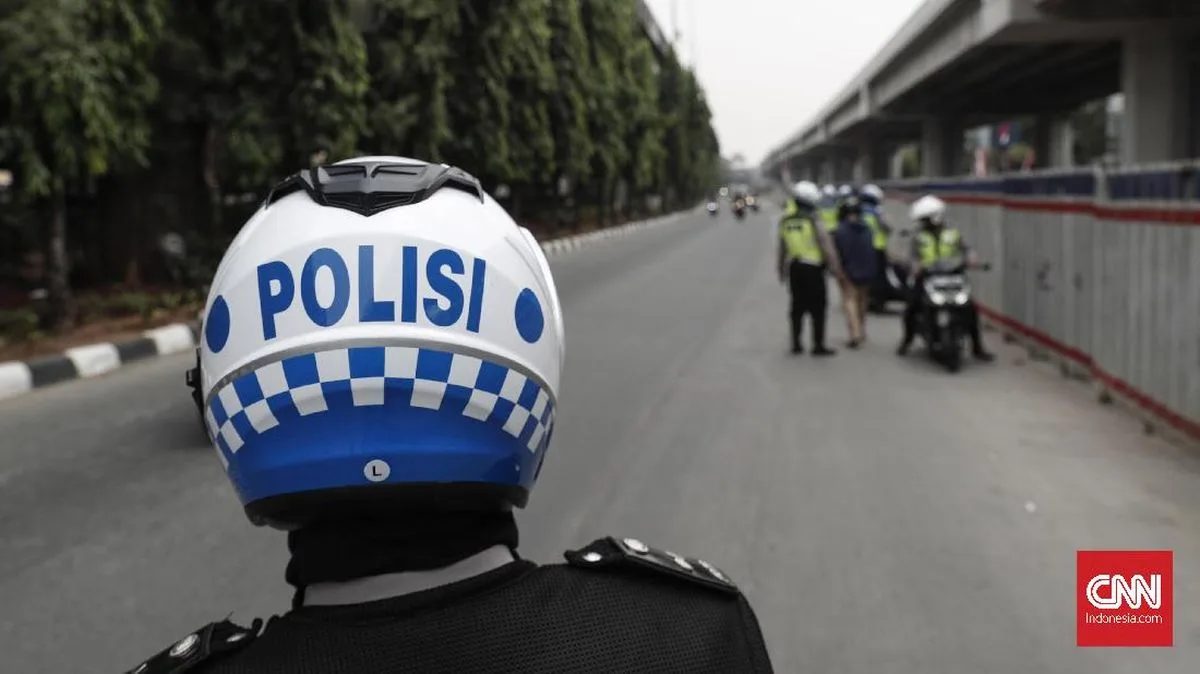
The Indonesian National Police's Traffic Corps (Korlantas) has strongly denied viral social media reports about a door-to-door vehicle inspection operation set to take place in late September 2026. Through its official Instagram account, @korlantaspolri.ntmc, the agency stressed that the narrative is false and is not an official announcement.
The circulating issue claimed that a joint team of police and financing companies would visit homes to inspect vehicles with unpaid taxes, those involved in credit disputes, and units transferred without the leasing company's knowledge. The news spread quickly because it touched on two sensitive issues at once: tax arrears and vehicle repossession by debt collectors.
Korlantas stressed that vehicle inspections on the road follow strict procedures. Citing Articles 264 and 265 of Law No. 22 of 2009 on Road Traffic and Transportation, inspections may only be carried out by police officers or civil servant investigators (PPNS) in the traffic sector. Officers are also required to carry a duty order, wear a full uniform, and comply with designated locations and procedures.
Korlantas also corrected the assumption that BPKB must be carried while driving. Under Article 106 paragraph (5) of Law No. 22/2009, the documents that must be shown during an inspection are the STNK or STCK, SIM, proof of periodic roadworthiness test for vehicles subject to testing, and/or other valid proof. BPKB is not part of that obligation.
On home searches over tax arrears, Korlantas stressed that such action cannot be taken arbitrarily. Articles 112 to 114 of the Criminal Procedure Code stipulate that home searches may only be conducted by investigators for the purpose of a criminal investigation. Vehicle tax arrears are not a criminal matter that justifies such action.
Repossession of credit vehicles also cannot be done arbitrarily. Execution of fiduciary collateral must refer to Law No. 42 of 1999 on Fiduciary Security and Constitutional Court Ruling No. 18/PUU-XVII/2019. If there is no agreement on default and the debtor does not voluntarily surrender the vehicle, the financing company must pursue an execution mechanism through the court. The police are not the party acting as a debt collector for financing companies.
"The narrative about a 'door-to-door vehicle raid in late September 2026 by a joint team of Police and finance parties' has no legal basis and is not an official policy," said Korlantas Polri in its statement.
Korlantas urged the public not to spread the information and to always verify through official channels of the Police, Samsat, Bapenda, and the relevant financing companies. The public is also asked to confirm with official agencies before handing over original documents or money.
"If any party comes claiming to represent such an operation, the public has the right to ask for their identity and duty order and to confirm with official agencies before handing over vehicles, original documents, or money. Filter before sharing. Make sure information comes from official and accountable sources," said Korlantas.
For vehicle owners in Indonesia, such hoaxes can cause anxiety and even material losses if irresponsible parties exploit them for extortion. Digital literacy and vigilance are key. Make sure any information related to traffic and tax policies is consumed only from trusted sources.
Going forward, the spread of disinformation about road law enforcement demands a swift response from authorities. Beyond relying on official channels, proactive outreach to the public—especially in areas with high social media penetration—needs to continue. Will we remain trapped in a cycle of hoaxes and denials, or is there a systematic effort to break the chain?