Sultanate Land Registration in Yogyakarta Reaches 75.87 Percent, 10,103 Remaining Parcels Targeted by 2027
Baca dalam 60 detik
- Pemda DIY baru menyelesaikan pendaftaran 31.774 dari 41.877 bidang tanah SG/PAG yang ditargetkan RPJMD 2022-2027, menyisakan 10.103 bidang untuk dikebut dalam dua tahun tersisa.
- Aplikasi Latar Adipati hadir sebagai kanal tunggal rekomendasi pemanfaatan tanah, sementara payung hukum Permen ATR/BPN No. 2/2022 menjadi dasar yang tidak dimiliki daerah lain.
- Kepastian alas hak tanah SG/PAG berpotensi membuka jalan investasi properti, pariwisata, dan usaha di Yogyakarta, tetapi tumpang tindih data dan batas bidang masih menjadi ganjalan utama.
The Government of the Special Region of Yogyakarta recorded that registration of land titles for Sultanate Land (Sultan Ground/SG) and Duchy Land (Pakualam Ground/PAG) had reached only 31,774 parcels as of early 2026, equivalent to 75.87 percent of the 41,877-parcel target set in the 2022-2027 RPJMD. That leaves 10,103 parcels to be completed in the remaining two years — a substantial administrative task given the complexity of ownership and boundary arrangements for land inherited from the palace.
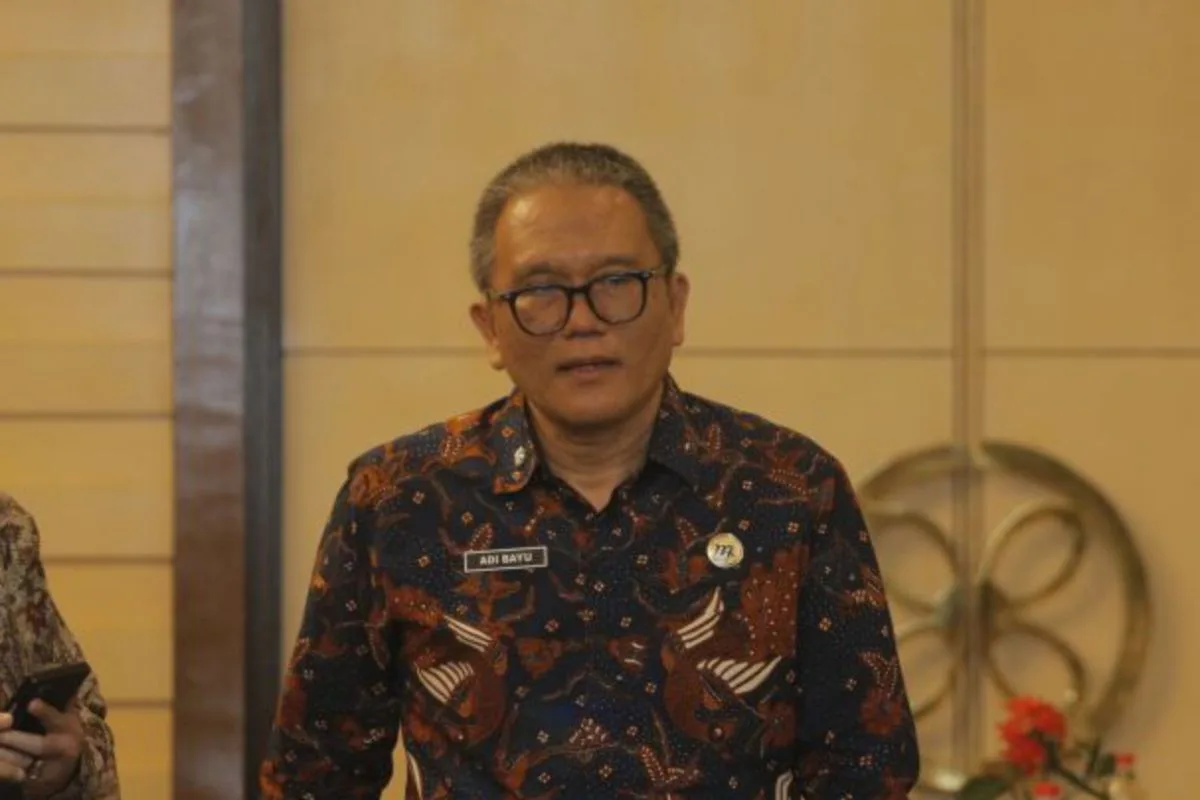
Head of the Yogyakarta Land and Spatial Planning Agency (DPTR) Adi Bayu Kristanto acknowledged the figure shows progress, but stressed that accelerating registration and certification remains a priority. "Accelerating the registration and certification of Sultanate and Duchy Land must continue in order to meet the targets that have been set," he said in Yogyakarta on Wednesday.
Notably, the Yogyakarta regional government has launched the Latar Adipati application — designed as a single window, or single channel, for issuing recommendations on the use of SG and PAG land. The digital innovation is expected to cut bureaucratic steps, speed up inter-agency coordination, and make monitoring easier. For businesses seeking to lease or use Sultanate/Duchy land, the system could reduce waiting times and the uncertainty that has long been complained about.
Head of the Yogyakarta Regional Office of the National Land Agency (BPN) Sepyo Achanto added that registration of Sultanate and Duchy land has its own policy basis through Ministerial Regulation of ATR/Head of BPN Number 2 of 2022. "This is a special policy that does not exist in other regions. That means there is a special policy from the Ministry and we must take part in completing the registration of Sultanate and Duchy land in Yogyakarta," Sepyo said.
He called for stronger synergy between the Yogyakarta BPN Regional Office, the Yogyakarta regional government, the Sultanate, the Duchy, district/city governments, and down to the kalurahan level to overcome various obstacles, from data, location, and parcel boundaries to paperwork. "We hope for synergy and collaboration to resolve the obstacles, constraints, and problems that arise in the administration of SG and PAG land," he said.
For readers outside Yogyakarta, especially investors and businesses, this development is worth watching. SG and PAG land has long been a source of disputes or legal uncertainty because of its unique ownership status — tied to the Sultanate and the Duchy, not merely state or individual assets. When the land titles are registered and certified, the economic value of the land rises, lease and utilization transactions become safer, and investment potential in property, tourism, and micro-business in strategic areas of Yogyakarta opens up more widely. The central government also has an interest because this registration contributes to the national complete systematic land registration (PTSL) program.
However, the challenges are not light. The remaining 10,103 parcels must be pursued in less than two years, while the administrative terrain is not simple: many parcels are in dense areas, overlap with claims by other parties, or lack historical documents. Acceleration at the kalurahan level, stronger spatial data, and resolution of boundary disputes that often take time are needed. Without a breakthrough, the RPJMD target risks being missed.
Going forward, the question is not merely whether the target figure is met, but how much economic impact can be gained from certainty over those land titles. If registration is completed, Yogyakarta has the opportunity to reorganize the spatial planning of its cultural heritage without sacrificing traditional rights. Conversely, if it stalls, the old uncertainty will continue to haunt the business climate in the student city. The regional government and BPN need to show that service digitalization such as Latar Adipati truly accelerates, rather than merely adding a new layer of bureaucracy.