KPK Uncovers Rp106.3 Billion Money Trail in Summarecon HGB Case, Nusron's Assets Under Scrutiny
Baca dalam 60 detik
- KPK menyita uang tunai dan valas senilai total Rp106,3 miliar dalam OTT kasus dugaan suap pengurusan HGB Summarecon di Bogor.
- Penyidik kini menelusuri asal-usul dana serta kemungkinan penggunaannya untuk pembelian aset yang diduga terkait orang kepercayaan Menteri ATR/BPN Nusron Wahid.
- Delapan orang telah ditetapkan sebagai tersangka, termasuk Dirjen ATR/BPN, Kepala Kantor Pertanahan Bogor, dan Presiden Direktur PT Summarecon Agung Tbk.
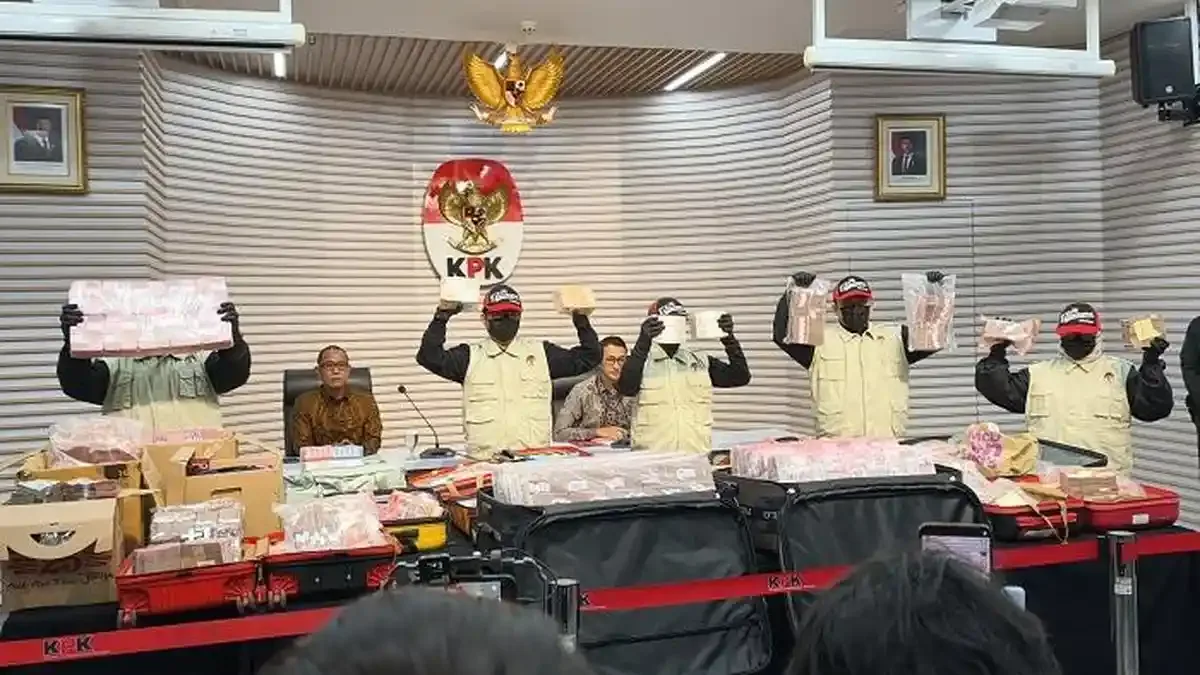
The Corruption Eradication Commission (KPK) is tracing the origin and use of about Rp106.3 billion seized in a sting operation (OTT) linked to alleged bribes in the processing of Hak Guna Bangunan (HGB) for PT Summarecon Agung Tbk in Bogor Regency, West Java. The investigation is now focusing on the possibility that the funds were used to buy assets allegedly connected to a confidant of Agrarian and Spatial Planning Minister/National Land Agency (ATR/BPN) Nusron Wahid.
The OTT carried out in the Greater Jakarta area on Monday (14/9/2026) resulted in the seizure of cash and foreign currency totaling about Rp106.3 billion. Some of the money was found in a suitcase at the home of former Kebumen Regent Arif Sugiyanto in Cibubur. At that location, investigators found Rp31.86 billion, USD 2,611,500, SGD 1,974,500, SAR 910, and MYR 981.
The KPK has named eight suspects in the case. They are Lampri, Director General of Land and Spatial Control and Ordering at ATR/BPN; I Sontang Coin Manurung, Head of the Bogor Regency Land Office; Adrianto Pitojo Adhi, President Director of PT Summarecon Agung Tbk; Rizal Pahlevi; Arif Sugiyanto; Fahd El Fouz alias Fahd A Rafiq; Erwin; and Muhammad Fakhry. Four of them—Arif Sugiyanto, Fahd El Fouz, Erwin, and Muhammad Fakhry—are described by the KPK as Nusron's confidants.
Acting KPK Director of Investigation Achmad Taufik Husein stressed that investigators are not only tracing the source of the money but also its use. "As for the use of the money, whether there were asset purchases and so on, that will certainly be part of the investigation materials that will also be examined," Taufik told reporters on Wednesday (16/9/2026). He added that the origin of the seized funds remains an object of investigation.
"The KPK has not concluded that the seized money was used to buy certain assets. Investigators are still tracing the origin, allocation, and flow of those funds."
The context of the money flow is crucial because the KPK also disclosed that Erwin allegedly received Rp1.5 billion from Adrianto Pitojo Adhi. According to the KPK, the money was related to a fee for unblocking and splitting Summarecon's HGB. However, that fact does not mean the entire Rp106.3 billion came from Summarecon. The source and use of the entire sum remain part of the investigation.
To date, the KPK has not stated that any specific assets were bought by Nusron using the seized money. Investigators are also still untangling the relationship between Summarecon, the suspects, and the money flow in the HGB case.
Indonesian Context: What Does It Mean for Investors and Professionals?
The case again highlights governance risks in the property and land sectors, long one of the areas prone to corruption. For capital market investors, the naming of the President Director of PT Summarecon Agung Tbk as a suspect could trigger volatility in the company's shares, at least in the short term. Negative sentiment could also spread more broadly across the property sector, especially if the case expands to other companies.
On the regulatory side, the disclosure reinforces the urgency of land bureaucracy reform, particularly in the processing of HGB and certificate splitting. Legal and compliance professionals need to watch how the KPK traces cross-jurisdictional money flows, including the use of foreign currency, which could set a precedent for handling similar cases.
Going forward, the public is waiting to see whether the KPK will name new suspects, including from higher-ranking officials. The big question: how far does this money flow reach into the centers of power at the Ministry of ATR/BPN, and will the case drive systemic improvements in land management in Indonesia?