Bandung in the New Delhi Declaration: Indonesia's Diplomatic Capital and the Test of Global Bargaining Power
Baca dalam 60 detik
- Nama Bandung masuk dalam New Delhi Declaration hasil KTT BRICS 2026, mengangkat kembali prinsip Konferensi Asia-Afrika 1955 sebagai rujukan tata kelola global yang lebih adil.
- Keanggotaan penuh Indonesia di BRICS sejak Januari 2025 menjadi pijakan untuk mengubah posisi dari peserta menjadi penentu arah kebijakan ekonomi-politik Global South.
- Tiga pesan Presiden Prabowo—kemandirian, solidaritas Global South, dan kerja sama konkret—menjadi fondasi yang menghubungkan kapasitas domestik dengan pengaruh internasional.
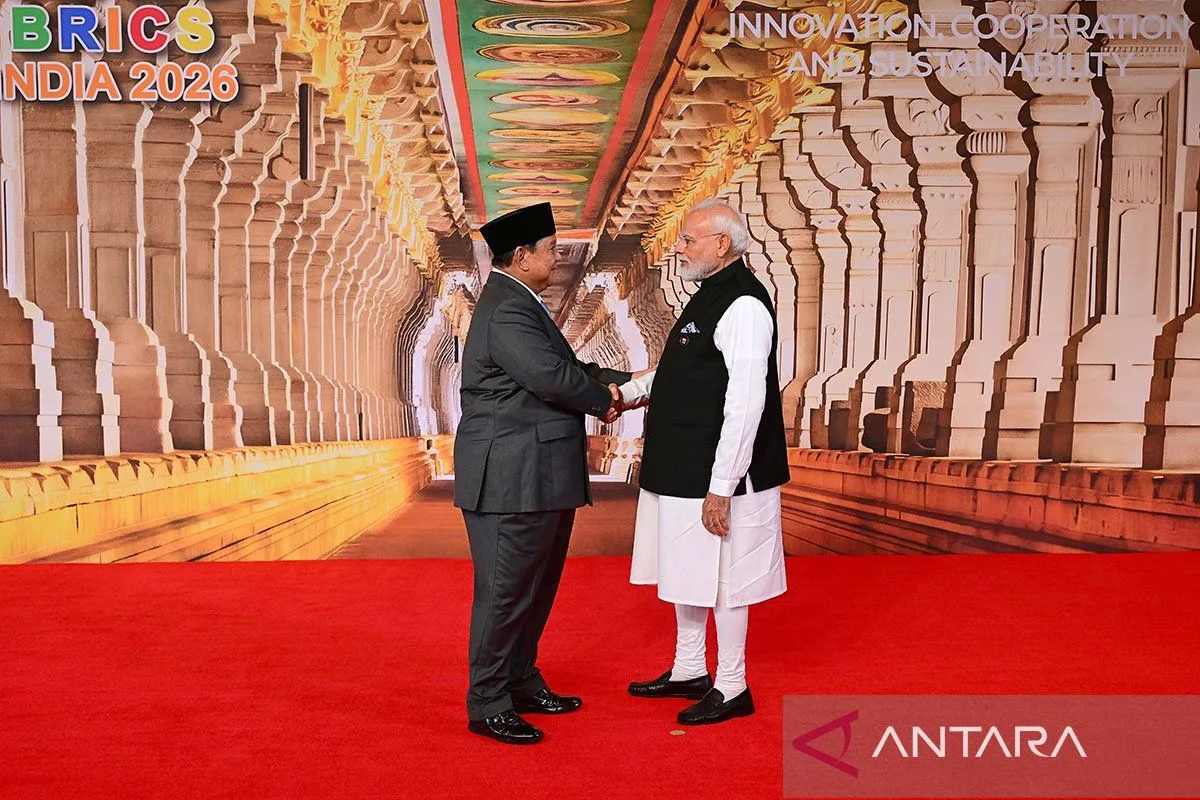
The name Bandung is echoing on the world stage once again. In the New Delhi Declaration produced by the 2026 BRICS Summit, the city that hosted the 1955 Asia-Africa Conference is explicitly cited as a reference for a more equal, inclusive, and representative multilateral system. The mention is not merely a historical flashback, but a signal that the principles of non-intervention and mutual benefit inherited from the AAC are still considered relevant for addressing today's imbalances in global governance.
For Indonesia, this moment marks a shift in position. Since officially becoming a full member of BRICS in January 2025, the question that has arisen is no longer about participation, but about the extent to which Jakarta can use the forum to advance its interests. New Delhi is the first stage on which that membership is tested: whether Indonesia will merely be a complement to the declaration, or genuinely able to push the agenda of reforming international financial institutions and amplify the voice of developing countries.
At the summit, President Prabowo Subianto carried three main messages. First, national self-reliance and resilience resting on food, energy, and education. Second, the importance of unity among Global South countries in facing geopolitical pressure. Third, the need to translate BRICS strength into real economic cooperation, not merely political rhetoric. The three are interconnected: without solid domestic capacity, Indonesia will find it difficult to have room to determine its stance in international fora.
The link between food self-sufficiency and diplomatic strength is indeed not automatic. A country with abundant energy reserves does not necessarily have commensurate political influence. International power is born from a combination of economic capacity, institutional quality, leadership, geographic position, partner networks, and the skill to turn that capital into concrete results. However, domestic capacity provides one fundamental thing: choice. Without it, the room for diplomatic maneuver will be narrow and Indonesia will tend to be reactive to external pressure.
"Domestic self-reliance is a prerequisite for being able to speak loudly at the global level. Without it, we will only be spectators in the contest of great powers," such was the core of the message delivered by President Prabowo at the forum, as quoted from an official statement.
For readers in Indonesia, especially professionals and investors, the mention of Bandung in the BRICS declaration carries practical implications. First, Indonesia's position in BRICS can strengthen bargaining power in trade and investment negotiations, especially with member countries that share similar interests in reforming the global financial system. Second, closeness with the Global South opens opportunities to diversify export markets and alternative sources of financing, including the use of local currencies in bilateral transactions. Third, domestic political stability and regulatory certainty are determining factors in whether this momentum can be converted into real flows of capital and technology.
However, the challenges are not small. BRICS is a heterogeneous forum—its members' interests do not always align. Indonesia needs to carefully maintain a balance between strengthening South-South solidarity and keeping dialogue open with developed countries. Leaning too far toward one camp risks reducing the diplomatic flexibility that has long been a hallmark of the free and active foreign policy. On the other hand, if Indonesia fails to offer concrete initiatives, BRICS membership will only be a symbol without impact.
Going forward, the real test lies in the ability to translate declarations into policy. Will Indonesia propose a joint infrastructure financing mechanism under the BRICS umbrella? What is Jakarta's position in negotiations on IMF and World Bank quota reform? And just as important, can the government maintain consistency in domestic reform so that the trust of international partners is preserved? Without real steps, the echo of Bandung in New Delhi will only be a sweet historical note, not a foundation toward genuine bargaining power.