Prabowo Inaugurates Kelapa Gading–Manggarai LRT, Jakarta Transport Integration Enters Trial Phase
Baca dalam 60 detik
- Presiden Prabowo Subianto meresmikan pengoperasian LRT rute Kelapa Gading–Manggarai, Rabu (17/9/2026), menandai beroperasinya fase 1B LRT Jakarta.
- Rute sepanjang 12,2 km ini menghubungkan kawasan padat hunian di utara dengan simpul transit Manggarai, berpotensi mengurai beban lalu lintas dan mendorong pergeseran moda.
- Uji coba terbatas untuk masyarakat berlangsung 17 September–2 Oktober 2026 dengan jam operasional terbatas, sebelum layanan penuh ditetapkan.
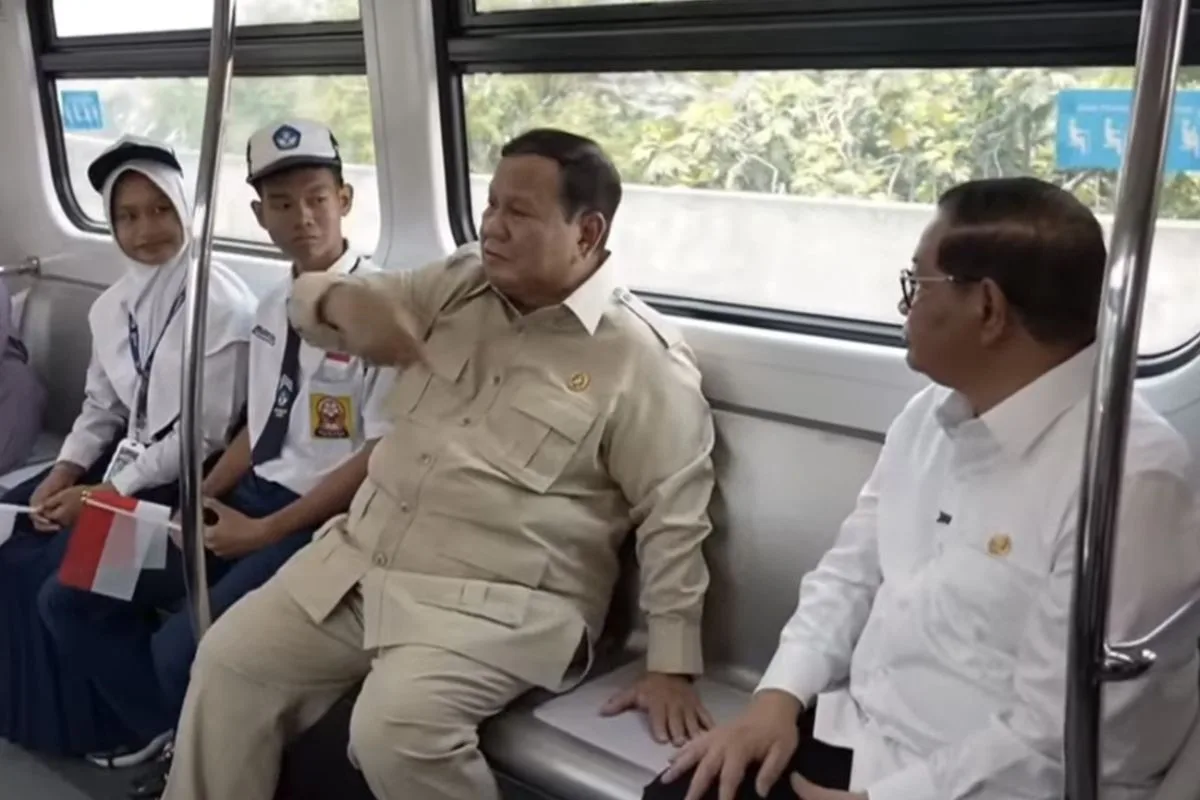
President Prabowo Subianto set foot at Kelapa Gading LRT Station in Jakarta on Wednesday afternoon, not merely to inspect the facilities but to mark the start of operations on the new Kelapa Gading–Manggarai route. The head of state's presence at the station, long awaited by residents of North Jakarta, signals that the phase 1B mass transit project of Jakarta LRT has officially entered its operational stage.
Prabowo's arrival at around 13.00 WIB was greeted by dozens of junior high school students who had been waiting. Accompanying him were Jakarta Governor Pramono Anung, Transportation Minister Dudy Purwagandhi, Presidential Chief of Staff Dudung Abdurachman, State Secretary Minister Prasetyo Hadi, and Cabinet Secretary Teddy Indra Wijaya. The President was seen trying out the ticketing system by tapping a card at the gate, then inspecting a reading room and speaking with several elementary school students. He then boarded an LRT train with Governor Pramono and two junior high school students, sitting in a passenger seat throughout the journey.
The Kelapa Gading–Manggarai route is part of the Jakarta LRT Phase 1B construction linking the densely populated residential area of North Jakarta with the main transit area of Manggarai. Previously, from 10–16 September 2026, a limited trial of the Manggarai–Velodrome route was held exclusively for invitees, resident representatives, institutions, communities, and journalists. Now, the door for the general public is beginning to open through a registration mechanism.
Jakarta Governor Pramono Anung stated that supporting infrastructure connecting LRT stations with Transjakarta and other transport modes has been prepared. This intermodal integration is crucial because the new route passes through a corridor long known for congestion, especially during peak hours. With Kelapa Gading connected to Manggarai, residents in North Jakarta have an alternative journey to the city center without having to rely on private vehicles.
For readers in Indonesia, particularly investors and professionals in the property, retail, and logistics sectors, the operation of this LRT has the potential to reshape area demand. Stations along the line can become new growth nodes, from vertical housing to culinary and office centers. However, that economic impact will not materialize automatically. The success of fare integration, reliable schedules, and pedestrian access from residential areas will determine whether the LRT truly becomes the backbone of mobility or merely a ceremonial project.
"Supporting infrastructure connecting LRT stations with Transjakarta and other transport modes has been prepared," said Governor Pramono Anung, as quoted from an official statement.
The government aims for this public trial to serve as an evaluation before full commercial service. The still-limited operating hours, 09.00–16.00 WIB, give the operator room to fix the ticketing system, headway, and carrying capacity. After 2 October 2026, the public will be waiting to see whether trip frequency is increased and whether the fares charged can compete with the cost of ride-hailing transport that has so far been the favorite.
If integration runs smoothly, the Kelapa Gading–Manggarai LRT can be a catalyst for more equitable development in North Jakarta, while reducing dependence on private vehicles that contribute to congestion and pollution. Conversely, without improved pedestrian access and seamless intermodality, that potential could evaporate. In the coming weeks, public attention will be fixed on this trial: whether the new LRT can convince Jakarta residents that mass transit is the main choice, not merely the last resort.