ICA-CEPA Takes Effect, Indonesia Pitches Nuclear to AI to Canadian Investors
Baca dalam 60 detik
- Indonesia memanfaatkan momen implementasi ICA-CEPA untuk menggaet perusahaan Kanada di sektor nuklir, AI, mineral kritis, dan jasa keuangan.
- Perjanjian ini menghapus atau memangkas tarif lebih dari 90 persen pos tarif Kanada untuk produk Indonesia, dan hampir 86 persen sebaliknya.
- Bagi pelaku pasar dalam negeri, ICA-CEPA membuka akses bahan baku dan teknologi, tetapi juga menuntut kesiapan standar serta aturan asal barang.
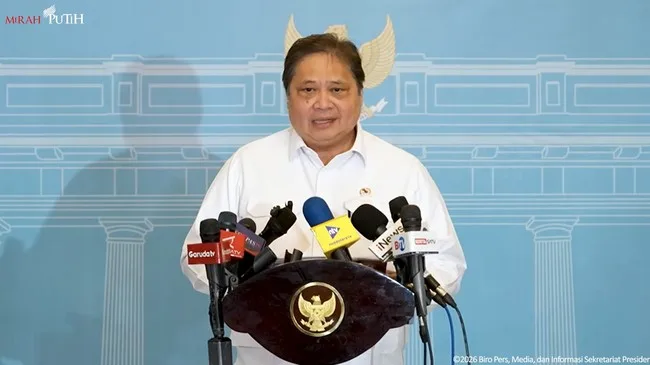
The Indonesian government is opening its doors wide for Canadian companies to invest in the nuclear energy, artificial intelligence, critical minerals, and financial services sectors, as the implementation phase of the Indonesia-Canada Comprehensive Economic Partnership Agreement (ICA-CEPA) begins. The invitation was extended by Coordinating Minister for Economic Affairs Airlangga Hartarto during the Canada-ASEAN Business Council (CABC) Executive Dialogue, held on the sidelines of the Canada Investment Summit.
The move marks a new chapter in the two countries' economic relations. ICA-CEPA is not just an ordinary trade agreement: it is Canada's first bilateral deal with an ASEAN country, as well as Indonesia's first comprehensive economic partnership with the North American region. Both countries have completed ratification, and discussions have now shifted to technical matters, including rules of origin that will determine how much of the benefit actually flows to businesses.
At the meeting, Airlangga stressed that Indonesia's market is not only large, but also stable and managed with discipline. The statement implies that regulatory certainty is a key selling point amid global economic uncertainty. He also encouraged the business forum to become a venue for two-way exchange of ideas, so that input from the business world can be quickly translated into concrete steps.
"Today's dialogue is important, because in the end it is business players like CABC members who will realize ICA-CEPA," Airlangga said, expressing hope that the forum would produce tangible follow-up.
Notably, the series of meetings did not stop at trade in goods. Airlangga was recorded holding a special meeting with AtkinsRealis CEO Ian L. Edwards to discuss nuclear energy cooperation, as well as with Sun Life CEO Kevin D. Strain to strengthen the financial sector. He also delivered remarks at the CABC Reception alongside Canadian Minister of Industry Mélanie Joly, inviting more investment into strategic sectors, from critical minerals, energy transition, and food security to AI.
For readers in Indonesia, especially investors and professionals, ICA-CEPA offers opportunities that need to be examined clearly. On one hand, domestic producers gain market access to Canada at much lighter tariffs, while importers can obtain raw materials and technology from Canada at lower costs. On the other hand, readiness of product standards, certification, and understanding of rules of origin are absolute requirements so that the benefits do not remain mere narrative on paper. Without that readiness, it is not impossible that the domestic market could instead be flooded with Canadian goods without being offset by Indonesian export expansion.
The government appears to be aware of this. Therefore, business forums such as the CABC Executive Dialogue are positioned as a bridge between state-level negotiations and company-level execution. The presence of several officials, including Indonesian Ambassador to Canada Muhsin Syihab and Deputy for Economic and Investment Cooperation Edi Prio Pambudi, shows that the approach used is no longer merely ceremonial, but an effort to build business readiness early on.
Going forward, the real test lies in the technical details: how quickly the rules of origin are completed, how ready domestic industry is to meet Canadian standards, and how aggressively Canadian companies realize their investment commitments. If those three things move in tandem, ICA-CEPA could become a blueprint for similar agreements with other developed countries. But if not, it risks becoming a thick document whose economic benefits are enjoyed by only a handful of parties.