Water Bombing Helicopter Crashes in Barito, BNPB Says Forest Fire Operations Continue
Baca dalam 60 detik
- BNPB memastikan insiden jatuhnya Super Puma H-225 di Sungai Barito tidak menghentikan operasi pemadaman karhutla di sejumlah wilayah.
- Dua pilot asal Australia selamat dan telah dirawat, sementara satu awak HLO asal Indonesia, Yayan Supyansuri, masih dalam pencarian.
- Evaluasi menyeluruh terhadap prosedur operasi udara akan dilakukan, mencakup kelaikan armada, water bombing, dan faktor cuaca.
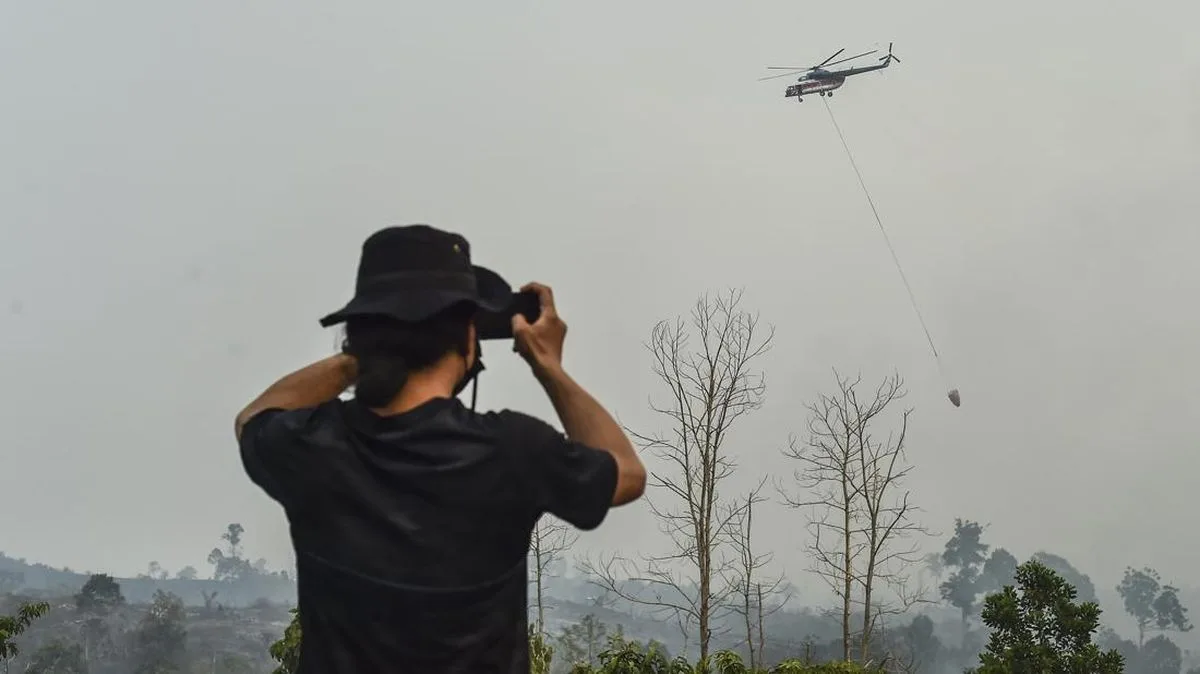
The National Disaster Mitigation Agency (BNPB) has affirmed that forest and land fire (karhutla) suppression operations in several regions continue despite a helicopter crashing in the waters of the Barito River, South Kalimantan, on Sunday (8/11). The incident tests the readiness of the government's aerial operations amid a dry season that still looms.
A Super Puma H-225 helicopter with registration VH-HGM is suspected to have crashed in Tabatan Village, Kuripan District, Barito Kuala Regency. Of the three crew members on duty, two Australian pilots were found alive and have received medical treatment. One other crew member, Yayan Supyansuri, an Indonesian national serving as Helicopter Landing Officer (HLO), was still reported missing as of Sunday afternoon.
Acting Head of the BNPB Disaster Data, Information, and Communication Center, Berton SP Panjaitan, said the incident must not diminish the government's commitment to tackling karhutla. According to him, suppression operations must continue, but with stricter safety oversight. "This incident does not reduce the government's commitment to continue handling karhutla. Suppression operations must still run, but they must be carried out with strict attention to safety aspects," Berton said in an online press conference in Jakarta on Sunday (8/11).
A rescue team from the Basarnas Banjarmasin SAR Office immediately moved to the scene. A total of 18 personnel were dispatched at 13.10 WITA. The search operation also involved the Indonesian Air Force, the National Police, village supervisory non-commissioned officers (Babinsa), and local residents. The main priorities now are finding the missing victim, restoring the condition of the two pilots, and securing the helicopter wreckage on the riverbank.
The incident raises questions about safety standards in disaster response aerial operations. Water bombing helicopters typically operate at low altitudes and often must draw water from sources that are not always ideal, such as fast-flowing rivers or pools surrounded by vegetation. Rapidly changing weather and the characteristics of the location are risks inherent to every mission.
"We will conduct a comprehensive evaluation of the fleet's technical readiness, water-drawing procedures, crew airworthiness, as well as weather factors and location characteristics," Berton said.
BNPB is also committed to facilitating an official investigation by the authorities to determine the exact cause of the accident. This step is important to prevent speculation among the public that could disrupt operations. The evaluation will cover all aspects of aerial operations, from helicopter maintenance and crew training to water-drawing protocols.
For Indonesia, karhutla is not merely an annual environmental disaster but also an economic and public health issue. The resulting haze often crosses provincial and even national borders, triggering flight disruptions and rising cases of respiratory infections. Aerial suppression operations are the backbone of response in areas difficult for ground teams to reach. Therefore, disruption to the aerial fleet can slow the overall response.
Going forward, BNPB's focus is to ensure operations continue without compromising crew safety. The comprehensive evaluation is expected to produce stricter procedures, including risk assessments before every water bombing mission. The question is whether this evaluation will be quick enough to anticipate the next potential karhutla, given that the dry season is still ongoing in several regions.