Lawyers Deny Intimidation of Three Generals Named Wiretapping Suspects, Palace Raises Treason Question
Baca dalam 60 detik
- Kuasa hukum Irjen Ahrie Sonta menegaskan kliennya dan dua jenderal lain tak mengalami tekanan selama penyidikan kasus dugaan penyadapan terhadap Presiden Prabowo.
- Penyidik Bareskrim baru menjerat para tersangka dengan pasal penyadapan dan akses ilegal, belum memakai sangkaan makar meski Istana dan BIN menyebut perbuatan itu masuk kategori tersebut.
- Tiga jenderal ditahan di Mako Brimob, sementara satu tersangka lain, Irjen Slamet Uliandi, tidak ditahan karena alasan kesehatan.
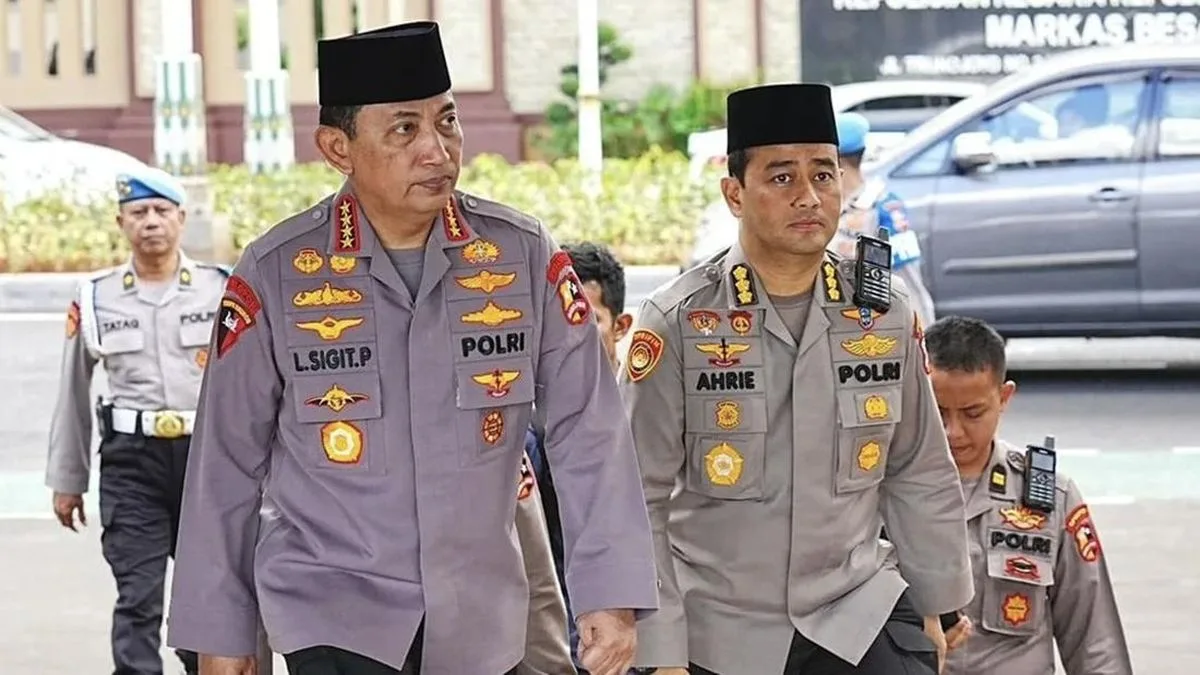
The legal advisory team for Insp. Gen. Ahrie Sonta Nasution has confirmed that there was no physical or psychological pressure on their client and two other senior officers named suspects in the alleged wiretapping of President Prabowo Subianto. The statement was made after investigators from the National Police Criminal Investigation Department (Bareskrim Polri) detained three of the four generals named as suspects at the Mako Brimob Detention Center in Kelapa Dua, Depok, West Java.
Krisna Murti, a member of Ahrie's legal team, said the examination process followed the Criminal Procedure Code (KUHAP). According to him, legal assistance had been provided since his client was still a witness until he was finally named a suspect. "From the start of the examination, our client was accompanied by legal counsel. There was no intimidation, and the process was transparent," Krisna said in a video statement on Friday (6/11).
He also stressed that Ahrie would be cooperative and open so that the case could be fully clarified. That stance, Krisna said, is a form of respect for the ongoing legal process. However, the statement has not answered public questions about the motive behind the alleged wiretapping, which involves a number of national figures.
So far, investigators have not included a treason element in the case construction. Yet in recent days, the Presidential Palace and the head of the National Intelligence Agency (BIN) have stated that the suspects' actions could be categorized as an attempt at treason. This difference in assessment has drawn attention because it could affect the direction of the investigation and the severity of the sentence prosecutors will later seek.
Criminal law observer Chairul Huda of the University of Indonesia said the investigators' decision not to apply the treason article shows caution. According to him, the treason element in the Criminal Code has strict limits and requires proof of intent to lawfully overthrow the government. "Investigators appear to want to build the case on the evidence that is easiest to prove first, namely illegal wiretapping," he said when contacted separately.
The case began with a report of alleged wiretapping of President Prabowo and several other senior officials. Bareskrim Polri then named four senior officers as suspects. Besides Ahrie, they are Gen. Listyo Sigit Prabowo, who once served as National Police chief and head of the Presidential Staff Office, Insp. Gen. Eko Hadi Santoso, and Insp. Gen. Slamet Uliandi. Listyo and Eko are now in cells at Mako Brimob, while Slamet is undergoing treatment.
The detention of Listyo, a former number one in the National Police, is a test of the investigators' independence. A number of parties view this case as a benchmark for the government's commitment to cleaning up the police institution from the practice of abuse of authority. On the other hand, the public is waiting to see whether the investigation will lead to the masterminds behind the alleged wiretapping, or stop at the level of field operatives.
Also crucial is the transparency of the legal process. Although the lawyers say there has been no intimidation, external oversight is still needed to ensure investigators do not overstep their bounds. The National Police Commission (Kompolnas) and House of Representatives Commission III have been asked to actively monitor this case so that it does not become a tool of political revenge within the institution.
Going forward, investigators face a difficult choice: expand the charges toward treason, which carries major political implications, or stay focused on the more technical wiretapping articles. That decision will shape the face of law enforcement in Indonesia, while also testing how far the state can resolve a case that touches the highest circle of power.